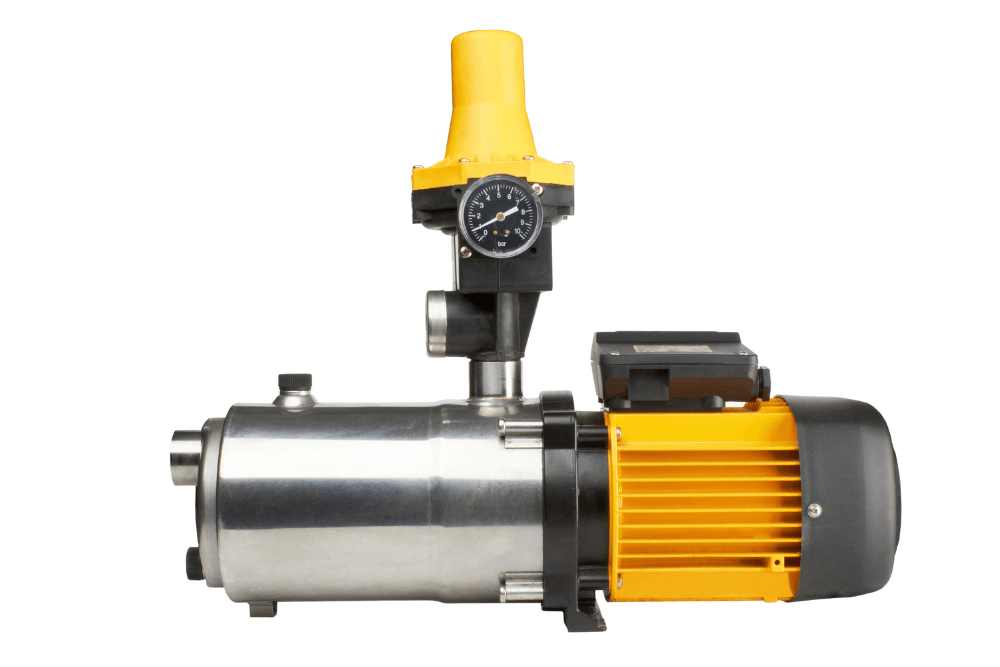
A bang, knock, or whistle from your pipes is a pressure problem, not a mystery noise, and in Dubai it's frequently caused by something almost no generic plumbing guide mentions: your booster pump. Most water hammer advice online is written for houses on direct municipal mains pressure. Most Dubai properties aren't. They run on a DEWA-fed storage tank plus a booster pump, and that pump's own pressure settings are one of the most common, least-discussed causes of banging pipes in this city.
!Quick answer
A sudden bang right when a washing machine, dishwasher, or toilet fill valve shuts off is classic water hammer, fixed with an arrestor. A rhythmic knock or repeated banging that isn't tied to one specific valve closing is more likely your booster pump's pressure cycling. A whistle is a restricted valve or washer. All three are covered below, with the Dubai-specific cause first, since it's the one generic guides miss.
What's Actually Happening: Pressure Has Nowhere to Go
Every version of this noise, banging, knocking, or whistling, is water under pressure being stopped or restricted suddenly, with the resulting shock or turbulence transmitted through the pipe as sound. Water moving through a pipe has momentum. When a valve shuts fast, that moving water slams to a stop almost instantly, and the energy it was carrying has to go somewhere: it turns into a pressure spike that shudders through the pipe, and if the pipe isn't secured or cushioned, that shudder becomes an audible bang or knock. A whistle is a related but different mechanism, water forced through a narrowed opening (a partially closed valve, a worn washer, a restricted pressure-reducing valve) vibrates as it passes, producing a high-pitched sound rather than a shock.
The practical difference between the three sounds tells you where to look first, which is the whole point of this guide rather than treating them as interchangeable.
| Sound | What's happening | Where to look first |
|---|---|---|
| Single loud bang, right when an appliance's fill cycle ends | Classic water hammer, a solenoid valve closing near-instantly | The appliance's own valve, and whether an arrestor is fitted near it |
| Repeated banging or knocking, not tied to one specific valve | Often booster pump pressure cycling in Dubai properties | The booster pump's pressure switch and accumulator tank |
| Rhythmic knocking that gets louder over time | Loose pipe straps letting the pipe move under normal pressure changes | Accessible sections of pipe near walls, under sinks, in service risers |
| High-pitched whistle when a tap or valve is partly open | Water forced through a narrow gap, a worn washer or a restricted valve | The specific tap or valve making the sound |
| Whistle that happens only at certain times of day | Municipal or building pressure fluctuation interacting with a marginal valve or washer | Whether the pattern matches known peak-usage times in the building |
The Dubai Cause Almost Nobody Else Covers: Your Booster Pump
In a property fed by a storage tank and booster pump rather than direct mains pressure, a booster pump with an incorrectly calibrated pressure switch, a failing check valve, or a worn-out accumulator (pressure) tank is one of the most common causes of repeated banging or knocking, and it's a cause that doesn't exist in the same form on a direct-mains system.
Most water hammer content online, and most of what a generic search returns, is written assuming your house is fed directly by municipal mains pressure with no pump in between. That's the norm in a lot of markets. It is not the norm in most Dubai villas and many apartment buildings, where water is delivered by DEWA into a storage tank (rooftop, underground, or both), and a booster pump then pressurizes it for distribution through the property. That pump is a mechanical, cycling system with its own pressure switch, and if that switch is calibrated too aggressively, kicking the pump on and off across too wide or too abrupt a pressure swing, or if the small accumulator tank built into most booster systems has lost its air charge, a very common wear pattern, the same failure mode as a car tire slowly losing pressure over years, the pump cycles on and off more often and more abruptly than it should, and each cycle can produce a knock or bang as pressure jumps rather than ramps smoothly.
This is mechanically different from classic water hammer, though it can sound similar and the two can compound each other. Classic water hammer is a single sharp shock from a fast-closing valve. Booster-pump-related banging is often more repetitive, tied to the pump's duty cycle rather than to any specific tap or appliance, and it frequently gets worse gradually as the accumulator tank's air charge slowly depletes over months or years rather than appearing suddenly.
A failing non-return (check) valve inside or just after the booster pump adds a second mechanism: instead of holding pressure steady when the pump cycles off, a worn check valve lets pressurized water in the line briefly flow backward toward the pump before the valve fully seats, and that reversal itself creates a knock, distinct from anything a standard water hammer arrestor at a faucet is designed to catch, since the source is at the pump, not at the fixture.
How to Tell If It's Your Booster Pump
If the banging happens throughout the day, unrelated to any specific tap or appliance use, and seems to correlate with the pump's motor audibly starting and stopping, the booster pump is the more likely cause than a fixture-level water hammer issue. Stand near the booster pump, usually in a plant room, under-stair cupboard, or roof-level pump housing, and listen for the motor cycling on and off. If a bang or knock happens at the same moment the pump kicks on or off, rather than at the moment a tap or appliance valve closes elsewhere in the house, that's a strong signal the pump's pressure switch or accumulator is the actual source.
Properties with older or poorly maintained booster pumps, common in villas and lower-rise buildings that have had the same pump for many years without the accumulator tank's air charge being checked, are the most likely to show this pattern. A pump installed or serviced recently, with a properly charged accumulator and a correctly calibrated pressure switch, shouldn't produce audible banging as part of normal cycling.
A simple hose-bib pressure gauge, screwed onto any outdoor tap or a washing machine's cold supply valve, gives a rough but genuinely useful pressure reading in under a minute, and it's worth doing before a professional visit to describe the problem accurately. Take the reading with no other fixtures running, and again with a tap or two open elsewhere in the property; a reading that swings dramatically between the two, rather than dropping gradually as you'd expect with more fixtures drawing water, is itself a useful data point for whoever diagnoses the booster pump afterward.
Classic Water Hammer: The Appliance-Valve Bang
A single loud bang or a short series of bangs, happening at the exact moment a washing machine, dishwasher, or toilet fill valve finishes filling and shuts off, is classic water hammer caused by that valve's near-instant closure. Solenoid valves, the electrically controlled valves used in washing machines, dishwashers, and modern toilet fill mechanisms, close far faster than a hand-turned tap does. That abrupt stop sends the moving water's momentum into a pressure spike that travels back up the supply line and shocks the pipe, and if the pipe near that valve isn't cushioned or secured, you hear it as a bang.
This is the version of water hammer that a piston-style water hammer arrestor is specifically designed to solve, and it's a genuinely effective, well-understood fix once installed close to the valve causing it. Older air chambers, a capped length of vertical pipe that trapped air as a cushion, did a version of the same job in older installations, but they gradually fill with water over time and stop working, which is why a modern sealed-piston arrestor is the more reliable long-term fix.
A water hammer arrestor works best installed as close as possible to the valve causing the shock, not at a random point in the pipe run. For a washing machine or dishwasher, that means at the appliance's own supply valve, an arrestor that screws directly onto the shut-off valve behind the machine is both the easiest DIY-adjacent installation and the most effective placement. For a toilet's fill valve, a smaller in-line arrestor fitted at the toilet's own supply line serves the same purpose. If multiple fixtures or appliances are affected, or the banging seems to originate somewhere inside a wall rather than at an accessible valve, a whole-house or point-of-entry arrestor fitted near the main supply line, after the booster pump, if the property has one, can address several sources at once, though it's a larger job that benefits from professional sizing rather than a retrofit DIY attempt.
Loose Pipes: The Rattle That Isn't Really Water Hammer
A rhythmic knocking or rattling that happens across a range of normal water use, rather than at one specific valve-closing moment, and that seems to get louder over weeks or months, often means a pipe has come loose from its securing strap or bracket and is moving slightly against a wall, joist, or another pipe every time pressure changes. This is a genuinely different, simpler problem than water hammer, and it's often mistaken for it because both produce a knocking sound. The fix is entirely mechanical: locate the loose section, commonly under a sink, in a service riser, or wherever pipe runs are accessible without opening a wall, and secure it with a proper pipe strap or clip rather than tightening it excessively, since over-tightening a strap can itself cause problems if it doesn't allow the pipe a small amount of natural movement as it expands and contracts with temperature changes.
Whistling Pipes: A Different Mechanism Entirely
A whistle, as distinct from a bang or knock, means water is being forced at speed through a narrowed opening, most commonly a partially closed valve, a worn tap washer, or a restricted pressure-reducing valve, and the fix is almost always at that specific point rather than anywhere else in the system. Unlike water hammer, which is a shock from sudden stoppage, a whistle is continuous turbulence while water is actively flowing through a restriction. The most common cause in a home is a valve, either a shut-off valve under a sink or toilet, or the property's main stopcock, that isn't fully open; even a valve that looks fully open can be slightly restricted internally if it's old or partially seized.
A whistle that happens only intermittently, or only at certain times of day, is worth checking against the property's pressure pattern rather than assuming a single fixture is at fault: if a booster pump or the wider building system runs at a higher pressure during low-usage periods, common overnight or during quiet building hours, a marginal washer or valve that's fine under normal daytime pressure can start whistling under that higher off-peak pressure.
Villas vs. Apartments: Who Controls the Pressure?
A villa owner typically has direct access to and responsibility for their own booster pump and its settings; an apartment resident's water pressure is usually managed by a shared building system they cannot access or adjust. In a villa, the booster pump, its accumulator tank, and its pressure switch are your own equipment, and a plumber can inspect, recalibrate, or service all of it directly as part of diagnosing banging pipes.
In an apartment, water pressure is typically managed by a shared building-level pumping system in a plant room you have no access to, which means if the banging is a pressure-cycling issue rather than a specific appliance's valve, you cannot diagnose or fix the pump yourself, and it needs raising with building management as a shared-system issue. What you can still diagnose and fix yourself in an apartment is anything downstream of your own unit's water meter or isolation valve: your own washing machine's supply valve, your own toilet's fill valve, loose pipe straps inside your own walls.
Banging that starts in a property less than a year or two old, especially a villa with its own booster pump, can point to a pump that was never correctly calibrated at handover rather than gradual wear, since there hasn't been enough time for an accumulator's air charge to deplete naturally. Dubai's development pace means a booster pump set is sometimes installed and connected without the pressure switch's on and off points being properly tuned to the specific property's pipe run and fixture count. If banging has been present since you moved in rather than appearing gradually, raising it with the developer or contractor as a commissioning issue is worth doing before treating it as a repair you should be paying for yourself.
High Pressure as a Contributing Factor
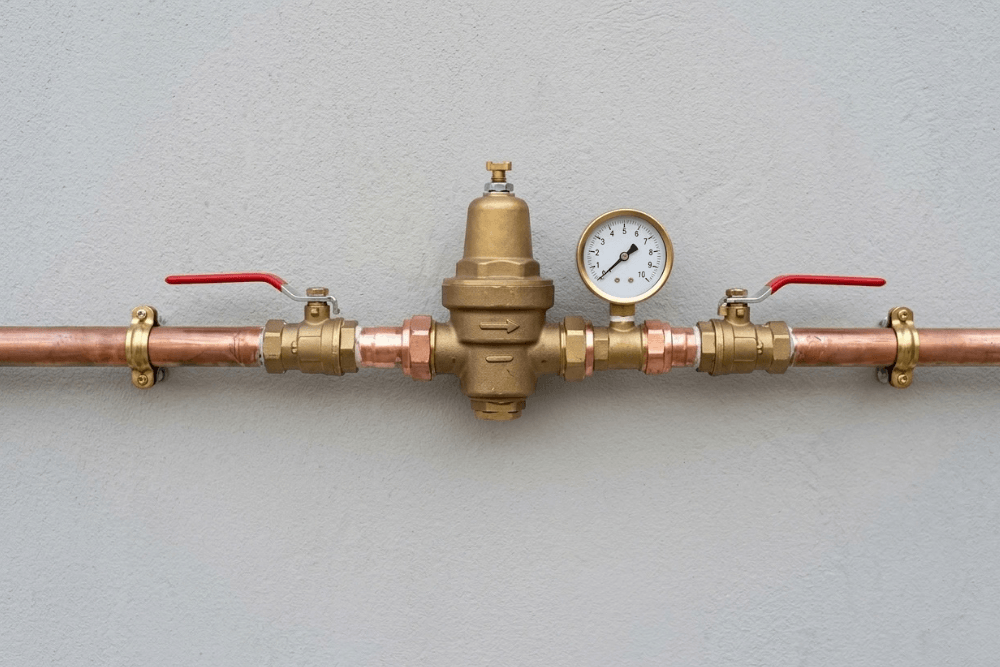
Water pressure significantly above normal residential range makes every other cause on this list worse, since higher pressure means more momentum to shock-stop and more force pushing through any restriction, and a pressure-reducing valve is the fix when this is a factor. If a plumber's pressure test shows the property running unusually high, whether from a booster pump calibrated too aggressively or, less commonly in a tank-fed property, an unusually high incoming supply pressure, a pressure-reducing valve fitted at the point of entry brings the whole system down to a safer working range, which reduces the severity of every other cause on this page simultaneously.
What Professional Diagnosis and Repair Actually Involves
A plumber diagnosing persistent banging typically starts with a pressure test and a check of the booster pump's condition, in a villa, before assuming the cause is a simple valve-level arrestor fix, since treating a pump-cycling issue as if it were classic water hammer wastes an arrestor installation without addressing the actual source.
| Situation | What's typically involved | Relative scope |
|---|---|---|
| Single appliance, bang tied to its own fill cycle | Arrestor fitted at that appliance's supply valve | Lowest, often resolved in one visit |
| Multiple bangs, no clear single-valve trigger, villa with a booster pump | Booster pump inspection: pressure switch calibration, accumulator air charge, check valve condition | Moderate, may include pump servicing rather than pipe work at all |
| Persistent whistle at one fixture | Valve or washer inspection and replacement at that specific point | Lowest |
| Whole-property pressure running high | Pressure test plus pressure-reducing valve installation at point of entry | Moderate to higher |
| Apartment, cause suspected in shared building system | Diagnosis limited to what's inside your own unit; building management engagement needed | Scope limited by access |
A fixed price confirmed after the initial pressure test and inspection, once the actual source is identified rather than assumed, avoids paying for an arrestor that was never going to fix a pump-calibration issue, or a pump service call for a problem that turns out to be a single loose pipe strap.
Frequently Asked Questions
What's the difference between water hammer and just noisy pipes?
Is banging in my pipes dangerous, or just annoying?
Why do my pipes bang specifically when the washing machine finishes filling?
My pipes bang randomly throughout the day, not when I'm using any specific appliance. What's causing that?
Can a water hammer arrestor fix booster-pump-related banging?
How do I know if my booster pump's accumulator tank has lost its air charge?
Will installing a water hammer arrestor stop all pipe noise in my house?
Why do my pipes only whistle sometimes, not all the time?
Is it normal for a booster pump to make some noise when it cycles on and off?
Can loose pipes cause actual damage over time, or is it just noise?
I live in an apartment and my pipes bang, but I don't have a booster pump. What's causing it?
Does high water pressure alone cause banging, even without a fast-closing valve?
My pipes bang right after DEWA does maintenance work in my area. Is that related?
Can a water softener or filter installation cause new banging that wasn't there before?
Is it worth replacing my booster pump entirely, or can the pressure switch and accumulator be serviced separately?
How long does a typical booster pump accumulator tank last before it needs recharging or replacing?
Related Service
Booster Pump Repair & Installation
Dealing with this issue right now? See real pricing and how we handle it.
View Booster Pump Repair & Installation