Booster Pump Repair & Installation Dubai
Weak pressure on the top floor, a pump that hums but won't start, or water that cuts out the moment two taps run at once, these are three different faults with three different price tags, not one generic "booster pump problem." We diagnose which one you actually have before we quote, on villas, apartments, and multi-pump commercial systems across Dubai. Not sure it's the pump at all? Our low water pressure page walks through the other common causes first.
Pressure switch and tank work, motor diagnostics and rewinds, full system sizing and installation. Real component-level pricing, not a flat callout fee that grows once someone's on-site.
AED 180+
Pressure switch repair
Same-day
Diagnosis on most calls
24/7
Emergency response
How a Booster Pump System Actually Maintains Pressure
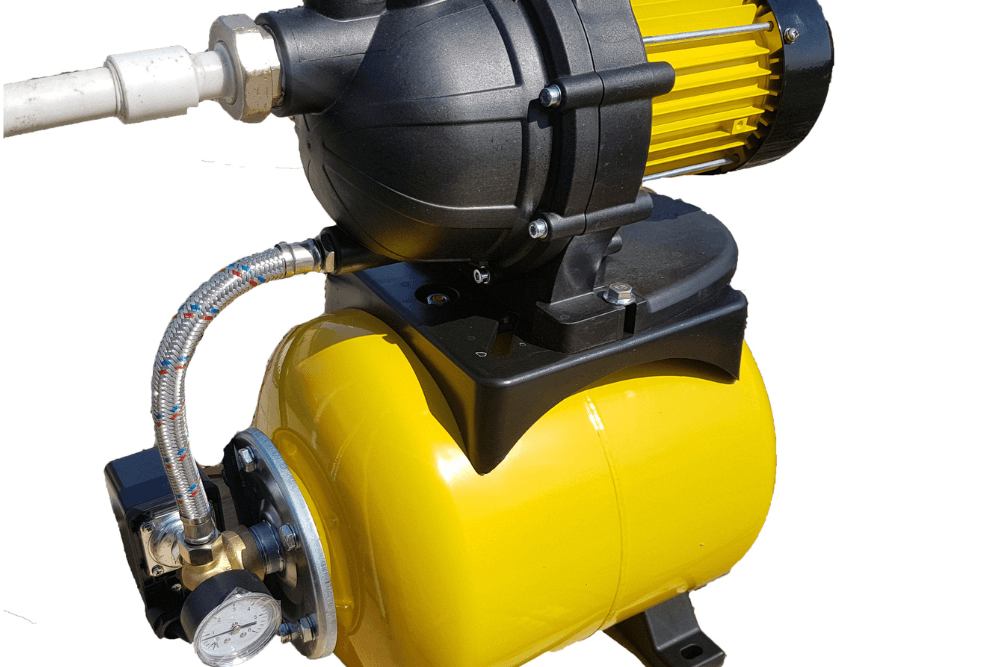
Most descriptions of a booster pump stop at "it increases water pressure," which is true but doesn't explain why yours cuts out at odd moments, or why replacing the motor alone sometimes doesn't fix the fault. Three components do the actual work, and which one has failed determines both the fix and the bill.
The pressure switch is the decision-maker. It watches the pressure in the system and switches the motor on when pressure drops to a set point, the cut-in pressure, and off again once it climbs back to a higher set point, the cut-out pressure. That gap between the two numbers, typically around 1 to 1.5 bar on a residential system, is deliberate. Too narrow, and the pump cycles on and off constantly, wearing out the motor and the switch contacts fast. Too wide, and you feel the pressure sag noticeably before the pump kicks back in.
The pressure tank (or pressure vessel) is what makes that gap survivable day to day. Inside is a rubber bladder or diaphragm holding a cushion of pre-charged air. When a tap opens, the tank supplies the first burst of water from that stored pressure, not the motor. Only once the tank empties down to the cut-in point does the motor actually start. A tank that's lost its air pre-charge, a slow leak through the bladder is a common failure, can't buffer anything, so the motor ends up starting for every single draw, however small. That's usually what's behind a booster pump that seems to be running constantly even though nothing's obviously broken.
The motor and impeller do the mechanical work, spinning the impeller to actually move water and build pressure. This is the expensive part to replace, and also the part most often blamed for a fault that's actually in the switch or the tank. A correct diagnosis checks all three before anyone recommends a motor swap.
What Actually Shortens a Booster Pump's Life in Dubai
A booster pump sold as rated for a certain lifespan is rated under test conditions that don't look much like a Dubai property. Two things specifically change the math here.
Hard water scales the impeller, not just the pipe. Mineral deposits that build up inside pipework do the same thing inside the pump housing, coating the impeller and narrowing its clearances. A scaled impeller has to work harder to move the same volume of water, which means the motor draws more current and runs hotter to deliver the same output. That heat is cumulative damage, not a one-off event.
These pumps run near-continuously, with none of the seasonal rest a similar system gets elsewhere. A booster pump in a climate with a genuine off-season sees demand taper off for months at a time. In Dubai, hot water and general water demand stay high year-round, so the motor accumulates run-hours at a pace closer to a commercial duty cycle than a typical residential one, even on a villa. Motors not specified for that duty cycle wear their bearings and windings faster than the manufacturer's general lifespan estimate assumes.
Neither of these is a defect. It's just what the equipment is actually being asked to do here, which is why a maintenance schedule built for a cooler, lower-demand climate consistently under-serves a Dubai installation.
What Your Symptoms Actually Mean
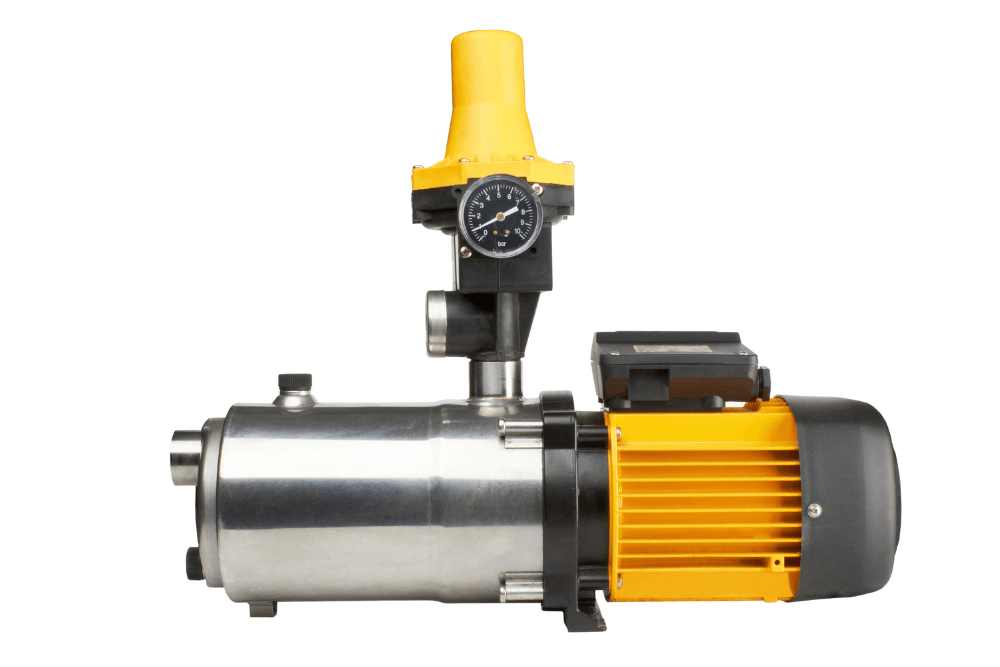
The same complaint, 'my pressure keeps dropping,' can point to three unrelated faults with very different price tags. This is roughly how we narrow it down before naming a number.
| What you're noticing | Likely cause | What that means for the fix |
|---|---|---|
| Pump hums but won't start, or struggles to start | Failed start capacitor, or a seized/stuck impeller | Usually the cheaper fix, a capacitor is a fast, low-cost swap |
| Pressure surges then drops repeatedly, pump cycles rapidly | Waterlogged pressure tank, lost its air pre-charge | Often a re-pressurise or a tank replacement, not a motor issue |
| Pump runs constantly, never seems to switch off | Pressure switch stuck closed, or a system leak keeping pressure low | Requires isolating whether it's the switch or a genuine leak first |
| No water at all, pump silent | Tripped breaker, failed pressure switch contacts, or dry-run cutout tripped | Often resolved without any part replacement |
| Water at low floors fine, weak or absent higher up | Undersized pump for the property's head height, or a partially failed motor | May need a sizing reassessment, not just a repair |
| Loud grinding or knocking noise from the pump | Worn bearings or impeller damage, often after prolonged dry-running | Typically the more expensive repair tier, bearing or motor-level work |
| Pump trips the breaker repeatedly | Motor winding fault or a failing capacitor drawing excess current | Needs proper electrical diagnosis before any part is replaced |
Pump hums but won't start, or struggles to start
- Likely cause
- Failed start capacitor, or a seized/stuck impeller
- What that means for the fix
- Usually the cheaper fix, a capacitor is a fast, low-cost swap
Pressure surges then drops repeatedly, pump cycles rapidly
- Likely cause
- Waterlogged pressure tank, lost its air pre-charge
- What that means for the fix
- Often a re-pressurise or a tank replacement, not a motor issue
Pump runs constantly, never seems to switch off
- Likely cause
- Pressure switch stuck closed, or a system leak keeping pressure low
- What that means for the fix
- Requires isolating whether it's the switch or a genuine leak first
No water at all, pump silent
- Likely cause
- Tripped breaker, failed pressure switch contacts, or dry-run cutout tripped
- What that means for the fix
- Often resolved without any part replacement
Water at low floors fine, weak or absent higher up
- Likely cause
- Undersized pump for the property's head height, or a partially failed motor
- What that means for the fix
- May need a sizing reassessment, not just a repair
Loud grinding or knocking noise from the pump
- Likely cause
- Worn bearings or impeller damage, often after prolonged dry-running
- What that means for the fix
- Typically the more expensive repair tier, bearing or motor-level work
Pump trips the breaker repeatedly
- Likely cause
- Motor winding fault or a failing capacitor drawing excess current
- What that means for the fix
- Needs proper electrical diagnosis before any part is replaced
This table is a starting point, not a self-diagnosis substitute. Several faults produce near-identical symptoms, a stuck pressure switch and a genuine leak can both look like "the pump never turns off," and telling them apart reliably needs a technician checking pressure readings on-site rather than guessing from a description over the phone.
Sizing a Booster Pump Correctly
'We size it for your property' means nothing without the actual numbers behind it. Here's roughly what goes into that calculation.
An undersized pump is the single most common cause of a "new pump that still doesn't work properly" complaint. Getting it right comes down to three numbers.
Head height is the vertical distance the pump has to push water, roughly the property's total floor height plus the vertical run from the tank or supply point. More floors means more head, and more head means the pump loses proportionally more of its rated pressure by the time water reaches the top fixture.
Simultaneous demand is how many fixtures could realistically run at once, not how many exist. A five-bathroom villa where two showers and a washing machine might run together needs sizing for that peak, not for a single tap.
Required flow rate, usually measured in litres per minute, is what actually determines the pump's horsepower rating once head height and simultaneous demand are known.
| Property type | Typical peak demand | General sizing range |
|---|---|---|
| Single villa, 2-3 floors | 4-8 fixtures active at once | Small single-pump unit, typically 0.5-1 HP |
| Larger villa or townhouse, 3+ floors | 8-15 fixtures | Mid-range single pump, 1-1.5 HP, or twin-pump for redundancy |
| Low-rise apartment building, shared supply | Multiple units drawing simultaneously | Multi-pump commercial set with staged control |
| Commercial or mixed-use building | High simultaneous demand, fire-safety considerations | Engineered multi-pump system, sized to a proper demand calculation |
Single villa, 2-3 floors
- Typical peak demand
- 4-8 fixtures active at once
- General sizing range
- Small single-pump unit, typically 0.5-1 HP
Larger villa or townhouse, 3+ floors
- Typical peak demand
- 8-15 fixtures
- General sizing range
- Mid-range single pump, 1-1.5 HP, or twin-pump for redundancy
Low-rise apartment building, shared supply
- Typical peak demand
- Multiple units drawing simultaneously
- General sizing range
- Multi-pump commercial set with staged control
Commercial or mixed-use building
- Typical peak demand
- High simultaneous demand, fire-safety considerations
- General sizing range
- Engineered multi-pump system, sized to a proper demand calculation
These are general starting ranges, not a substitute for an actual on-site assessment. Pipe diameter, supply pressure at the tank, and the specific fixture mix all shift the real number, sometimes significantly.
Repair, Motor Rewind, or Full Replacement?
Three tiers of fix exist for a failing booster pump, and which one makes sense depends on what's actually broken and how old the unit is, not just what's cheapest today.
Component repair, a pressure switch, a capacitor, a tank re-pressurise, is close to always worth doing regardless of the pump's age. These parts fail independently of the motor's condition and cost a fraction of replacement.
Motor rewind or bearing replacement makes sense on a unit under roughly 5 years old with a housing and impeller still in good condition. Beyond that age, a rewind is often chasing a unit that's going to need something else within a year or two anyway, the labour cost of a rewind approaches a meaningful fraction of a new pump, without the fresh warranty.
Full replacement is the right call on an older unit with motor-level failure, or on any system that's been consistently undersized since installation, no repair fixes a pump that was never correctly matched to the property in the first place.
We give you the actual fault and its age-adjusted cost before recommending a tier, not a default upsell to replacement.
How a New Installation Actually Goes
Site assessment and sizing
We measure head height, map simultaneous demand, and check existing pipe diameter and supply pressure before recommending a specific pump.
System design
Single or twin-pump configuration, pressure tank size, and control setup, matched to the property, not a one-size default.
Installation
Pump, tank, and pressure switch fitted and wired, with isolation valves positioned so future servicing doesn't require cutting into pipework again.
Pressure testing and calibration
Cut-in and cut-out points set and verified at every fixture, not just at the pump, top-floor pressure is checked directly.
Handover
A written record of what was installed, its rated specifications, and the maintenance interval it needs.
Booster Pump Pricing in Dubai
Priced by the actual component that's failed, not a flat callout that grows once someone's on-site.
| Service | Typical Cost (AED) |
|---|---|
| Diagnostic visit (waived if you proceed with the repair) | AED 120 - 180 |
| Pressure switch replacement | AED 180 - 350 |
| Capacitor replacement | AED 180 - 320 |
| Pressure tank re-pressurise or replacement | AED 250 - 500 |
| Motor bearing repair | AED 450 - 750 |
| Motor rewind | AED 550 - 900 |
| Single pump replacement (villa, standard sizing) | AED 900 - 2,200 |
| Twin-pump installation, new | AED 1,800 - 3,500 |
| Multi-pump commercial system | Quoted after site assessment |
Diagnostic visit (waived if you proceed with the repair)
- Typical Cost (AED)
- AED 120 - 180
Pressure switch replacement
- Typical Cost (AED)
- AED 180 - 350
Capacitor replacement
- Typical Cost (AED)
- AED 180 - 320
Pressure tank re-pressurise or replacement
- Typical Cost (AED)
- AED 250 - 500
Motor bearing repair
- Typical Cost (AED)
- AED 450 - 750
Motor rewind
- Typical Cost (AED)
- AED 550 - 900
Single pump replacement (villa, standard sizing)
- Typical Cost (AED)
- AED 900 - 2,200
Twin-pump installation, new
- Typical Cost (AED)
- AED 1,800 - 3,500
Multi-pump commercial system
- Typical Cost (AED)
- Quoted after site assessment
The diagnostic visit fee is waived against the repair cost if you proceed, so the diagnosis itself never costs you extra on top of the fix.
*All prices are indicative and depend on pump capacity, brand, and access. We provide a fixed, itemised quote after diagnosis, no work starts without your approval.
Booster Pump Maintenance
Given how much harder these systems work in Dubai's water and demand conditions, a scheduled check catches scale buildup and drifting pressure settings before they become a motor-level failure.
What a service visit covers
- Pressure switch cut-in and cut-out points checked and recalibrated if drifted
- Pressure tank pre-charge tested and topped up
- Impeller and housing inspected for scale buildup
- Motor current draw measured against rated spec, an early warning of internal wear
- Capacitor condition checked
- Electrical connections and wiring inspected
- Written report noting any component approaching end of service life
Recommended interval
| Interval | Applies to |
|---|---|
| Annual | Standard residential systems, normal usage |
| Every 6 months | Older units (5+ years), villas at the end of a long supply run |
| Quarterly | Commercial multi-pump systems, continuous-demand properties |
Annual
- Applies to
- Standard residential systems, normal usage
Every 6 months
- Applies to
- Older units (5+ years), villas at the end of a long supply run
Quarterly
- Applies to
- Commercial multi-pump systems, continuous-demand properties
Why Choose Quick Fix Dubai for Booster Pump Work
Diagnosis before quoting
We identify which of the three failure points, switch, tank, or motor, is actually at fault before naming a price. No default upsell to the most expensive fix.
Component-level electrical diagnostics
Capacitor, winding, and current-draw checks done properly, not a guess based on the pump's age or a generic symptom list.
Sizing based on real numbers
Head height, simultaneous demand, and flow rate calculated for your specific property, not a default unit fitted regardless of fit.
Fixed, itemised pricing
The diagnostic fee is waived against the repair if you proceed. Every quote is itemised and agreed before work starts.
Villas to commercial systems
Single residential units and multi-pump commercial installations, sized and serviced to the standard the property actually needs.
Genuine 24/7 availability
A total loss of water pressure doesn't wait for business hours, and neither do we.
Serving All of Dubai
From single villas to multi-pump commercial systems, we install and service booster pumps across every property type in Dubai.
Booster Pump Repair & Installation FAQ
How much does booster pump repair cost in Dubai?
Why does my booster pump hum but not start?
Why does my booster pump keep cycling on and off?
How do I know if I need a bigger booster pump, not just a repair?
How long does booster pump installation take?
Do you repair Grundfos, Wilo, and other specific pump brands?
Is it worth rewinding a motor, or should I just replace the pump?
How often should a booster pump be serviced in Dubai?
Can a booster pump be installed on an existing water tank system?
What's the difference between a booster pump and a submersible or sump pump?
Do you offer emergency booster pump repair?
Weak Pressure Now Is Cheaper to Fix Than No Pressure Later
A pump showing early warning signs, cycling too often, a faint hum on start-up, is a component-level repair. Left alone, most of those faults eventually take the motor down with them. We diagnose, quote honestly, and fix it, with genuine 24/7 emergency response across Dubai.
Licensed & insured. All areas of Dubai.