Bathroom Renovation in Dubai: Built From the Plumbing Up
A bathroom renovation replaces everything from the pipework and waterproofing to the tiles, sanitaryware, vanity and glass, usually in two to four weeks once permits and materials are ready. We are plumbers who renovate, so the parts behind the tiles that decide how long a bathroom lasts are pressure-tested and flood-tested before anything is covered.
We handle the whole job for apartments and villas across Dubai: design, the building or community permit, supply of every material, demolition, plumbing, electrics, waterproofing, tiling and fit-off, then hand over with a two-year warranty on our workmanship. Just need a leak or a fitting fixed? See our bath and shower repairs instead.
2 years
Workmanship warranty
2–4 wks
Typical time on site
AED 8,000+
From a refresh to a full rebuild
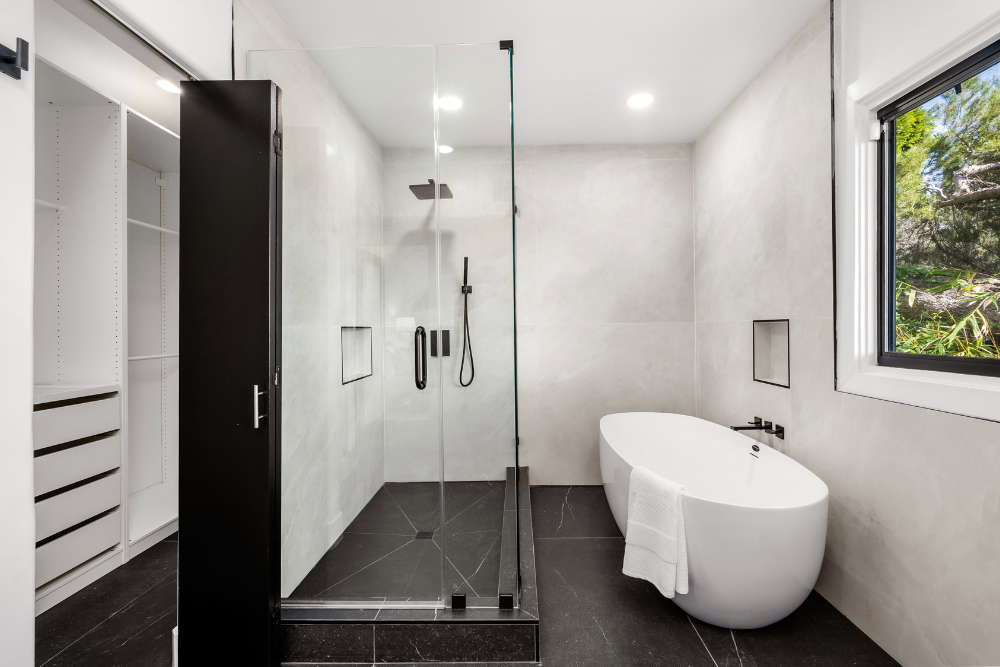
What a Full Bathroom Renovation Includes
A full bathroom renovation strips the room back to its walls and floor slab, then replaces the supply pipework, drainage connections, waterproofing, tiles, sanitaryware, vanity, shower glass, lighting and extract fan. A refresh keeps the tiles and waterproofing and changes fittings only. A layout change moves the WC, shower or basin as well.
| Scope | What changes | Right choice when |
|---|---|---|
| Refresh | New taps, WC, vanity, mirror and accessories; re-grout and reseal; no demolition | Tiles and waterproofing are sound, and the layout works |
| Full renovation, same layout | Strip to walls and slab, new pipework, waterproofing, tiles, sanitaryware, vanity, glass, lighting and extract fan | The bathroom is dated, leaking or has failed grout and silicone throughout |
| Layout change | Everything in a full renovation, plus moving the WC, shower or basin, converting a tub to a walk-in shower, or creating a wet room | The room doesn't work as laid out, or you want a different bathroom, not a newer version of the same one |
Refresh
- What changes
- New taps, WC, vanity, mirror and accessories; re-grout and reseal; no demolition
- Right choice when
- Tiles and waterproofing are sound, and the layout works
Full renovation, same layout
- What changes
- Strip to walls and slab, new pipework, waterproofing, tiles, sanitaryware, vanity, glass, lighting and extract fan
- Right choice when
- The bathroom is dated, leaking or has failed grout and silicone throughout
Layout change
- What changes
- Everything in a full renovation, plus moving the WC, shower or basin, converting a tub to a walk-in shower, or creating a wet room
- Right choice when
- The room doesn't work as laid out, or you want a different bathroom, not a newer version of the same one
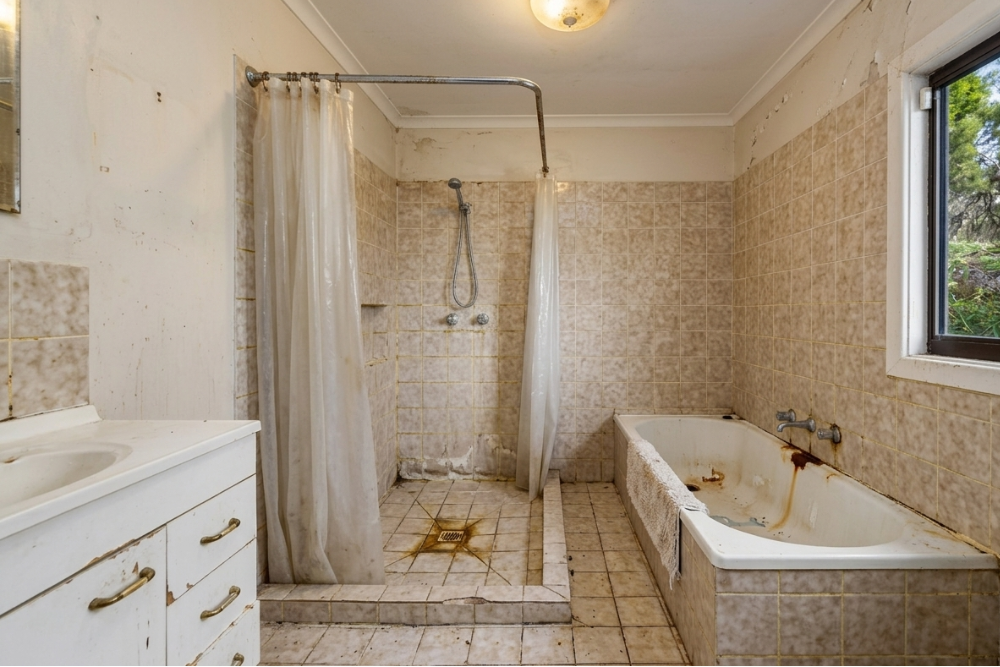
Design and materials
We design the layout with you and supply every material: tiles, sanitaryware, mixers, vanities, glass, lighting and accessories, across budget, mid-range and premium ranges. You choose the finish, and we make sure it suits the plumbing behind it.
Permits and warranty
We prepare and submit the building or community NOC and any authority permit the scope needs. On handover, our workmanship carries a two-year warranty, with the manufacturers' warranties on the products themselves.
Why the Plumbing Decides How Long a Bathroom Lasts
The tiles are what you see, but a bathroom fails behind them: a weeping joint at a concealed mixer, a floor that falls the wrong way, a cistern valve nobody can reach. These are plumbing decisions made in the first week, before a single tile goes up, and they decide whether the bathroom still works in ten years.
Concealed valves set to the finished wall
Concealed shower and bath mixers have a minimum and maximum depth marked on their protective cap. We set each body to the finished tile line the tiler confirms, so trims sit flush and cartridges can be changed later without cutting tiles.
Concealed cisterns you can service
A wall-hung WC frame is fixed to the floor and wall to the manufacturer's instructions, and the cistern's fill valve and isolation valve must be reachable through the flush-plate opening. If they aren't, every future repair means breaking tiles.
Pipework tested before it is covered
New supply lines, usually PPR, are held at 1.5 times working pressure for at least 30 minutes before any wall is closed, with the gauge photographed at the start and end.
Drains that fall the right way
The floor is screeded to a steady fall toward the floor drain or linear drain, typically 1 to 2 percent. The drain is sized for a rain shower's flow. Too little fall leaves puddles; a drain too small for the shower floods the room.
Traps and venting that hold
Every waste has a trap deep enough to keep its water seal when nearby fixtures drain, so the new bathroom doesn't smell of the sewer on its first empty week.
Hot water that keeps up
A large rain shower can empty a small water heater quickly. We check the heater's size, the pipe runs and the pressure before specifying the shower, not after the first cold rinse.
Most renovation companies in Dubai are fit-out firms that bring a plumber in for a day. We are the plumbers, so the pipework is designed with the layout rather than squeezed in around it. The procedure and test figures we work to are set out on our PPR installation during a renovation page.
Opening the walls is also the cheapest moment to deal with old pipes. In a building with ageing copper or galvanised steel, replacing the bathroom's supply while the walls are open costs a fraction of a later leak repair through new tiles. Our bathroom repipe page explains when that makes sense.
Waterproofing and the Flood Test
Waterproofing is a continuous membrane applied to the floor and lower walls of a bathroom, and higher inside the shower, before tiling. It is proven by a flood test: water is held on the finished membrane, commonly for 24 to 48 hours, and checked for any drop in level or any trace below before a single tile is laid.
Tiles and grout are not waterproof. Water gets through grout lines every day, and the membrane underneath is what stops it reaching the slab. In an apartment, a failed membrane shows up in the ceiling of the unit below, often months later and after the new tiles are down. That is why building managements take it seriously, and some ask to be told when the flood test runs and to see the result.
What we check before the flood test starts:
- The membrane runs continuously across the floor and turns up the walls, with reinforcing tape at every internal corner and wall-to-floor joint, where movement cracks start.
- Every pipe that passes through it, at the mixer, the WC and the basin, is sealed with a purpose-made collar, not just painted around.
- The floor drain is fitted with its flange bonded into the membrane, so water on top of the membrane runs into the drain instead of around it.
- The membrane has cured for the time its manufacturer specifies.
A falling water level, or damp showing below or beside the bathroom, means the membrane is repaired and the test runs again. It costs a day. Finding the same fault after tiling costs the tiles. It's also one thing a snagging inspection can't verify on a finished bathroom, so it has to be done right at the time.
Bathroom Renovation Permits and Building Rules in Dubai
Almost every bathroom renovation in a Dubai tower or gated community needs a no-objection certificate (NOC) from building or community management before work starts. Keeping the same layout usually needs only that NOC. Moving drains or water points, or changing walls, can also need a permit from Dubai Municipality, Trakhees or DDA, depending on where the property sits.
| What you're changing | Approval usually needed | Typical time |
|---|---|---|
| Refresh or like-for-like renovation (same layout, same drain and water points) | Building management or community NOC | Commonly 3 to 10 working days once documents are complete |
| Moving the WC, shower or basin; new water or drain points | NOC plus, depending on the building, an authority permit with drawings | Longer; plan for weeks rather than days |
| Removing or building walls, enlarging the bathroom | NOC plus an authority permit through a licensed contractor | The longest route; structural review may apply |
Refresh or like-for-like renovation (same layout, same drain and water points)
- Approval usually needed
- Building management or community NOC
- Typical time
- Commonly 3 to 10 working days once documents are complete
Moving the WC, shower or basin; new water or drain points
- Approval usually needed
- NOC plus, depending on the building, an authority permit with drawings
- Typical time
- Longer; plan for weeks rather than days
Removing or building walls, enlarging the bathroom
- Approval usually needed
- NOC plus an authority permit through a licensed contractor
- Typical time
- The longest route; structural review may apply
Which authority applies depends on the area, not the property type. Most mainland communities fall under Dubai Municipality, while some free zones and developer areas run their own processes. Gated villa communities usually want the master developer's NOC first, and the authority permit, where one is needed, follows it. We identify the route at the site visit, prepare the drawings and documents, and submit the applications.
The NOC usually comes with house rules for the work itself:
- Noisy work, such as demolition and chasing, limited to set hours and days
- Service lift booked in advance, with lift and corridor protection
- Debris bagged and removed the same day, not left in common areas
- A refundable security deposit held against damage to common areas
- Contractor documents: trade licence, insurance and a method statement
These rules shape the timeline as much as the work does. A tower that allows demolition only four hours a day turns a one-day strip-out into two. We plan the sequence around the building's rules from the start, rather than finding them out on day one.
Apartment vs. Villa Bathroom Renovations
Apartment bathrooms are shaped by what they share with the building: a soil stack in a fixed position, a thin floor build-up and a neighbour below. Villa bathrooms have more freedom but more to open up, especially on the ground floor, where drains run under the slab.
Apartments
- The WC connects to a shared stack in a fixed riser. It can move only as far as its drain can still fall toward that stack, often less than people hope.
- The floor build-up is thin, which limits how far a floor drain can move and whether a level-entry shower is possible without a small step.
- Waterproofing protects the unit below as much as your own, which is why the flood test matters most here.
- Building rules and lift access set the pace of the job.
Villas
- Upper-floor bathrooms drain through the ceiling void below, so moving fixtures is more flexible, but the ceiling below is opened for the work.
- Ground-floor drains run under the slab. Moving them means breaking and re-casting part of the floor.
- Bigger bathrooms tempt bigger showers. Rain heads and body jets need the water heater and pressure to match.
- Older villas often still run copper supply lines. The bathroom renovation is the natural time to replace them.
Tub-to-Shower Conversions and Walk-In Showers
Converting a bathtub into a walk-in shower is the most requested bathroom change in Dubai apartments. It means removing the tub, reworking the drain for a shower's flow, waterproofing the whole shower zone, and fitting a tiled floor or tray with glass. It typically costs AED 12,000 to 25,000, depending on size, tiles and glass.
The drain decides the result. A bath waste is sized for a tub that empties slowly. A shower drain has to keep up with a shower running at full flow. So we check the existing drain's size and position before promising a flush floor. Where the build-up allows, a linear drain along the wall gives a level entry with one fall across the whole floor. Where it doesn't, a low-profile tray is the better answer.
The glass is measured only after tiling, because tile thickness changes the openings, so expect it a few days after the tiling finishes. And think about resale before removing the only bath in the home. Families with young children often look for one, so in a two-bathroom apartment many owners convert the ensuite and keep the bath in the second bathroom.
Small Bathrooms and Accessible Bathrooms
Small bathrooms gain the most from wall-hung fittings, concealed cisterns, recessed niches and large-format tiles. Accessible bathrooms need a level-entry shower, grab rails fixed into solid backing, a thermostatic mixer to prevent scalds, and slip-resistant floor tiles. Both are decided at the design stage, before the walls close.
Making a small bathroom work
- A wall-hung WC with a concealed cistern frees floor space and makes cleaning easier. Our concealed cistern repair page shows why service access matters later, and our concealed cistern installation page covers frames and fitting.
- A wall-hung vanity keeps the floor visible, and the room reads larger.
- A recessed niche in the shower replaces a caddy, set between studs or blockwork courses at the design stage.
- A fixed glass panel instead of a door removes the swing space a door needs.
- Large-format tiles mean fewer grout lines to clean, as long as the floor is flat enough and the falls are designed for them.
Designing for older or less mobile users
- A level-entry shower with no step, and a linear drain to carry the water away.
- Grab rails beside the WC and in the shower, fixed into solid backing built into the wall before tiling. A rail on plain gypsum won't hold a person's weight.
- A thermostatic mixer that limits the maximum temperature and steadies it.
- A comfort-height WC, lever taps and a fold-down shower seat.
- Slip-resistant floor tiles, and good lighting at the entrance and in the shower.
Many people in Dubai call this a toilet renovation. Whatever you call it, the same planning applies to a guest toilet as to a master ensuite, just at a smaller scale.
Materials That Last in a Dubai Bathroom
In a Dubai bathroom, the materials that fail first are the ones that meet water every day: shower grout, the vanity carcass, and cheap mixers in hard water. Porcelain floor tiles with a slip-resistant finish, epoxy grout in the shower, a moisture-resistant vanity and brass-bodied mixers add little to the total and outlast the alternatives by years.
| Element | What we recommend | What fails early |
|---|---|---|
| Floor tiles | Porcelain with a slip-resistant finish for wet areas | Polished tiles on a shower floor; soft ceramic on floors |
| Grout in the shower | Epoxy grout, which resists stains, mould and water | Standard cement grout in a shower that is used daily |
| Movement joints and junctions | Sanitary-grade silicone with fungicide at wall-floor and wall-wall corners | Grout packed into corners, where it cracks as the building moves |
| Vanity carcass | Moisture-resistant board, PVC or aluminium, sealed at every cut edge | Standard MDF or chipboard, which swells at the first leak |
| Mixers and valves | Solid brass bodies from a brand with cartridges available in the UAE | Unbranded fittings with no spare parts, or bodies that aren't brass |
| Extract fan | A fan ducted to the building's exhaust or outside, sized for the room | A fan venting into the false ceiling, where the damp stays |
Floor tiles
- What we recommend
- Porcelain with a slip-resistant finish for wet areas
- What fails early
- Polished tiles on a shower floor; soft ceramic on floors
Grout in the shower
- What we recommend
- Epoxy grout, which resists stains, mould and water
- What fails early
- Standard cement grout in a shower that is used daily
Movement joints and junctions
- What we recommend
- Sanitary-grade silicone with fungicide at wall-floor and wall-wall corners
- What fails early
- Grout packed into corners, where it cracks as the building moves
Vanity carcass
- What we recommend
- Moisture-resistant board, PVC or aluminium, sealed at every cut edge
- What fails early
- Standard MDF or chipboard, which swells at the first leak
Mixers and valves
- What we recommend
- Solid brass bodies from a brand with cartridges available in the UAE
- What fails early
- Unbranded fittings with no spare parts, or bodies that aren't brass
Extract fan
- What we recommend
- A fan ducted to the building's exhaust or outside, sized for the room
- What fails early
- A fan venting into the false ceiling, where the damp stays
Dubai's hard water shortens the life of every mixer and shower head it passes through. Scale builds up in aerators, thermostatic cartridges and rain heads, so a valve that feels smooth on handover can stiffen within a year or two in some buildings. Choosing a brand whose cartridges you can buy locally matters more than the finish. Where the scale is heavy, a water softener protects the new fittings as well as the rest of the home.
Because we supply the materials, we can match every choice to the plumbing behind it: a concealed valve that suits the wall depth, a WC frame that suits the stack position, a shower drain sized for the head you've picked. Mismatches like these are how a good-looking bathroom ends up with problems nobody can see.
Seven Renovation Mistakes That Show Up After Handover
The bathroom renovation faults that cost the most are invisible on handover day and appear weeks or months later: a mixer set too deep, a cistern nobody can reach, a niche that holds water, a floor that falls the wrong way. Each takes minutes to get right during the work, and days of broken tiles to put right afterwards.
Mistake 1
Concealed mixer set at the wrong depth
The trim plate won't sit flush, or the cartridge can't be removed later without cutting the tiles around it.
Mistake 2
No service access to the concealed cistern
A flush plate fitted where the internals can't come out means every fill-valve repair breaks tiles.
Mistake 3
Shower niche sill laid flat
Water sits on the sill instead of running back into the shower, and the grout below it fails first.
Mistake 4
Floor falls toward the door
Water collects against the threshold and the edge of the waterproofing every time the shower runs.
Mistake 5
Glass fitted without proper seals
Water escapes along the bottom of the screen and soaks the floor outside the shower zone.
Mistake 6
Extract fan venting into the ceiling void
The moisture stays in the building fabric, and mould appears on the ceiling within months.
Mistake 7
Grab rails or heavy fittings on plain gypsum
Without solid backing built in before tiling, rails and wall-hung fittings work loose.
If you're living with one of these from an earlier renovation, not every fix needs a new bathroom. A mis-set valve or a cistern without access can often be corrected locally, and our bath and shower repair team can tell you whether a repair or a renovation makes more sense.
Our Bathroom Renovation Process and Timeline
A standard bathroom renovation takes two to four weeks on site, after about one to two weeks for design, quoting and the building NOC. The stages run in a fixed order: demolition, plumbing and electrics, screed and waterproofing, flood test, tiling, then fit-off. The waterproofing cure and flood test are the stages that shouldn't be rushed.
- 1
Site visit and design
We measure the bathroom, check the stack, drain and supply positions, and agree the layout, finishes and materials with you.
- 2
Fixed quote and permits
You receive an itemised quote. We then prepare and submit the building or community NOC, and any authority permit the scope needs.
- 3
Order materials
Tiles, sanitaryware, mixers and vanity are ordered so they arrive before they're needed; imported or custom items take longer.
- 4
Protect and demolish
Corridors, lifts and adjoining rooms are protected, then the bathroom is stripped to walls and slab and debris is removed under the building's rules.
- 5
Plumbing and electrical rough-in
New supply and drainage are installed, concealed valves are set to the finished wall line, and supply pipework is pressure-tested before closing.
- 6
Screed, waterproof and flood test
The floor is screeded to fall, the membrane is applied and cured, and a flood test proves it before tiling.
- 7
Tiling
Walls and floor are tiled, with niches, trims and movement joints; grout and silicone go in last.
- 8
Fit-off and glass
Sanitaryware, mixers, vanity, mirror, lighting and extract fan are fitted, and the shower glass is measured after tiling and installed.
- 9
Snag and handover
Every fitting is tested for flow, drainage and leaks, snags are closed, and you receive the warranty and product documents.
How long each stage takes
Typical durations for a standard bathroom. Imported or made-to-order tiles and fittings can add one to three weeks if they aren't ordered at the design stage.
| Stage | Typical time | Notes |
|---|---|---|
| Design, quote and NOC | About 1–2 weeks | The NOC runs while materials are ordered; authority permits take longer |
| Demolition | 1–2 days | Longer where the building limits noisy hours |
| Plumbing and electrical rough-in, pressure test | 2–3 days | |
| Screed, waterproofing, cure, flood test | 3–4 days | Curing and the 24–48 hour flood test can't be rushed |
| Tiling | 4–7 days | Depends on tile size, pattern and niches |
| Fit-off, glass, snag and handover | 3–5 days | Glass is made to measure after tiling |
Design, quote and NOC
- Typical time
- About 1–2 weeks
- Notes
- The NOC runs while materials are ordered; authority permits take longer
Demolition
- Typical time
- 1–2 days
- Notes
- Longer where the building limits noisy hours
Plumbing and electrical rough-in, pressure test
- Typical time
- 2–3 days
- Notes
Screed, waterproofing, cure, flood test
- Typical time
- 3–4 days
- Notes
- Curing and the 24–48 hour flood test can't be rushed
Tiling
- Typical time
- 4–7 days
- Notes
- Depends on tile size, pattern and niches
Fit-off, glass, snag and handover
- Typical time
- 3–5 days
- Notes
- Glass is made to measure after tiling
Bathroom Renovation Prices in Dubai
Bathroom renovation in Dubai costs from about AED 8,000 for a refresh to AED 30,000 to 55,000 for a full renovation of a standard bathroom, and AED 55,000 to 80,000 or more for premium finishes or a layout change. Size, tile and sanitaryware choices, and whether fixtures move, decide where a bathroom falls in each range.
| Scope | Typical price |
|---|---|
| Refresh (no demolition: fixtures, vanity, re-grout, accessories) | AED 8,000 - 18,000 |
| Full renovation, small or guest bathroom, same layout | AED 18,000 - 30,000 |
| Full renovation, standard or master bathroom | AED 30,000 - 55,000 |
| Premium or layout change (moving WC or shower, wet room, freestanding bath) | AED 55,000 - 80,000+ |
| Tub-to-shower conversion | AED 12,000 - 25,000 |
Refresh (no demolition: fixtures, vanity, re-grout, accessories)
- Typical price
- AED 8,000 - 18,000
Full renovation, small or guest bathroom, same layout
- Typical price
- AED 18,000 - 30,000
Full renovation, standard or master bathroom
- Typical price
- AED 30,000 - 55,000
Premium or layout change (moving WC or shower, wet room, freestanding bath)
- Typical price
- AED 55,000 - 80,000+
Tub-to-shower conversion
- Typical price
- AED 12,000 - 25,000
For a line-by-line breakdown, with a fully costed example bathroom, tile quantities, hidden costs and VAT, read our bathroom renovation cost guide.
Included in a full renovation
Design, NOC and permit applications, protection, demolition and debris removal, new plumbing and pressure test, electrical works, screed, waterproofing and flood test, tiling, supply and fitting of the agreed materials, glass, snagging, and the two-year workmanship warranty.
What moves the price most
Tile and sanitaryware ranges, moving fixtures, a wet room or level-entry shower, bespoke vanities, frameless glass, and in villas, work under the slab. Authority and building fees vary by community and are confirmed in the quote.
Comparing renovation quotes: 8 questions to ask
Two quotes with the same total can describe very different bathrooms. Put the same questions to every contractor:
- Is a new waterproofing membrane itemised, and is a flood test included before tiling?
- Are the new supply pipes pressure-tested before the walls close, and will I get the record?
- Which brands and ranges are the tile and sanitaryware allowances based on?
- Does the price include demolition, debris removal and protection of common areas?
- Who prepares and submits the NOC and any authority permit?
- Are the electrical works in the bathroom done by a licensed electrician?
- Is the shower glass included, and what type and thickness?
- What does the warranty cover, for how long, and what is excluded?
The first two questions matter most, because they cover the parts you will never see again. For hidden leaks in an existing bathroom before you decide how far to go, our residential leak detection can tell you what you're starting with.
Bathroom Renovation FAQ
How much does a bathroom renovation cost in Dubai?
How long does a bathroom renovation take in Dubai?
Do I need a permit to renovate my bathroom in Dubai?
Can I stay in my apartment during a bathroom renovation?
What is a flood test?
Can the toilet be moved in an apartment bathroom?
Do you supply the tiles and sanitaryware?
Is there a warranty on the renovation?
Is it worth replacing the pipes during a bathroom renovation?
Can you convert my bathtub into a walk-in shower?
A Bathroom That Looks New and Stays Dry
Tell us your community, whether it's an apartment or villa, and what you want to change. We'll visit, measure, design the layout with you and send a fixed, itemised quote, with the permit route explained.
Where We Renovate Bathrooms in Dubai
We renovate bathrooms in apartments and villas across Dubai, from tower units where the building's rules set the pace to villa ensuites where the drains run under the slab. These area pages carry local plumbing notes: