Low Water Pressure Dubai
Weak shower, a tap that used to fill a glass in seconds and now takes ten, water that's fine downstairs but barely a trickle on the top floor, low pressure has at least six genuinely different causes, and a booster pump is only one of them.
This page helps you work out which one you've actually got, a clogged aerator, a valve, a leak, a building-side issue, or a pump fault, before anyone quotes you for a fix you might not need. Pressure too high instead, with banging pipes or burst hoses? See our pressure reducing valve (PRV) page.
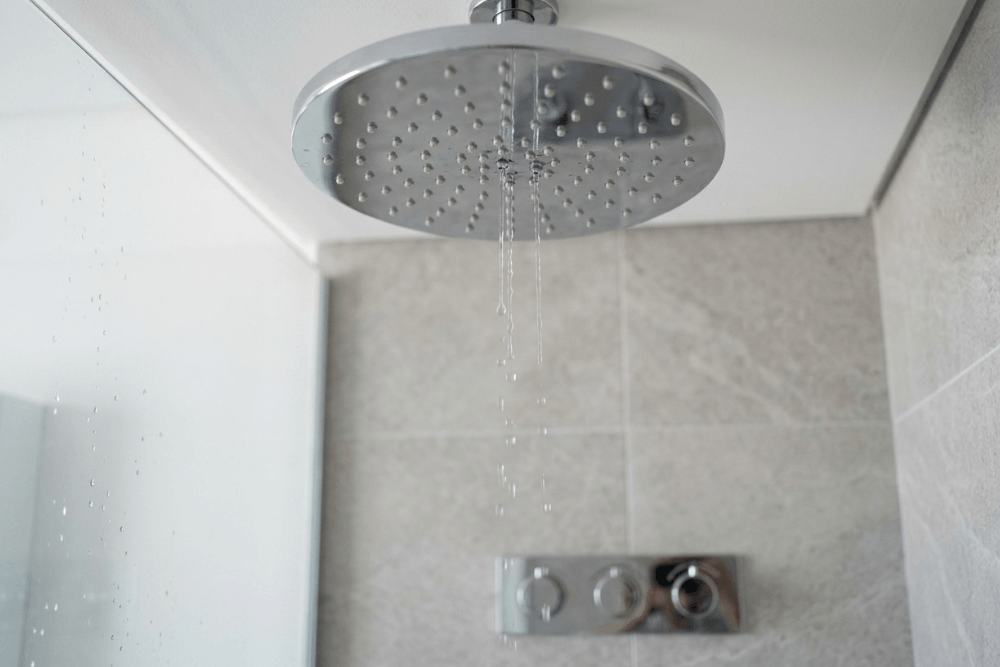
Whole House, or Just One Fixture?
Four quick observations, all free and safe to check yourself, narrow the likely cause dramatically before you need to call anyone.
Test more than one fixture
Run the kitchen tap, a bathroom tap, and a shower separately. Weak at just one? That's almost always local to that fixture, an aerator or showerhead, not a system-wide fault. Weak everywhere? The cause is further upstream.
Check hot and cold separately
If only hot water is weak while cold runs fine, the restriction is likely inside the water heater itself (sediment buildup) or its inlet valve, not the main supply.
Check upstairs vs downstairs
Fine on the ground floor but weak upstairs points toward a pump or sizing issue overcoming gravity and height, common in villas and multi-story apartments alike.
Note when it started
Right after tank cleaning, a pipe repair, or a water outage points toward a trapped air pocket. Gradual over weeks points toward scale buildup. Sudden with no obvious trigger points toward a valve, a new leak, or a building-side change.
What's Actually Causing It
Roughly in the order we see them, though which one applies to you depends heavily on the pattern from the self-diagnostic above.
Clogged aerator or showerhead
Dubai's hard water leaves limescale inside the fine mesh of a tap aerator or showerhead, restricting flow at that single point regardless of what's happening in the rest of the system. The single most common cause of localized low pressure, and the cheapest to fix.
Scale buildup inside the pipes
The same mineral content that clogs an aerator deposits gradually along the inside of supply pipes over years, narrowing the usable diameter. This affects the whole property rather than one fixture, and gets worse slowly rather than appearing overnight.
A valve that isn't fully open
The main shutoff valve, or a valve at the water meter, sometimes isn't turned fully open, whether from recent work on the system or simply never having been opened all the way. A five-minute check rules this out before anything more involved.
A leak stealing pressure
Water escaping anywhere in the system before it reaches your tap reduces what arrives. A leak significant enough to affect pressure noticeably is usually also visible as a damp patch, a sound of running water, or an unexplained DEWA bill increase.
A trapped air pocket (airlock)
After a water tank is cleaned, a pipe is repaired, or the supply is interrupted and restored, air can get trapped in a high point of the pipework. This shows up as sputtering, inconsistent flow, or a tap that seems to have no pressure at all until it suddenly clears. Usually resolves on its own within a day or two; if it doesn't, it needs releasing manually at the right point in the system.
A booster pump fault or undersizing (villas)
Villas typically rely on a booster pump to bring pressure up from a ground or rooftop tank. A failing capacitor, a waterlogged pressure tank, or a pump simply undersized for the property's height and fixture count all show up as weak pressure, usually worse at higher floors. Covered in full detail, including real repair pricing, on our booster pump page.
A shared building riser issue (apartments)
In towers, pressure is fed through a shared vertical riser serving multiple units. A partial blockage or fault in that shared line hits upper floors hardest and often affects more than one apartment at similar times, which is the tell that it's a building issue rather than something specific to your unit.
A DEWA supply-side fluctuation
Occasionally the drop originates outside the property altogether, in the municipal supply itself. If neighbours on the same line are reporting the same issue at the same time, that's worth ruling in before assuming it's your plumbing.
Quick Diagnosis by Symptom
| What you're seeing | Most likely cause |
|---|---|
| Weak at one tap or shower only, fine elsewhere | Clogged aerator or showerhead |
| Weak everywhere, gradual decline over weeks or months | Scale buildup narrowing pipes |
| Weak everywhere, started suddenly | Partially closed or faulty valve, or a new leak |
| Weak since right after tank cleaning or pipe work | Trapped air pocket (airlock) |
| Fine downstairs, weak upstairs (villa) | Booster pump fault or undersizing |
| Weak in an apartment, especially top floors, multiple units affected | Building shared riser issue |
| Weak with no obvious trigger, whole neighbourhood affected | DEWA supply-side fluctuation |
Weak at one tap or shower only, fine elsewhere
- Most likely cause
- Clogged aerator or showerhead
Weak everywhere, gradual decline over weeks or months
- Most likely cause
- Scale buildup narrowing pipes
Weak everywhere, started suddenly
- Most likely cause
- Partially closed or faulty valve, or a new leak
Weak since right after tank cleaning or pipe work
- Most likely cause
- Trapped air pocket (airlock)
Fine downstairs, weak upstairs (villa)
- Most likely cause
- Booster pump fault or undersizing
Weak in an apartment, especially top floors, multiple units affected
- Most likely cause
- Building shared riser issue
Weak with no obvious trigger, whole neighbourhood affected
- Most likely cause
- DEWA supply-side fluctuation
A Cause That's Rarely Explained: A Bad PPR Weld
Most Dubai apartments and newer villas run on PPR pipe, welded rather than screwed together, and a poorly made weld can restrict flow from the day it was installed.
PPR pipe is joined by heating the pipe end and fitting together until they fuse into a single piece. Done correctly, the joint is as wide open as the rest of the pipe. Done with too much heat or the pipe pushed too far into the fitting, melted material can bead up inside the joint and partially obstruct the bore, narrowing that one exact point permanently.
This is different from scale buildup in one important way: it doesn't develop gradually, it's been restricting flow since the day that joint was made. If a property has had consistently weaker pressure than it should since it was built or renovated, rather than a pressure that's declined over time, a bad weld at some point in the run is worth considering, and it's something a camera inspection or a section-by-section pressure test can locate. For what a correctly made joint looks like, see our PPR pipe installation page.
Why the Likely Cause Depends on Where You Live
These are structurally different pressure systems, which means the same symptom points toward different causes depending on which one you have.
Villa
Most villas rely on a ground or rooftop water tank feeding a booster pump, which is what actually generates usable pressure at the taps rather than relying on mains pressure alone. This means a villa's low pressure problem is very often the pump itself, its capacitor, pressure tank, or sizing relative to the property's height and fixture count. It also means a villa can develop low pressure even with perfectly clear pipes, if the pump is the weak link.
Apartment
Apartments are typically fed pressure directly through the building's own supply system and shared vertical risers, rather than each unit having its own pump. This shifts the likely causes toward local fixture issues (your problem alone) or shared building issues (a riser fault affecting your floor or several units), and away from anything pump-related inside your own unit, since most apartments simply don't have one.
What to Do Based on What You Found
Once the self-diagnostic and causes above point toward a likely source, here's where to go next.
How We Diagnose It
Five steps to confirm the actual cause before recommending any fix, not a default assumption based on property type alone.
Pattern check
We confirm what you've already noticed, single fixture or whole property, hot only or both, gradual or sudden, since this alone rules out most causes before any tool comes out.
Pressure test at multiple points
Readings taken at the meter, at an early fixture, and at the affected fixture isolate whether the loss happens before or after it enters the property.
Valve & visible pipework check
Confirming the main valve and any accessible isolation valves are fully open, and a visual check of accessible pipework for obvious corrosion or damage.
Pump or riser check, if relevant
For villas, the booster pump and pressure tank are checked. For apartments with a suspected shared issue, we help document it clearly for building management.
Honest next step
Where the fix is within scope, a fixed price before work starts. Where it's a building or DEWA-side issue, we say so directly rather than quoting for work that won't resolve it.
Low Water Pressure Diagnosis Across Dubai
Villa booster pump systems and apartment building-fed systems, diagnosed the same honest way across every Dubai community.
Low Water Pressure FAQ
Why is my water pressure suddenly low?
Is low water pressure always a booster pump problem?
How do I know if it's just one fixture or the whole house?
My pressure has been weak since I moved in, not something that got worse over time. What does that mean?
Can a water tank cleaning cause low pressure afterward?
Why is my pressure fine downstairs but weak upstairs?
Multiple apartments in my building have low pressure at the same time. Is this my problem to fix?
Can a leak cause low water pressure without any visible sign?
Do you fix low water pressure, or just diagnose it?
Is it worth buying a pressure gauge to check myself?
Confirmed it's a pump issue? Booster pump repair & installation has full diagnosis and pricing. Suspect a leak instead? Leak detection is the page you want.
Still Not Sure What's Causing It?
Describe the pattern, which fixtures, hot or cold, when it started, and we'll tell you honestly what it's likely to be before booking anything.
Fixed price before any work starts, whichever fix it turns out to be.
Licensed & insured. All areas of Dubai.