Commercial Water Leak Detection Dubai
Water leaks in commercial buildings are a different problem from residential leaks, not just in scale, but in consequence. A concealed pipe fault in an office block can affect multiple tenants simultaneously. A leak inside a hotel floor ceiling affects guest rooms, triggers insurance claims, and forces operational shutdowns.
We handle everything from single-office investigations to multi-floor building-wide surveys, using acoustic, electronic, and thermal detection methods to locate faults with minimum disruption, working around business hours with full written documentation for every job.
3
Detection methods per survey
9
Commercial property types
24/7
Emergency response
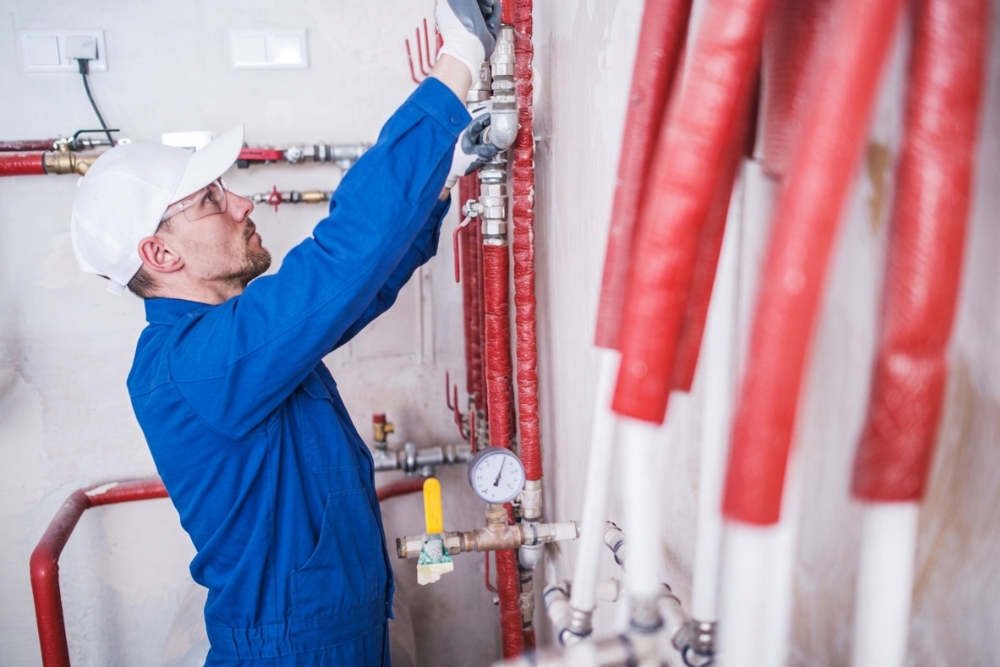
Why Commercial Leak Detection Requires a Specialist Approach
Commercial buildings in Dubai are substantially more complex than residential properties in terms of their water systems. A typical multi-floor office building has separate hot and cold supply risers, multiple plant rooms, extensive horizontal distribution across each floor, numerous commercial-grade fixtures and appliances, and in many cases a cooling tower or chiller system that introduces additional pipework and water management requirements.
The other complicating factor is access. In occupied office buildings, you can't lift an entire floor of carpet tiles to trace a pipe run. In a hotel, you can't open twenty guest room ceilings to find a leaking joint in a horizontal supply run. Our commercial surveys identify the fault location precisely using non-invasive methods before any access work begins.
Documentation is also a commercial-specific requirement. Facilities managers, building owners, and insurance adjusters all need written evidence of what was found, how it was detected, and what the repair involves. We produce a full written survey report for every commercial detection job as standard.
An unexplained rise in building water consumption
Ceiling stains appearing in tenant or common areas
Water staining on basement or service corridor ceilings
Damp patches on fire-rated walls or columns
A drop in system water pressure across a floor
Musty odour in enclosed service areas
A lift shaft or riser cupboard showing moisture
Types of Commercial Properties We Survey
Common Sources of Commercial Water Leaks
Flat Roof Membrane Failures
One of the leading sources of water ingress in Dubai buildings. Intense UV radiation, thermal cycling, and the physical stresses of HVAC equipment mounted on the roof mean membrane systems deteriorate faster here than in most markets. Electronic leak detection identifies the precise entry point, avoiding costly wholesale membrane replacement.
Riser Pipe Joints
Vertical supply risers connecting floor-by-floor distribution networks have joints at each floor connection that are a common failure point: under continuous pressure, subject to vibration, and typically concealed inside riser shafts with no routine inspection access. Acoustic survey equipment detects the pressure loss signature without requiring the shaft to be opened.
Horizontal Distribution Pipe Runs
Supply lines running horizontally through floor slabs or ceiling voids are a persistent source of commercial leaks. A single joint failure in a concealed run can saturate the slab above and produce ceiling staining on the floor below. Both acoustic and thermal methods are effective here.
Cooling Tower and Chiller Connections
Commercial buildings using chiller systems have extensive water-carrying pipework connecting plant room equipment to cooling towers, fan coil units, and air handling units. These systems are complex, often under significant pressure, with joints and flexible connections that deteriorate over time.
Plant Room Equipment
Water heaters, pressurisation units, booster pumps, and storage tanks in relatively confined spaces where maintenance access is limited. Joints and connections here are under continuous operational stress and are common sources of slow leaks that go unnoticed until damage appears outside the plant room.
Documentation Built for Commercial Use
A verbal 'found it, here's the fix' doesn't satisfy an insurance adjuster or a facilities audit. Every commercial survey produces documentation that actually holds up.
Insurance-ready format
Reports structured the way insurance adjusters actually need them, confirmed cause, confirmed location, supporting evidence, not a summary that gets sent back for more detail.
Facilities management standard
Findings logged in a format that slots directly into a building's maintenance records, with enough detail that a future technician doesn't have to start from zero.
Thermal and acoustic evidence included
Scan images and readings are part of the report itself, not just referenced verbally, giving anyone reviewing it the actual data behind the conclusion.
Useful for a DEWA billing dispute
A confirmed leak location and repair date gives you documentation to reference if you're querying an unusually high water bill with DEWA, evidence the elevated consumption had a specific cause that's since been resolved.
Delivered same day
The written report is provided before the technician leaves the site in most cases, not sent days later once you've already had to make decisions without it.
One-Time Survey vs. Continuous Monitoring
Most commercial leak detection is a one-time diagnostic survey responding to a specific problem. For properties with a repeated leak history or particularly high consequences from water damage, continuous monitoring is worth a conversation too.
A diagnostic survey, what this page primarily covers, answers a specific question: where is the leak that's already causing a problem. It's the right approach for a confirmed issue, a ceiling stain, an unexplained consumption spike, a reported odour.
Continuous monitoring is a different proposition: sensors installed at known risk points, plant rooms, riser connections, areas with previous leak history, that flag a problem the moment it starts rather than waiting for symptoms to become visible. For a property with a genuine repeat-leak history, or where water damage consequences are severe enough to justify the investment, ongoing monitoring catches the next issue before it reaches the ceiling stain stage at all.
If this is relevant to your property, it's worth a direct conversation about what's practical for your specific building rather than a generic recommendation. We can discuss options during any commercial survey visit.
How We Carry Out Commercial Leak Detection
Large commercial jobs follow a structured five-stage process that minimises disruption to building operations while maximising survey accuracy.
Initial briefing
The survey begins with a briefing with the facilities manager or building representative, covering symptoms reported, previous repair attempts, the building's water system layout, and access constraints. Understanding the building before the survey begins significantly increases efficiency.
Meter and pressure analysis
Building water meter readings and system pressure data are checked before any detection equipment is deployed. Identifying the rate of water loss and which system is affected narrows the survey scope considerably.
Zoned survey
Large commercial buildings are surveyed in zones, working systematically from the most likely source areas identified in the briefing. Acoustic, electronic, and thermal methods are applied as appropriate for each zone.
Non-invasive location
The fault location is confirmed using detection equipment before any structural access is requested. In most cases, the leak location can be confirmed without any access work, allowing repairs to be scheduled in a planned maintenance window.
Written report
A full survey report covers the detection methods used, confirmed fault location, extent of moisture spread, and recommended repair approach, suitable for insurance purposes, contractor briefings, and facilities management records.
Commercial Leak Detection Cost
Commercial survey pricing varies significantly based on building size, number of systems surveyed, and access requirements. Full quotations are provided in writing before any work begins.
| Service | Typical Dubai Price Range |
|---|---|
| Single-floor commercial detection survey | AED 600 - 1,200 |
| Multi-floor building survey | AED 1,200 - 4,000 |
| Flat roof electronic membrane survey | AED 800 - 2,500 |
| Riser pipe acoustic survey | AED 500 - 1,500 |
| Plant room survey and report | AED 400 - 900 |
| Full written survey report (insurance standard) | Included |
Single-floor commercial detection survey
- Typical Dubai Price Range
- AED 600 - 1,200
Multi-floor building survey
- Typical Dubai Price Range
- AED 1,200 - 4,000
Flat roof electronic membrane survey
- Typical Dubai Price Range
- AED 800 - 2,500
Riser pipe acoustic survey
- Typical Dubai Price Range
- AED 500 - 1,500
Plant room survey and report
- Typical Dubai Price Range
- AED 400 - 900
Full written survey report (insurance standard)
- Typical Dubai Price Range
- Included
Benefits of Commercial Leak Detection
No disruption to tenants
Fault location confirmed before any structural opening; surveys can be scheduled out-of-hours to avoid impact on tenants and building operations.
Multi-floor coverage
A multi-method approach handles complex multi-floor buildings that single-method surveys can't address, including riser pipes, ceiling voids, and roof areas.
Insurance-ready reports
Written survey reports support insurance claims, maintenance records, and repair contractor briefings with documented evidence of fault location and moisture extent.
Prevent cascade damage
Early detection prevents a single pipe joint from becoming widespread structural remediation across multiple floors.
Accurate means cheaper repairs
Accurate fault location reduces repair costs by limiting the scope of structural access required. No speculative demolition.
Planned maintenance windows
Non-invasive detection means repair work can be scheduled for planned maintenance windows without emergency disruption to operations.
Why Facilities Managers Choose Quick Fix Dubai
From single-floor office suites to multi-floor mixed-use developments and large industrial facilities, we work across Dubai's commercial and business districts.
Out-of-hours availability
Commercial surveys can be scheduled for evenings and weekends to avoid any disruption to tenant operations or building management schedules.
Multi-method capability
We carry acoustic, electronic, thermal, and tracer gas equipment to every commercial job, so the right method is used for each situation encountered.
Insurance-grade documentation
Survey reports are prepared to a standard that satisfies insurance adjusters, building owners, and facilities management audit requirements.
Full-service from detection to repair
We handle commercial repairs as well as detection, no need to coordinate a second contractor once the leak is found.
Experience across property types
Hotels, offices, data centres, retail, healthcare, industrial: the full range of commercial property types across Dubai covered with equal expertise.
24/7 emergency response
For active water damage situations in commercial buildings, we provide genuine around-the-clock emergency response.
Commercial Leak Detection Across Dubai
Offices, hotels, retail, healthcare, and industrial properties across every business district in Dubai.
Commercial Leak Detection FAQ
Can you carry out surveys in occupied commercial buildings?
We have water staining on a ceiling but can't identify where it's coming from. Can you help?
How do you handle large commercial buildings with multiple water systems?
What documentation do you provide for insurance purposes?
Can you detect leaks in a building without access to all floors?
How do you coordinate with facilities management teams for ongoing scheduled maintenance?
What's the difference between a commercial detection survey and a residential one?
Can a commercial leak detection report be used directly for an insurance claim?
How quickly is the written report delivered after a commercial survey?
Do you provide ongoing scheduled leak detection for commercial portfolios with multiple properties?
Can a commercial leak detection report be used to dispute an unusually high DEWA bill?
Is continuous leak monitoring different from a one-time detection survey?
Accurate, Documented, Minimal Disruption
A commercial water leak that isn't found and documented creates ongoing damage, rising insurance exposure, and potential tenant disputes. We provide the accurate fault location and the written evidence commercial property management requires.
Licensed & insured. All areas of Dubai.