A gurgling toilet or sink means air is being pulled backward through a drain trap because the plumbing vent system can't supply air fast enough to replace the water leaving through another fixture. It is not random, and it is not the drain "clearing its throat." It's a specific, diagnosable mechanical problem with a specific fix, and this guide covers exactly how to tell which version you have and what actually resolves it.
!Quick answer
If the fixture drains at normal speed, the vent system is the problem (a blocked roof vent in a villa, a shared building stack in an apartment, or a failed AAV). If it also drains slowly, there's a partial blockage in the line adding resistance, and that needs clearing first. The full diagnostic test is below.
What That Gurgle Actually Means
A gurgling sound is trapped air escaping backward through standing water in a drain trap. Every sink, toilet, and shower has a P-trap holding a small amount of water that blocks sewer gas from entering the room. When a large volume of water drains quickly elsewhere in the system, most often a toilet flush, it needs an equal volume of air to replace it somewhere in the pipe network, or the whole system fights itself on pressure. That air normally comes in through a vent pipe, usually a stack that runs up through the roof. If the vent can't supply air fast enough, either because it's blocked, undersized, or there's a partial clog forcing water through faster than air can equalize around it, the system pulls air from the next-easiest source instead: back up through a nearby trap, bubbling through the standing water on its way, which is the gurgling sound you hear.
This means a gurgle is always telling you one of two things: either your vent system isn't supplying air properly, or there's a partial blockage somewhere downstream creating enough resistance to force air backward. The test below tells you which.
The 30-Second Test: Drains Fine or Drains Slow?
If the fixture drains at normal speed and only gurgles, the problem is the vent, not a blockage. If it drains slowly and gurgles, there's a partial blockage in the line as well, and that needs clearing before a vent fix will fully resolve the noise.
Run this test on the gurgling fixture directly: fill the sink or tub partway, pull the plug, and time how fast it empties while listening. A full-speed drain with just a bubbling sound at the end means air resistance in the vent system is the whole story. A drain that empties noticeably slower than it used to, on top of the gurgle, means there's also a partial blockage adding resistance to the line, and that blockage is very likely what's disrupting the airflow in the first place.
| What you observe | What it means |
|---|---|
| Fixture drains at normal speed, gurgles briefly | Vent-air issue only |
| Fixture drains slowly and gurgles | Partial blockage, likely also affecting the vent path |
| Fixture doesn't drain at all | Full blockage, this is a different problem, not covered here |
One Fixture Gurgles vs. the Whole House
A gurgle in a single fixture points to a local trap or branch-vent problem; gurgling across multiple fixtures at once points to a main line or main vent stack issue. If only one sink gurgles, and only when a specific other fixture drains (commonly the toilet), the two fixtures likely share a branch drain line with a vent point somewhere between them that isn't equalizing pressure fast enough. This is usually the narrower, cheaper problem to fix, often a partial blockage right at that shared branch rather than anything systemic.
If multiple fixtures across the property gurgle, especially ones that don't obviously share a line, the issue is more likely at the main vent stack or the main drain line itself, and it's worth treating as a whole-system problem rather than chasing it fixture by fixture. Flush every toilet in the property one at a time and listen at each sink while you do it; which fixtures react and which stay silent narrows down whether you're dealing with one branch or the whole system.
Common Gurgling Patterns and What Each One Means
The exact trigger for a gurgle, what's running when it happens, narrows down the cause faster than the sound itself does. Match your situation against the table below.
| Pattern | Most likely cause |
|---|---|
| Sink gurgles only when the toilet is flushed, drains fine otherwise | Shared branch line, vent-air issue between the two fixtures |
| Toilet gurgles on its own flush, no other fixture involved | Partial blockage or vent restriction close to the toilet |
| Gurgling happens when the washing machine drains | The washing machine's discharge often shares a line with a nearby sink or floor drain; same vent-air mechanism, different trigger |
| Gurgling starts or worsens after heavy rain | Less common in Dubai than a blocked vent, but possible in properties on combined or surface drainage; should resolve once rain passes |
| Gurgling with no obvious trigger, happens randomly | Often points to a marginal vent restriction that gets tipped over by whatever fixture happens to be used at the time |
| Gurgling only in a specific season or after the property sits empty for a while | A dried-out trap is a common co-factor; the returning water re-triggers gurgling as air readjusts through freshly wetted traps |
| Gurgling paired with a sewage smell | Points toward a more significant vent or main-line issue rather than a minor restriction |
| Gurgling in a villa on septic, every fixture around the same time | Check the septic tank itself before anything indoors |
One pattern worth a specific mention: a bathroom or fixture that's had a dry P-trap, the same mechanism that causes drain flies, can gurgle noticeably for the first few uses after the property comes back into regular use, simply because the system is re-establishing normal water seals across every trap at once. If gurgling settles down within a day or two of a property being reoccupied after a vacant stretch, this is the likely explanation rather than a new fault.
Drain Flies in Your Dubai Home
The same dry-trap mechanism, different symptom. Worth a read if this pattern applies to you.
Sewage Smell in Your House (Dubai)
If gurgling is paired with a sewage odor, this covers that combination in more depth.
Is Gurgling the Same Thing as a Slow Drain or a Clog?
No. Gurgling is an air-pressure symptom; a slow drain or clog is a water-flow symptom, and a fixture can have either one without the other. A drain can gurgle while still draining at completely normal speed, which means the water flow itself isn't restricted, only the air equalization is. Equally, a drain can be slow or fully clogged without ever gurgling, if the water simply can't get through fast enough to create the pressure differential that causes air to bubble backward through a trap in the first place.
When both are present together, gurgling and slow drainage, that combination specifically indicates a partial blockage, since a good vent system can usually keep pace with even a fast-draining fixture, but a partial blockage restricts water flow and disrupts air pressure at the same time. This is why the 30-second test above is the single most useful diagnostic step in this whole guide: it separates a pure air-pressure issue (vent-only, often the cheaper fix) from a combined flow-and-pressure issue (blockage, needs clearing before the noise stops).
Villas vs. Apartments: Can You Even Check the Vent?
A villa owner can typically inspect their own roof vent directly; an apartment resident cannot, since the vent stack is shared building infrastructure. In a villa, the vent pipe usually terminates on the roof as a small vertical pipe, and a blocked vent, leaves, dust buildup, a bird's nest, or construction debris left behind after handover, is something you or a plumber can physically inspect and clear directly. This is worth checking first in a villa, since it's often the fastest, cheapest fix available.
In an apartment, the vent stack runs through the building and terminates on the roof of the whole structure, not your unit, which means you cannot access or inspect it yourself under any circumstances. If your apartment gurgles, the practical options are narrower: confirm with the 30-second test above whether it's a local branch issue inside your own unit, which a plumber can address without touching shared infrastructure, or a main-stack issue, in which case it needs raising with building management as a shared-system problem. If more than one unit on your line reports gurgling around the same time, that's a strong signal it's the shared stack, not anything specific to your unit.
!What happens if you ignore gurgling
Gurgling that's left unaddressed tends to progress, not stay static, because the restriction or vent obstruction causing it typically worsens with continued use rather than resolving on its own. The same accumulating debris in a roof vent, or the same slowly narrowing partial blockage, keeps building until the symptom changes: drainage starts slowing down, a sewage smell develops, or the fixture eventually backs up outright.
A Quick Word on AAVs
An AAV, air admittance valve, is a one-way mechanical valve used instead of a full vent pipe run to the roof, and a failed or undersized AAV is a common, often-overlooked cause of gurgling in modern Dubai builds. Running a full vent pipe to the roof from every fixture isn't always practical in a modern layout, a kitchen island sink, an under-stair powder room, or a bathroom added during a renovation often can't reach a roof vent economically. An AAV solves this: it opens to let air in when negative pressure pulls on it, then closes to seal against sewer gas the rest of the time, all without a physical connection to the outside. It's a legitimate, code-recognized solution, not a shortcut, but it is a mechanical part that can fail or stick, and an undersized AAV on a fixture with heavier-than-expected drainage, like a kitchen sink handling both a tap and a dishwasher, is a specific, checkable cause of persistent gurgling that a full-vent system wouldn't have.
If your gurgling fixture is in a part of the property that clearly wasn't built with a traditional roof-vent run, a kitchen island, an under-stair bathroom, a converted space, checking for an AAV under the sink or in the cabinet below is worth doing before assuming the problem is a distant blockage.
Gurgling that starts in a property less than a year or two old, or shortly after a renovation, can point to an installation error rather than gradual buildup, since there's been no time for scale or debris to accumulate to the degree usually needed to cause the symptom. Dubai's fast-paced development cycle means vent systems occasionally get value-engineered or altered mid-construction without every downstream implication being fully worked through, an AAV substituted for a planned vent run without accounting for that fixture's actual drainage load, or a branch line re-routed during a late design change in a way that leaves an awkward, under-vented section. This is worth raising directly with the developer or contractor if gurgling shows up early and doesn't match any of the gradual-buildup patterns described elsewhere in this guide, since it may be covered under a snagging or defects-liability period rather than being a maintenance cost you should be absorbing yourself.
Is It a Blockage, Not a Vent Problem?
If the 30-second test showed slow drainage alongside the gurgle, a partial blockage is adding resistance to the line, most commonly grease, soap scum, or mineral scale narrowing the pipe's interior. Dubai's water is moderately hard to hard, DEWA remineralizes it after desalination specifically to protect the pipe network, which means genuine mineral content, not soft water, and mineral scale builds up inside drain lines over years the same way it does inside a water heater or storage tank. That buildup narrows the effective diameter of the pipe, and a narrower pipe both drains slower and creates more resistance for air trying to equalize past it during a flush, which is exactly the combination that produces a gurgle with slow drainage rather than a clean gurgle alone.
A kitchen line specifically, if grease and food residue are regularly going down it, builds this kind of restriction faster than almost any other fixture in the property. If the gurgling fixture is a kitchen sink and drainage has been getting gradually slower for weeks before the gurgling started, grease buildup narrowing the branch line is the most likely explanation, and the fix is the same mechanical clean covered in our guide to drain flies, since drain flies and gurgling from grease buildup often share the exact same root cause inside the pipe. Clearing it is a hydro-jet drain cleaning job, not a chemical one.
Villa on Septic? One More Thing to Check
A septic tank or soakaway that isn't pumped and maintained on schedule can back gas and pressure up into the property's drainage system, producing gurgling that no amount of vent or trap work inside the house will resolve. If your villa connects to an on-site septic tank rather than the DEWA sewer network, and every fixture in the house has started gurgling around the same time with no obvious blockage pattern, the tank itself is worth ruling out before spending more on indoor plumbing work. A septic system nearing capacity or overdue for pumping creates backpressure that travels upstream into the house's own vent and drain system, and it presents almost identically to a main-stack vent problem from inside the property, the difference only becomes clear once someone actually checks the tank.
DIY Fixes That Actually Work (and the Ones That Don't)
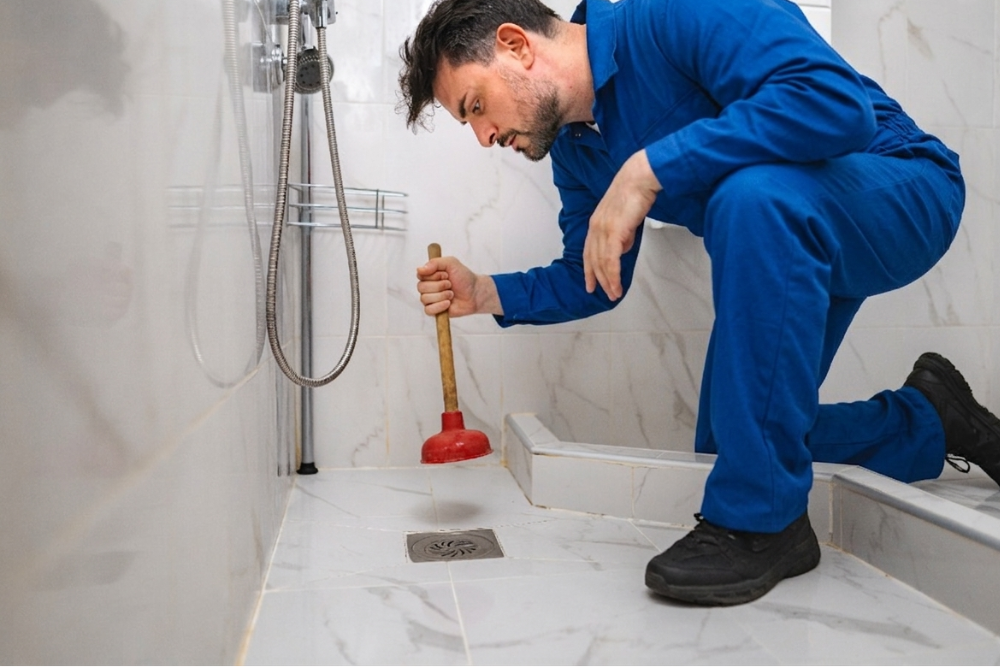
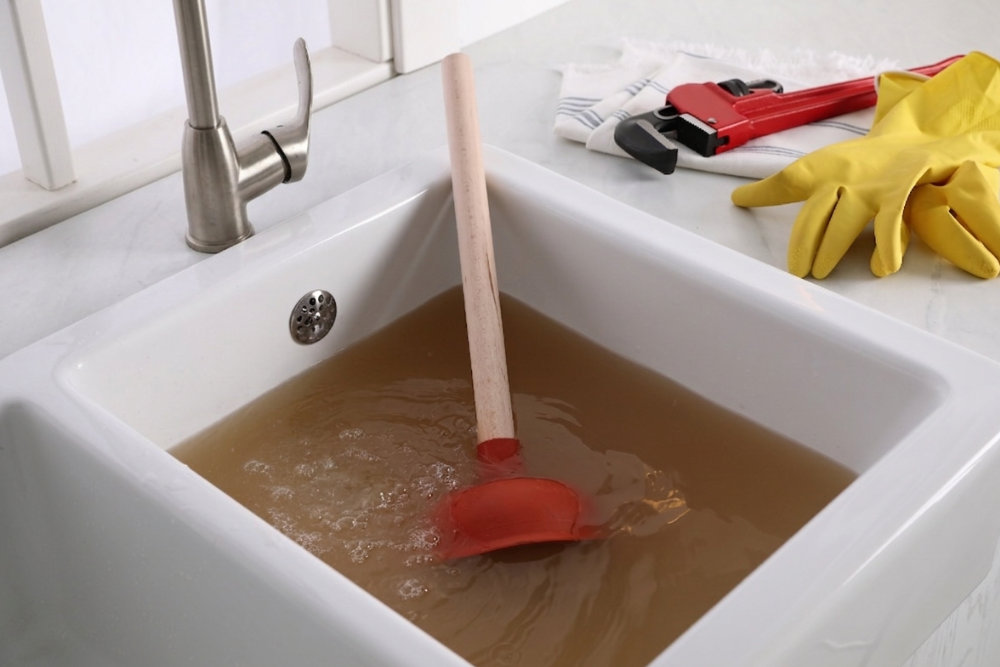
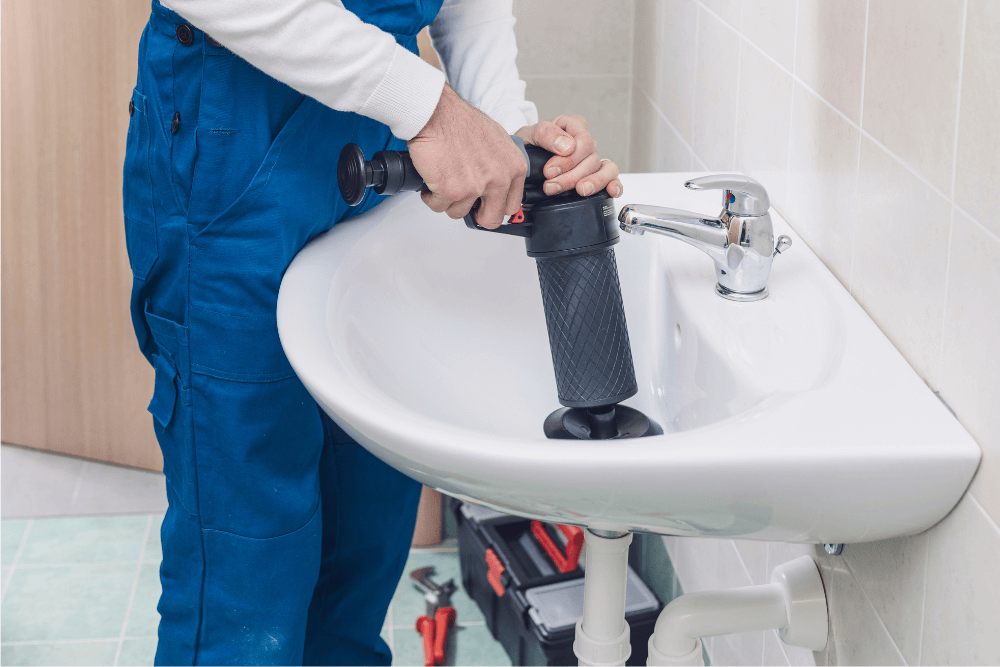
A plunger and a check for an obviously blocked roof vent are the two DIY steps worth trying; pouring chemicals down the drain is not, since it doesn't address a vent problem at all and rarely clears the kind of partial blockage that causes gurgling.
| Method | Addresses a vent problem? | Addresses a partial blockage? | Verdict |
|---|---|---|---|
| Plunger on the gurgling fixture | No | Sometimes, for a light blockage near the trap | Worth trying first if drainage is also slow; won't help a pure vent-air issue |
| Clearing visible debris from a villa's own roof vent | Yes, if that's the cause | No | Genuinely useful, low cost, and something you can check yourself in a villa |
| Baking soda and vinegar | No | Minimal, mostly cosmetic fizzing | Not a real fix for either cause |
| Pouring chemical drain cleaner down the drain | No | Sometimes, for light organic buildup near the surface | Doesn't reach mineral scale or a vent-related cause; not the first thing to reach for |
| Boiling water | No | Minimal, surface-level only | Helps marginally, doesn't fix the underlying restriction |
| Running water in every drain to test | Diagnostic only | Diagnostic only | Doesn't fix anything itself, but the single-fixture-vs-whole-house test is genuinely the most useful DIY step you can take |
When to Call a Plumber, Not Just Plunge
Call a plumber rather than continuing to plunge if gurgling affects more than one fixture, keeps returning after plunging, is accompanied by a sewage smell, or is happening in an apartment where the cause may be shared building infrastructure you can't access. A single-fixture gurgle that drains normally and responds to plunging is a reasonable DIY case. Anything beyond that, multiple fixtures, recurring gurgling after you've already cleared it once, a smell alongside the sound, or a location you genuinely cannot inspect yourself, is worth a professional visit rather than repeating the same DIY step and hoping for a different result.
What Professional Diagnosis Involves
A plumber diagnosing gurgling typically starts with a camera inspection to locate the exact point of restriction or vent failure, then clears it with hydro-jetting if it's a blockage, or repairs/clears the vent directly if that's the cause. Camera inspection matters here specifically because gurgling can originate from a point well inside the wall or slab that's impossible to guess accurately from the symptom alone, sending a camera down the line from the nearest cleanout confirms exactly where the restriction or vent issue is before any work starts, which avoids paying to clear or open the wrong section.
For a suspected vent problem specifically, rather than a blockage, a smoke test is the equivalent diagnostic: non-toxic smoke is introduced into the drain system through a cleanout, and any point where it escapes, a cracked vent pipe, a disconnected joint, a failed seal around an AAV, is visible immediately, either as smoke escaping outdoors or as a smell indoors at the failure point. This is a faster, less invasive first step than a full camera survey when the symptom pattern, gurgling with normal drainage, no blockage indicators, already points toward the vent rather than the line itself.
| Situation | What's typically involved | Relative scope |
|---|---|---|
| Single fixture, drains fine, confirmed vent-only issue | Vent inspection and clearing (villa) or camera-confirmed branch check (apartment) | Lowest |
| Single fixture, drains slow, partial blockage confirmed | Camera inspection plus targeted jetting of the affected branch | Moderate |
| Multiple fixtures gurgling, main line suspected | Full camera survey of the main line plus jetting | Higher, priced by scope once confirmed |
| Villa on septic, tank suspected | Septic tank inspection first, before any indoor drain work | Separate scope |
Getting a fixed price confirmed after the camera inspection, once the actual cause and location are known, rather than before, is the reliable way to avoid paying for work that turns out not to address the real source.
Drain Line Camera Inspection
The diagnostic step that confirms whether gurgling is a vent issue or a blockage before any work starts.
Hydro-Jet Drain Cleaning & Unblocking
The mechanical fix once a partial blockage is confirmed as the cause.
Frequently Asked Questions
Why does my toilet gurgle when I flush it?
Why does my sink gurgle when the toilet flushes, but the sink drains fine on its own?
Is a gurgling toilet or sink dangerous?
My drain gurgles but never actually backs up or smells. Do I still need to fix it?
Can heavy rain cause gurgling drains?
Why does my kitchen sink gurgle specifically, more than my other drains?
I have a septic tank and my toilet started gurgling. Is that related?
Will plunging fix a gurgling toilet permanently?
Can I check my own roof vent for blockages?
Why did my apartment's gurgling start suddenly with no change in how I use the plumbing?
What's the difference between a gurgling drain and one that's fully blocked?
Does a new AAV installation ever fail quickly, or is this usually an older-property problem?
Why does my drain gurgle when the AC condensate line drains?
Can a gurgling toilet fix itself over time without any repair?
Is a noise from the toilet tank itself the same as bowl gurgling?
Who's responsible for fixing a shared vent stack in a rented Dubai apartment, the tenant or the landlord?
Related Service
Drain Cleaning
Dealing with this issue right now? See real pricing and how we handle it.
View Drain Cleaning