Sink and Washbasin Plumbing in Dubai: Under-Sink Leaks, Traps and Installation
Water under a sink comes from one of five places: the supply hoses and valves, the drain basket seal, the trap joints, the overflow seal, or splash running over the worktop edge. A few simple tests tell you which, and most of these leaks are fixed for AED 150 to 350 without replacing the sink.
We repair and replace sink and washbasin plumbing in kitchens and bathrooms: traps, pop-up wastes, overflows and waste pipes, and we supply and fit new basins and kitchen sinks. If the sink is blocked rather than leaking, our drain cleaning service clears it.
5 sources
Of every under-sink leak
AED 150+
Most leak and trap fixes
32 / 40 mm
Basin and kitchen waste sizes
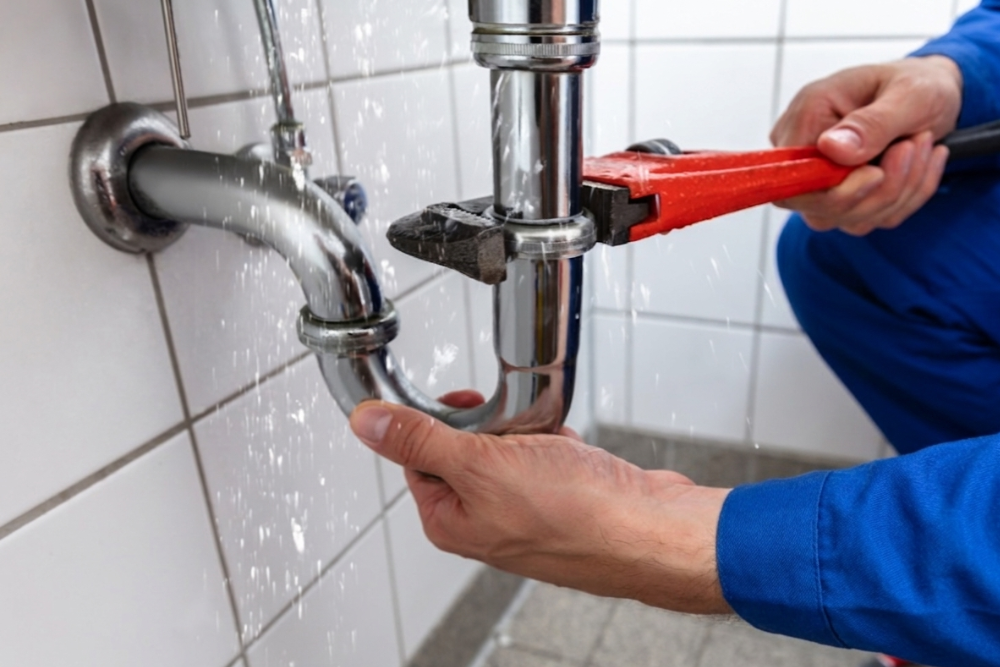
Find the Leak Under Your Sink: Five Simple Tests
Every leak under a sink comes from the supply, the drain basket, the trap joints, the overflow, or splash over the worktop. Each only shows up under certain conditions, which is why a leak can seem to come and go. Running these five tests in order, with dry paper towels wrapped around each joint, tells you exactly where it is.
- 1
Test 1: nothing running
Dry every joint with a paper towel and wait ten minutes with no tap on. A drip now is on the supply side: a flexible hose, a hose connection or an angle valve, which are under pressure all the time.
- 2
Test 2: tap running into an open drain
Run the tap for a minute with the plug out. A drip that starts now is at the drain basket seal or the trap joints, under light flow.
- 3
Test 3: a full basin released
Fill the basin, then pull the plug. The rush of water tests every waste and trap joint at full flow, and finds leaks that a running tap misses.
- 4
Test 4: basin filled to the overflow
Fill slowly until water enters the overflow slot. A drip that only appears now is at the overflow seal on the waste, or at a cracked overflow channel.
- 5
Test 5: splash on the worktop
Pour a little water around the tap base and along the back edge. If it appears in the cabinet, water is getting through failed silicone or the tap hole, not any pipe.
The paper towel matters because water runs along pipes before it drips. A drop falling from the bottom of the trap may have started at the drain basket 20 centimetres higher. A towel wrapped around each joint shows the first wet one.
A leak in Test 1 means the supply side, and it won't stop on its own, because those parts are under pressure day and night. Close the angle valves under the sink until it's fixed. Flexible hoses and angle valves are covered in detail on our tap and mixer repair page. Leaks in Tests 2 to 4 are on the drain side and only happen while water runs, so a bowl under the trap is a fair temporary fix. A leak in Test 5 is a sealing job, not plumbing: the silicone around the sink or the seal under the tap has failed.
Sink Traps: P, Bottle, S and Flexible, and Why Each Fails
Every sink has a trap that holds water to block sewer air. P-traps and bottle traps are the right choice for most Dubai sinks. S-traps, which run down into the floor, can siphon themselves dry and smell. Corrugated flexible traps sag and collect grease and hair in their ribs. Knowing which you have explains most leaks, smells and slow drains.
| Trap | What it looks like | Where you find it | Why it fails |
|---|---|---|---|
| P-trap | A U-bend with a horizontal outlet into the wall | Most kitchen sinks and many basins | Loose slip-nut washers; a trap forced to an angle it wasn't made for |
| Bottle trap | A compact cylinder with a removable base, usually chrome | Bathroom vanities and wall basins, where it's on show | Sediment in the bottom cup; a perished O-ring on the base |
| S-trap | A U-bend with its outlet going down into the floor | Older installations | Siphons its own water seal, so it gurgles and smells |
| Corrugated flexible trap | A ribbed plastic hose shaped into a bend | Quick fixes and some kitchen installations | Sags and collects grease and hair in the ribs; cracks with age |
P-trap
- What it looks like
- A U-bend with a horizontal outlet into the wall
- Where you find it
- Most kitchen sinks and many basins
- Why it fails
- Loose slip-nut washers; a trap forced to an angle it wasn't made for
Bottle trap
- What it looks like
- A compact cylinder with a removable base, usually chrome
- Where you find it
- Bathroom vanities and wall basins, where it's on show
- Why it fails
- Sediment in the bottom cup; a perished O-ring on the base
S-trap
- What it looks like
- A U-bend with its outlet going down into the floor
- Where you find it
- Older installations
- Why it fails
- Siphons its own water seal, so it gurgles and smells
Corrugated flexible trap
- What it looks like
- A ribbed plastic hose shaped into a bend
- Where you find it
- Quick fixes and some kitchen installations
- Why it fails
- Sags and collects grease and hair in the ribs; cracks with age
Bottle traps are the neat chrome cylinders under most bathroom vanities and wall basins in Dubai. Their base unscrews, which makes them easy to clean, and hair and soap sediment collect there. Unscrew the base over a bowl every few months and check its O-ring as you refit it. A perished ring is the usual cause of a slow drip from the bottom of a bottle trap.
S-traps are worth replacing when you can. Water rushing down the vertical outlet pulls the trap's own water seal after it, a gurgle you can hear, and the empty trap lets the drain smell come through. Converting to a P-trap needs an outlet in the wall rather than the floor, so it's straightforward in some bathrooms and part of a bigger job in others.
Corrugated flexible traps are sold as an easy fit for awkward positions. The ribs that let them bend are exactly where grease and hair stick, and the low point of the sag holds sludge. In a kitchen, a rigid trap in the right size is the lasting fix.
Size matters too. Bathroom basins normally use a 32 mm (1¼-inch) waste and trap, and kitchen sinks a 40 mm (1½-inch) one. A basin trap fitted to a kitchen sink is undersized, blocks easily, and is a common find under Dubai kitchen sinks.
Pop-Up Wastes and Overflows: Getting the Match Right
A basin with an overflow needs a slotted waste, which has side openings that let overflow water into the drain. A basin without an overflow, such as most vessel and countertop basins, needs an unslotted waste. Fitting the wrong one either leaks overflow water into the cabinet or leaves a basin that can't hold water. It's the most common mistake with a replacement pop-up.
Click-clack wastes
Press the plug to close it, press again to open. Simple and common on modern basins. When one sticks or won't seal, the spring mechanism or the seal on the plug has worn or scaled. The plug can often be replaced on its own, without changing the whole waste.
Lever pop-up wastes
A lever behind the tap lifts the plug through a rod under the basin. When the plug won't rise or seal, the linkage under the basin has usually slipped or the rod has come loose, which is an adjustment rather than a replacement.
The overflow itself is a channel moulded into the basin, running from the slot near the rim down to the waste. On a slotted waste, a seal where the waste meets the basin keeps that channel's water inside the drain. When the seal fails, the basin only leaks when it's full enough to reach the overflow, which is why Test 4 above finds it and the others don't.
When replacing a waste, bed it on the basin with the seals supplied, tighten the backnut firmly but not so hard that the ceramic cracks, and test to the overflow before the trap goes back on.
Why a Sink or Basin Smells
A basin that smells usually has slime in its overflow channel, sediment in a bottle trap, a trap that has dried out, or an unsealed gap where the waste pipe enters the wall. The overflow is the one people miss: it's a hidden channel inside the basin that rarely sees clean water, so it grows a film that smells even when the trap is perfect.
| What you notice | Likely cause | Fix |
|---|---|---|
| Smell from the overflow slot | Slime inside the basin's overflow channel | Flush the overflow with hot water and a narrow bottle brush |
| Smell in a guest WC or unused bathroom | Trap water evaporated | Run the tap for a minute weekly |
| Smell from a vanity cabinet | Sediment in the bottle trap, or an unsealed pipe entry at the wall | Clean the trap; seal the pipe entry with a proper wall seal |
| Gurgling as the basin empties, then a smell | S-trap siphoning its own seal, or poor venting | Convert to a P-trap; check venting |
| Kitchen sink smells of food | Grease and food film in the trap and waste | Clean the trap; stop fat going down the sink |
Smell from the overflow slot
- Likely cause
- Slime inside the basin's overflow channel
- Fix
- Flush the overflow with hot water and a narrow bottle brush
Smell in a guest WC or unused bathroom
- Likely cause
- Trap water evaporated
- Fix
- Run the tap for a minute weekly
Smell from a vanity cabinet
- Likely cause
- Sediment in the bottle trap, or an unsealed pipe entry at the wall
- Fix
- Clean the trap; seal the pipe entry with a proper wall seal
Gurgling as the basin empties, then a smell
- Likely cause
- S-trap siphoning its own seal, or poor venting
- Fix
- Convert to a P-trap; check venting
Kitchen sink smells of food
- Likely cause
- Grease and food film in the trap and waste
- Fix
- Clean the trap; stop fat going down the sink
The wall seal is worth checking in any vanity. The waste pipe runs from the trap into a socket in the wall, and that joint should be sealed with a rubber collar or compression seal. When it isn't, the gap around the pipe is an open path from the drain, and the smell collects inside the cabinet where it's easy to blame on the trap.
If floor drains or showers in the same room smell too, the problem is wider than the basin. Our shower drain repair page covers floor drains and missing trap cups, and our guide to sewage smells in Dubai homes covers venting and building-side causes.
Kitchen Sink Plumbing: Double Bowls, Appliances and Filters
Kitchen sinks carry more under the worktop than basins: a trap sized for 40 mm waste, often a second bowl sharing one outlet, a dishwasher or washing machine hose connected to the trap, and sometimes a reverse osmosis filter's drain line. Each connection is a potential leak and a potential blockage, so the layout under the sink matters.
Double bowls usually drain through a combined waste kit into one trap. The linking pipe between the bowls is a common leak point, often because it was cut slightly short and pulled into place, which strains the joints.
Dishwasher and washing machine hoses connect to a spigot on the trap or waste. The drain hose should rise in a high loop under the worktop before it drops to the spigot. Without the loop, dirty sink water can run back into the machine. Our dishwasher and washing machine installation page covers the appliance side.
RO filter drain lines clamp onto the waste pipe with a small saddle fitting above the trap. A saddle below the trap, or one that has shifted, can let the waste line smell or leak.
Grease is the kitchen sink's long-term problem. Cooking fat goes down liquid and sets as it cools, coating the trap and waste pipe and catching food behind it. Wipe pans before washing them and keep fat out of the sink. When the line is already narrowing, our drain cleaning team clears it.
Replacing a Sink or Washbasin
Replacing a sink or basin means choosing one that fits the cut-out, tap position and waste, fitting the tap and waste to it before it goes in, sealing it to the worktop, and connecting new traps and hoses. It is also the right moment to replace seized angle valves, which are common under sinks in Dubai properties more than a few years old.
| Basin type | How it's fitted | Worth knowing |
|---|---|---|
| Inset (top-mount) | Drops into a cut-out; the rim sits on the worktop | Simplest to fit and replace |
| Undermount | Fixed beneath a stone worktop | Clean edge; bonded and supported while the adhesive cures |
| Vessel (countertop) | Sits on the worktop | Needs a tall or wall-mounted tap and usually an unslotted waste |
| Semi-recessed | Partly set into the worktop, partly overhanging | Saves depth in narrow bathrooms |
| Pedestal | Wall-fixed basin with a pedestal hiding the trap | Classic look; the basin, not the pedestal, carries the weight |
| Wall-hung | Fixed to the wall with nothing below | Open floor; needs a solid wall or a support frame |
Inset (top-mount)
- How it's fitted
- Drops into a cut-out; the rim sits on the worktop
- Worth knowing
- Simplest to fit and replace
Undermount
- How it's fitted
- Fixed beneath a stone worktop
- Worth knowing
- Clean edge; bonded and supported while the adhesive cures
Vessel (countertop)
- How it's fitted
- Sits on the worktop
- Worth knowing
- Needs a tall or wall-mounted tap and usually an unslotted waste
Semi-recessed
- How it's fitted
- Partly set into the worktop, partly overhanging
- Worth knowing
- Saves depth in narrow bathrooms
Pedestal
- How it's fitted
- Wall-fixed basin with a pedestal hiding the trap
- Worth knowing
- Classic look; the basin, not the pedestal, carries the weight
Wall-hung
- How it's fitted
- Fixed to the wall with nothing below
- Worth knowing
- Open floor; needs a solid wall or a support frame
The order of work decides the quality. The tap and the waste or drain basket are fitted to the new sink on a work surface, with good access and the right torque, before the sink goes into the worktop. Tightening a drain basket while lying in a cabinet is how it ends up loose, and a loose drain basket is a classic source of a slow leak.
Inset sinks go down on a continuous bead of fresh silicone, clipped from below, with the excess tooled off before it skins. Undermount sinks are bonded to the underside of the worktop and propped until the adhesive cures, so they can't be used the same day. Old sealant is always removed. New silicone on old silicone doesn't bond.
Before buying, check four things against the old sink:
- the cut-out size
- whether the tap goes in the sink, the worktop or the wall
- whether the basin has an overflow, which decides the waste
- where the waste outlet sits relative to the pipe in the wall
A new basin whose outlet lands far from the old wall connection needs the trap re-routed, and occasionally the pipe in the wall moved.
If the angle valves won't turn, or turn but don't fully close, they're replaced at the same visit. A new sink on valves that can't shut off leaves no way to stop a future hose failure without shutting down the whole home.
Pedestal and Wall-Hung Basins
A pedestal basin is fixed to the wall, and the pedestal mainly hides the trap and pipes. So a wobbling pedestal basin usually means loose wall fixings, not a bad pedestal. A wall-hung basin carries its whole weight, and anyone leaning on it, through its fixings, so it needs a solid wall or a support frame behind gypsum board.
Pedestal basins leave little room for the plumbing. The trap and the supply hoses have to fit inside the pedestal's narrow column, and the wall outlet has to sit where the pedestal can hide it. Exposed plumbing beside a pedestal usually means the basin was replaced without moving the pipes. When the pedestal rocks or the basin lifts from the wall, re-fixing the basin into the wall, not wedging the pedestal, is the fix.
Wall-hung basins suit small bathrooms and look clean with a chrome bottle trap on show. They depend on what they're fixed to. On blockwork, heavy-duty fixings hold them. On gypsum partitions, which are common in Dubai apartments, they need a support frame or solid backing built into the wall. A wall-hung basin screwed into plain gypsum will eventually pull out. That's best planned as part of a bathroom renovation rather than retrofitted.
Protecting the Cabinet Under Your Sink
Slow leaks under sinks do most of their damage unseen: the cabinet base swells, mould grows, and the leak is only found when a door won't close. A drip tray or waterproof mat, a quick look inside the cabinet each month, and a cheap battery leak alarm catch a leak while it's still a washer, not a new kitchen unit.
Keep the cabinet under the sink clear enough to see the pipes. Cleaning products packed against the trap hide leaks and knock joints loose. Put a shallow tray or rubber mat on the cabinet floor, check the angle valves turn once or twice a year, and replace braided hoses when they show rust at the crimps. A water leak alarm on the cabinet floor costs very little and sounds at the first drop, which matters most in homes left empty over the summer.
Water Getting Past the Sink Rim or Tap Base
When water reaches the cabinet with no pipe leaking, it is coming from above: through failed silicone around the sink rim, through the tap hole past a worn base seal, or over the back edge where the worktop meets the wall. Resealing fixes it, but only after the old sealant is fully removed and the surface is dry.
Silicone around a sink doesn't last forever. It shrinks, peels at the corners, and in Dubai's humidity grows black mould that no cleaner fully removes. Once it has lifted, every splash runs under the rim and down the underside of the worktop, where it drips into the cabinet looking exactly like a pipe leak. Test 5 above separates the two.
Resealing properly is simple but not quick:
- Cut and scrape every trace of the old silicone out.
- Clean the joint with a solvent, and let it dry completely.
- Run a single continuous bead of sanitary-grade silicone and tool it smooth.
- Keep the sink dry for the curing time on the tube, usually around a day.
New silicone over old doesn't bond and fails within weeks.
The tap base has its own seal, a rubber or foam gasket between the tap and the sink or worktop. When it hardens, water pooling around the tap runs straight down the tap hole. Replacing the gasket means lifting the tap, which our tap and mixer team does at the same visit. On stone worktops, check the back edge where the worktop meets the wall tiles too. That joint needs its own bead of silicone, and it is often the one that was never done.
Laundry, Utility and Outdoor Sinks
Laundry and utility sinks take washing machine discharge and lint, which settles in the trap and slows the drain within months. Outdoor sinks at villa kitchens and barbecue areas sit in full sun, so plastic traps, hoses and sealants age far faster than indoors. Both need the right materials more than frequent repairs.
Laundry and utility sinks
A washing machine emptying into a utility sink sends lint with every cycle. A simple lint catcher on the machine's hose, cleaned weekly, keeps most of it out of the trap. Use a trap you can open and clean, sized for the flow of a machine pumping out, and make sure the hose is secured so it can't jump out of the sink mid-cycle.
Outdoor villa sinks
Sunlight hardens plastic traps and hoses and breaks down sealant within a couple of summers. Outdoors, a metal trap, braided or UV-resistant hoses, and a sealant rated for exterior use last far longer. A sink used only in winter also needs its trap topped up before the season starts, because an outdoor trap dries out quickly in summer.
Commercial kitchens and restaurants with hand-wash and prep sinks have their own rules on grease. Our grease trap cleaning and commercial plumbing pages cover them.
How We Fix or Fit a Sink
We find the source with the same five tests, isolate the supply, and repair or replace only the part that failed. New sinks are prepared before they go in. Every job ends by rerunning the tests, including a full basin released and water to the overflow, with dry towels on every joint, before we leave the cabinet dry.
- 1
Find the source
Dry every joint and run the tests in order: nothing running, tap running, a full basin released, the basin filled to the overflow, and splash on the worktop.
- 2
Isolate
Close the angle valves under the sink, and replace any valve that won't turn or won't fully close.
- 3
Repair or replace the part
Reseat or replace washers, the trap, the pop-up waste, the overflow seal or the waste pipe, using the correct size and a waste matched to the basin.
- 4
Fit new sinks properly
For a replacement, fit the tap and waste to the new sink first, remove old sealant, set the sink on fresh silicone or adhesive, then connect.
- 5
Test under every condition
Rerun the same tests, including a full basin released and water to the overflow, with dry towels on every joint.
- 6
Leave the cabinet dry
Dry the cabinet, check nothing is pressing on the trap, and show you the angle valves.
Sink and Basin Plumbing Prices in Dubai
Most under-sink leaks in Dubai are fixed for AED 150 to 300, and trap or pop-up waste replacements cost AED 150 to 350. Fitting a basin you've bought costs AED 300 to 600, a supplied mid-range basin with its waste and trap AED 800 to 2,500, and fitting a kitchen sink AED 400 to 1,200 depending on whether it drops in or mounts under the worktop.
| Work | Typical price |
|---|---|
| Under-sink leak found and fixed (reseal joints, new washers) | AED 150 - 300 |
| Trap replacement (P, bottle, or S-trap converted to P) | AED 150 - 350 |
| Pop-up or click-clack waste replacement | AED 150 - 350 |
| Waste pipe from trap to wall replaced | AED 200 - 500 |
| Drain pipe inside the wall replaced (local opening) | AED 400 - 1,200 |
| Washbasin fitted (your basin) | AED 300 - 600 |
| Washbasin supplied and fitted with waste and trap (mid-range; tap separate) | AED 800 - 2,500 |
| Kitchen sink fitted (your sink), drop-in | AED 400 - 800 |
| Kitchen sink fitted (your sink), undermount | AED 600 - 1,200 |
| Pedestal or wall-hung basin re-fixed | AED 200 - 450 |
Under-sink leak found and fixed (reseal joints, new washers)
- Typical price
- AED 150 - 300
Trap replacement (P, bottle, or S-trap converted to P)
- Typical price
- AED 150 - 350
Pop-up or click-clack waste replacement
- Typical price
- AED 150 - 350
Waste pipe from trap to wall replaced
- Typical price
- AED 200 - 500
Drain pipe inside the wall replaced (local opening)
- Typical price
- AED 400 - 1,200
Washbasin fitted (your basin)
- Typical price
- AED 300 - 600
Washbasin supplied and fitted with waste and trap (mid-range; tap separate)
- Typical price
- AED 800 - 2,500
Kitchen sink fitted (your sink), drop-in
- Typical price
- AED 400 - 800
Kitchen sink fitted (your sink), undermount
- Typical price
- AED 600 - 1,200
Pedestal or wall-hung basin re-fixed
- Typical price
- AED 200 - 450
Unblocking a sink is priced on our drain cleaning page, and replacing a tap or flexible hose on our tap and mixer page. Where a sink job turns up a seized angle valve, we price its replacement before doing it.
Sink and Basin Plumbing FAQ
How much does it cost to fix a leak under a sink in Dubai?
Why does my bathroom sink only leak when it's full?
What is the difference between a bottle trap and a P-trap?
What is the difference between a slotted and unslotted basin waste?
Why does my bathroom sink smell?
How much does it cost to install a bathroom sink in Dubai?
What size is a bathroom sink drain?
Are flexible corrugated sink traps a good idea?
Should the angle valves be replaced when a sink is replaced?
Why does my pedestal sink wobble?
A Dry Cabinet and a Sink That Drains
Tell us whether it's a kitchen sink or a basin, and when the water appears: all the time, only when the tap runs, or only when the basin is full. A photo under the sink helps us bring the right parts.