Solar Hot Water Heater Installation in Dubai
Dubai gets roughly 340 sunny days a year, which makes a solar hot water heater a practical choice here, not just an aspirational one. A properly sized system covers 60-80% of a household's hot water demand, with a backup electric element handling the rest automatically.
Straight upfront: this needs roof access, which means villas and townhouses, not most apartments. If that's you, here's what installation actually involves and what it costs.
AED 6,000+
150-200L system
Up to 70%
Electricity savings
15-20yr
System lifespan
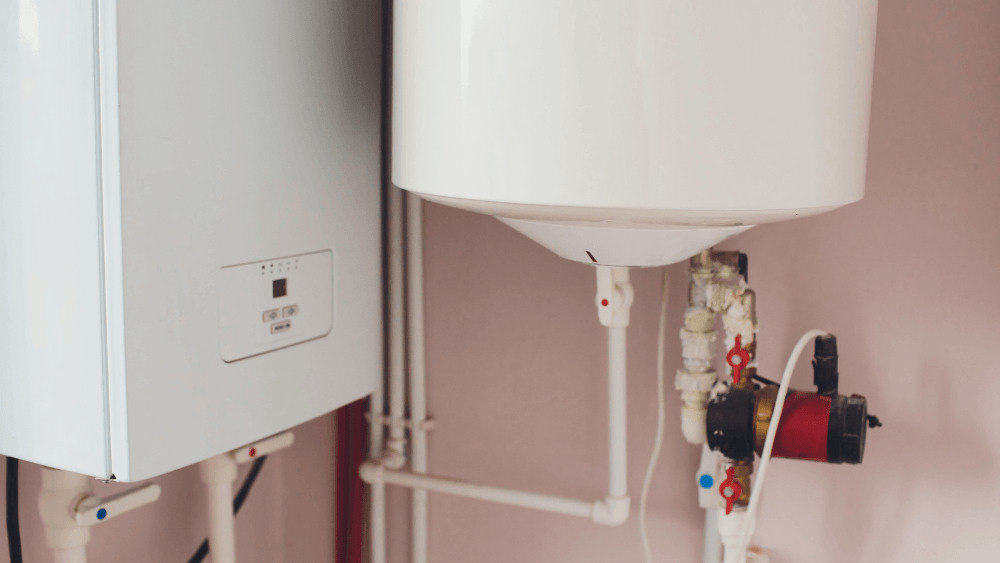
Three Components, Working Together
Solar Collector
Rooftop panels absorb sunlight and convert it to heat, transferred into the storage tank. This is the visible part of the system, and its size is what determines how much hot water the system can produce on solar alone.
Insulated Storage Tank
Holds heated water with enough insulation to stay hot for 24-48 hours without any further solar input, which is why a run of cloudy days genuinely isn't the problem people assume it is.
Backup Electric Element
Activates automatically when solar input isn't enough, overcast periods or unusually high demand. Not optional, every properly installed system has one, and it's what guarantees hot water regardless of weather.
Active vs. Passive (Thermosiphon) Systems
A passive, or thermosiphon, system relies on natural convection, the tank sits above the collector, and heated water rises into it on its own, no pump required. Simpler, fewer parts to maintain, and the more common choice for standard villa installations. An active system uses a pump and controller to circulate water more precisely, typically chosen for larger systems or specific roof layouts where the tank can't sit above the collector. We'll recommend whichever genuinely fits your roof, not default to the more expensive option.
Pumped Solar Systems and the Circulation Pump
A pumped (active) solar hot water system uses a small circulation pump and a controller to move water between the collector and the tank. The controller compares the collector and tank temperatures and starts the pump only when the collector is hotter. Most faults in these systems are sensors, trapped air or the pump, rather than the collector itself.
Pumped systems are chosen when the tank can't sit above the collector, for example with the tank inside a plant room and the collector on the roof. That makes the installation flexible, but it adds three parts a thermosiphon system doesn't have: the pump, the controller and the temperature sensors. When a pumped system stops heating, those are checked before anything on the roof.
Pump running but no heat gained
Air in the collector loop, or a pump that turns but no longer moves enough water. The loop is bled and the flow checked.
Pump never switches on
Usually a failed collector or tank sensor, so the controller never sees the temperature difference that should start it.
Pump runs at night
Sensors swapped or misread, which pumps heat out of the tank and into a cold collector overnight.
Noisy pump
Air in the system or a worn bearing. Air is bled first; a worn pump is replaced like-for-like.
This solar circulation pump is different from a hot water recirculation pump, which moves hot water around the house so taps run hot sooner. Many villas with solar have both, and the recirculation loop needs its own controls so it doesn't pull the solar tank's heat into the pipes all day.
Why This Is Mainly a Villa Service
Solar water heating needs roof access for the collector and, in most passive system layouts, space for a tank positioned above it, which is straightforward on a villa and effectively unavailable in the large majority of apartments. If you're in an apartment, our standard electric tank and tankless installation page is the one you want, and if hot water takes too long to reach a far bathroom or kitchen on an existing solar system, that's a separate, very fixable issue covered on our recirculation pump page, since a rooftop solar tank typically has the longest pipe run in the property.
Some communities require notifying building or community management before a solar installation, worth checking before work is scheduled, and it's a check we help with rather than leaving you to find out mid-installation.
What Cloudy Days Actually Mean Here
Summer (April - October)
Peak efficiency, water often heats to 60-70°C on solar alone with the backup element rarely activating at all.
Winter (November - March)
Shorter days and occasional cloud, but systems typically still run at 70-80% efficiency. The backup element covers the difference automatically.
Dubai sees roughly 20-25 cloudy days a year, and the tank's insulation holds heat for 24-48 hours without solar input, so a genuinely overcast stretch still isn't the problem people assume it is.
What a Solar Hot Water Heater Saves on Your DEWA Bill
A solar hot water heater typically saves a Dubai villa household of four or five about AED 60 to 80 a month, or roughly AED 750 to 970 a year, at 2026 DEWA rates. Savings grow with household size and hot water use. For small households, the system can take longer to pay back than some guides suggest, so the numbers are worth checking before buying.
| Household | Hot water a day | Electric heating cost a month | Solar saving a month (about 70%) | Payback vs an electric heater |
|---|---|---|---|---|
| 2-3 people | about 120 L | AED 58 - 76 | AED 41 - 53 | 5.5 - 20 years |
| 4-5 people | about 200 L | AED 89 - 115 | AED 62 - 80 | 3.5 - 13.5 years |
| 6-8 people | about 300 L | AED 127 - 164 | AED 89 - 115 | 4 - 13 years |
2-3 people
- Hot water a day
- about 120 L
- Electric heating cost a month
- AED 58 - 76
- Solar saving a month (about 70%)
- AED 41 - 53
- Payback vs an electric heater
- 5.5 - 20 years
4-5 people
- Hot water a day
- about 200 L
- Electric heating cost a month
- AED 89 - 115
- Solar saving a month (about 70%)
- AED 62 - 80
- Payback vs an electric heater
- 3.5 - 13.5 years
6-8 people
- Hot water a day
- about 300 L
- Electric heating cost a month
- AED 127 - 164
- Solar saving a month (about 70%)
- AED 89 - 115
- Payback vs an electric heater
- 4 - 13 years
How we worked it out
Heating water takes 0.001163 kWh per litre for every degree it's warmed. Taking a four-to-five person household using about 200 litres of hot water a day, warmed by about 30°C on average across the year:
200 L × 30°C × 0.001163 = 6.98 kWh a day to heat the water
+ about 1.2 kWh a day of standby loss from a storage tank
= about 8.2 kWh a day, or about 249 kWh a month
DEWA marginal rate, with the 6 fils fuel surcharge and 5% VAT:
28-fils slab: AED 0.357 per kWh · 38-fils slab: AED 0.462 per kWh
Electric heating: AED 89 - 115 a month · Solar at about 70% cover saves AED 62 - 80 a month
We use the higher slab rates because a villa using a few thousand kilowatt-hours a month pays for its last kilowatt-hours at 28 fils or more, and those are the ones solar removes. DEWA publishes its slabs at 23, 28, 32 and 38 fils per kWh. The fuel surcharge changes monthly; it was 6 fils in mid-2026.
Payback compares the extra cost of a solar system with the cost of an ordinary electric heater of the same size, from our installation prices. A 150 to 200 litre solar system costs AED 6,000 to 12,000 installed, against about AED 1,900 to 2,500 for an electric heater. With systems commonly lasting 15 to 20 years, solar pays for itself comfortably in larger households. In a household of two or three, it may not.
Why higher savings claims don't hold up
You will find guides promising monthly savings of AED 800 or more. For hot water alone, that would mean an electric heating cost several times higher than the arithmetic above allows. Most of a Dubai villa's electricity bill in summer is air conditioning, not water heating, and solar water heating does nothing for cooling. Summer also lowers the saving further: cold water from a roof tank is already warm, so there is less heating left to save.
None of this makes solar a poor choice. For a family villa with good roof space, it cuts a real running cost for well over a decade with very little upkeep. It's simply worth buying on the real numbers.
Installation Cost
Priced by tank size, since a small family system and a larger villa setup are genuinely different jobs in collector area and tank capacity.
| System | Typical Dubai Price Range |
|---|---|
| 150-200L system (small villa/family) | AED 6,000 - 12,000 |
| 250-300L system (larger villa) | AED 8,000 - 16,000 |
| Backup electric element replacement | Quoted after inspection |
| Annual professional service | Quoted after inspection |
150-200L system (small villa/family)
- Typical Dubai Price Range
- AED 6,000 - 12,000
250-300L system (larger villa)
- Typical Dubai Price Range
- AED 8,000 - 16,000
Backup electric element replacement
- Typical Dubai Price Range
- Quoted after inspection
Annual professional service
- Typical Dubai Price Range
- Quoted after inspection
Includes the collector, tank, backup electrical connection, mounting, and system commissioning. What moves the number within these ranges: tank capacity, roof access and mounting complexity, and pipe run length from the roof to the point of use, longer runs benefit from pairing installation with a recirculation pump to avoid a long wait for hot water at the far end of the property.
What Ongoing Care Actually Looks Like
Solar systems need genuinely little upkeep compared with a standard electric heater, but Dubai's dust means the collector specifically needs more attention than manufacturer guidance written for other climates suggests.
Visual check for obvious damage, leaks, or unusual sounds. Takes about five minutes and catches problems before they become expensive ones.
Collector cleaning. Dubai's dust and sand build up on the panel surface and can reduce efficiency by 10-15% if left unaddressed, more relevant here than in most climates.
Full connection check, pressure relief valve inspection, and confirming the backup heating element activates correctly.
Complete professional service, internal inspection, and component testing, including the backup element's condition.
How We Install It
Roof assessment
Access, orientation, and structural suitability confirmed, along with whether a passive or active system fits the layout.
Sizing
Tank capacity matched to household size and hot water demand, not a default size for the property type.
Install & connect
Collector mounted, tank positioned, backup electrical connection wired in, and pipework run to the point of use.
Commission & test
Full system run, pressure tested, and backup element confirmed to activate correctly before handover.
Handover
Maintenance schedule explained, including the quarterly collector cleaning Dubai's dust makes genuinely necessary.
Solar Water Heater Installation Across Dubai's Villa Communities
Solar Water Heater FAQ
How much does a solar hot water heater save in Dubai?
How long does a solar water heater take to pay for itself?
Why does my pumped solar system run but not heat the water?
How much does solar water heater installation cost in Dubai?
Can I install a solar water heater in an apartment?
What happens on cloudy days?
Do I still need an electricity connection if I have solar?
What's the difference between active and passive (thermosiphon) systems?
How much maintenance does a solar water heater need?
How long does a solar water heater last?
Do you install Ariston solar systems?
My hot water takes too long to reach a far bathroom. Is that a solar issue?
Do I need community approval before installing?
In an apartment, or want electric tank/tankless instead? See our standard water heater installation page.
Ready to Cut Your Water Heating Bill?
Tell us your household size and roof access, and we'll recommend the right system size before quoting, not a default that leaves you short or paying for capacity you don't need.
Licensed & insured. Villa & townhouse communities across Dubai.