Hot Water Recirculation Pump Installation Dubai
Running a tap for a minute or more before hot water actually arrives isn't a pressure fault, it's wasted water sitting in a cold pipe. A recirculation pump keeps that pipe primed with hot water so it's there the moment you open the tap, no waiting, no runoff down the drain.
Particularly relevant on villas with a rooftop solar water heater feeding fixtures multiple floors below, where the wait is often longest. Correctly sized, correctly installed, with the right return-path method for your existing plumbing.
AED 450+
Standard installation
2
Installation methods
Same-day
On most retrofits
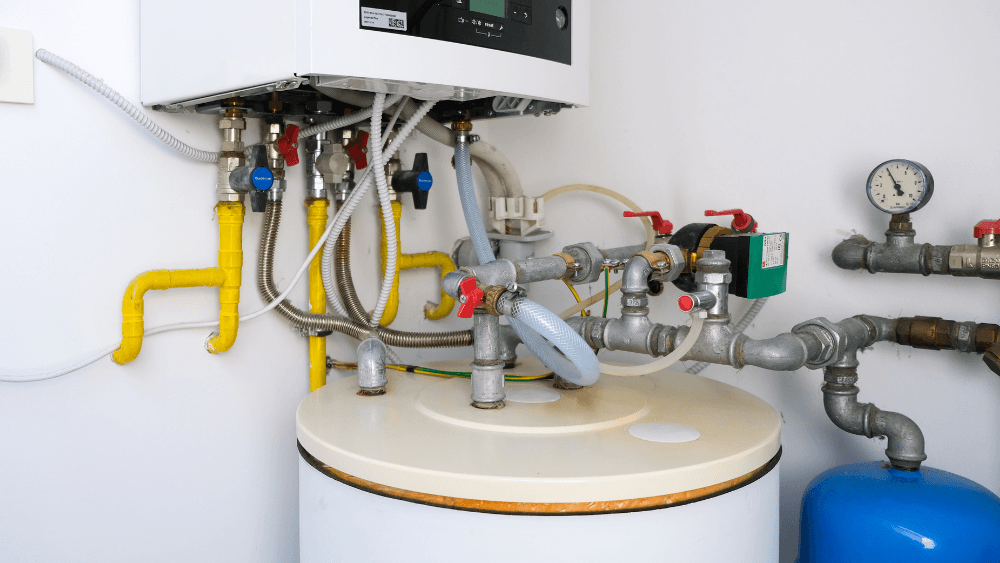
What Actually Happens Between the Tap and the Water Heater
When a tap sits closed, the hot water pipe running to it isn't hot, it's whatever temperature the surrounding wall or ceiling void has cooled it to. Open the tap and the water heater has to push an entirely new column of water through that pipe before any of it reaches you, and everything sitting in the pipe in the meantime just runs down the drain, cold. The longer the pipe run, the longer that wait and the more water wasted before anything useful comes out.
A recirculation pump solves this by keeping that pipe primed. It creates a loop, either through a dedicated return pipe or by using the existing cold-water line as a return path, and continuously or periodically pulls the cooling water in the hot line back to the heater to be reheated, rather than letting it sit and go cold. The result is that hot water is already present in the pipe by the time you open the tap, instead of having to travel the full distance first.
This is worth separating clearly from a booster pump, which is a completely different piece of equipment solving a completely different problem. A booster pump increases how hard water pushes through your pipes when a tap is open. A recirculation pump changes what temperature that water is the moment the tap opens. Weak flow at the shower head is a pressure problem. A long wait before the water even turns warm is a recirculation problem. They sometimes get confused because both involve a pump on a supply line, but fixing one does nothing for the other.
Solar Water Heaters and Multi-Floor Villas
Solar water heating is common on Dubai villas, and it changes where the wait actually comes from. The tank usually sits on the roof, which means every hot water pipe run starts at the highest point of the property and travels down through multiple floors before reaching a ground-floor kitchen or a guest bathroom. That's a longer run than a typical single-story installation elsewhere, and a longer run means more water sitting in the pipe going cold between uses.
A villa with a rooftop tank and a ground-floor kitchen at the far end of the property is close to the worst-case layout for this problem, and it's also one of the most common layouts in Dubai. Fixtures closest to the tank, an ensuite directly below it, might barely notice a delay. A kitchen tap two floors down and across the building can take genuinely long enough that people give up and just use cold water for tasks that don't need it.
None of this is a fault in the water heater or the plumbing, it's simply distance. A recirculation pump is the direct fix for distance-driven wait time, rather than anything that requires touching the heater itself.
Two Ways to Install This, and When Each Makes Sense
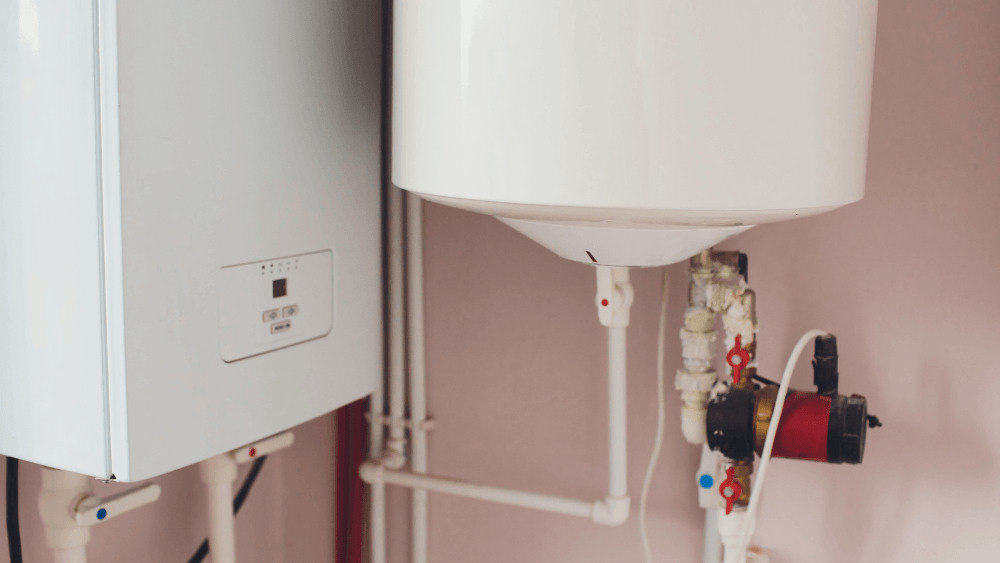
Most installation guides mention only one method. The right one for you depends entirely on whether your walls are already open.
| Method | How it works | Best for | Trade-off |
|---|---|---|---|
| Dedicated return line | A separate pipe carries cooled water back to the heater, entirely independent of the cold supply | New builds, or a villa already undergoing renovation with walls open | The cleanest, most efficient setup, no interaction with cold-water pressure or temperature at any fixture |
| Crossover valve (existing cold line) | A valve at the far fixture routes cooled water back through the existing cold-water pipe instead of a new one | Retrofitting an already-finished villa or apartment without opening walls | No new pipework needed, but the cold line runs slightly warm near the pump while active |
Dedicated return line
- How it works
- A separate pipe carries cooled water back to the heater, entirely independent of the cold supply
- Best for
- New builds, or a villa already undergoing renovation with walls open
- Trade-off
- The cleanest, most efficient setup, no interaction with cold-water pressure or temperature at any fixture
Crossover valve (existing cold line)
- How it works
- A valve at the far fixture routes cooled water back through the existing cold-water pipe instead of a new one
- Best for
- Retrofitting an already-finished villa or apartment without opening walls
- Trade-off
- No new pipework needed, but the cold line runs slightly warm near the pump while active
For the overwhelming majority of Dubai retrofits, a finished villa or apartment where nobody wants walls opened for a comfort upgrade, the crossover valve method is what actually gets installed. We confirm which your property needs during the site visit rather than assuming.
Continuous, Timer, or On-Demand Operation
This is a genuine cost trade-off, not a minor feature toggle. Every hour the pump circulates, the water heater is doing a small amount of reheating work to make up for it.
| Mode | How it behaves | Running cost | Best fit |
|---|---|---|---|
| Continuous | Pump runs constantly, pipe stays hot at all times | Highest, reheating loss runs around the clock | Guest villas, properties with genuinely unpredictable usage times |
| Timer-based | Pump runs only during set hours (e.g. 6am-10pm) | Lower, no circulation overnight when nobody's drawing water | Households with a predictable daily routine |
| On-demand (aquastat) | Pump activates only when pipe temperature drops below a set point | Lowest, only runs to correct an actual temperature drop, not on a fixed schedule | Most Dubai villa retrofits, best balance of comfort and running cost |
Continuous
- How it behaves
- Pump runs constantly, pipe stays hot at all times
- Running cost
- Highest, reheating loss runs around the clock
- Best fit
- Guest villas, properties with genuinely unpredictable usage times
Timer-based
- How it behaves
- Pump runs only during set hours (e.g. 6am-10pm)
- Running cost
- Lower, no circulation overnight when nobody's drawing water
- Best fit
- Households with a predictable daily routine
On-demand (aquastat)
- How it behaves
- Pump activates only when pipe temperature drops below a set point
- Running cost
- Lowest, only runs to correct an actual temperature drop, not on a fixed schedule
- Best fit
- Most Dubai villa retrofits, best balance of comfort and running cost
An aquastat-controlled pump is what we fit on most residential jobs. It solves the actual problem, cold water sitting in the pipe, without circulating hot water on a fixed schedule regardless of whether anyone's home to use it.
Recirculation With Instant, Tankless and Heat Pump Heaters
A hot water recirculation pump works best with a storage heater, electric or solar, because the tank always has hot water ready to send round the loop. With tankless and heat pump heaters it can work, but only with the right controls and a heater designed for it. Small instant heaters beside a tap rarely need a loop at all.
| Heater type | Recirculation? | What to know |
|---|---|---|
| Electric storage tank | Yes, the standard setup | The tank holds hot water ready; the loop just keeps the pipes warm |
| Solar with storage tank | Yes, with controls | Use a timer or on-demand control so the loop doesn't drain the solar tank's heat all day |
| Heat pump water heater | Yes, with care | Continuous circulation can pull heat from the tank faster than the heat pump replaces it, bringing on the electric backup element |
| Tankless (whole-house) | Only if the heater is rated for it | Needs enough flow to fire the heater, and some models void the heat exchanger warranty if used on a loop |
| Small electric instant heater | Rarely | Point-of-use instant heaters sit next to the tap already; a loop adds little and can confuse the flow switch |
Electric storage tank
- Recirculation?
- Yes, the standard setup
- What to know
- The tank holds hot water ready; the loop just keeps the pipes warm
Solar with storage tank
- Recirculation?
- Yes, with controls
- What to know
- Use a timer or on-demand control so the loop doesn't drain the solar tank's heat all day
Heat pump water heater
- Recirculation?
- Yes, with care
- What to know
- Continuous circulation can pull heat from the tank faster than the heat pump replaces it, bringing on the electric backup element
Tankless (whole-house)
- Recirculation?
- Only if the heater is rated for it
- What to know
- Needs enough flow to fire the heater, and some models void the heat exchanger warranty if used on a loop
Small electric instant heater
- Recirculation?
- Rarely
- What to know
- Point-of-use instant heaters sit next to the tap already; a loop adds little and can confuse the flow switch
Tankless heaters only fire when water flows through them above a minimum rate. A recirculation pump has to push at least that much, or the heater never switches on and the loop just circulates lukewarm water. Some manufacturers build a pump and a small buffer tank into their tankless units for exactly this reason. Others state that recirculation voids the heat exchanger warranty. Check the heater's manual before adding a pump, not after.
Heat pump water heaters heat slowly and efficiently. A loop that circulates around the clock keeps drawing heat out of the tank. The heat pump then struggles to keep up, and the heater switches to its electric backup element, which undoes much of the saving. With a heat pump, recirculation should run on a timer or on demand, never continuously.
Small instant heaters, the compact units fitted under a basin or beside a shower in many Dubai apartments, already sit where the hot water is used. The wait at those taps is short. A recirculation loop doesn't fix a problem they have, and a pump pushing water through them can interfere with the flow switch that turns them on.
If you're still choosing a heater, choose it and the recirculation plan together. Our water heater installation page covers sizing and heater types, and our solar hot water heater page covers solar tanks.
Sizing a Hot Water Recirculation Pump
A home recirculation pump is sized to replace the heat the loop loses, not to move large volumes of water. That usually means a small pump running slowly. An oversized pump wastes electricity, can be noisy, and pushes water fast enough to wear the inside of copper pipes over time. The length of the loop and the number of branches matter more than the size of the house.
Three things decide the size:
- Loop length. A longer loop loses more heat and needs slightly more flow to keep the far end warm.
- Pipe size and material. Narrow pipes resist flow more, and copper suffers from high velocity in a way plastic pipe doesn't.
- Branches. In a villa with bathrooms on several floors, water takes the easiest path, so the nearest bathroom gets hot water and the furthest doesn't.
The branch problem is where most multi-bathroom systems go wrong. The answer isn't a bigger pump. It's a balancing valve on each branch, often a thermostatic one that opens as the water in its branch cools and closes as it warms, so every bathroom gets its share. Insulating the loop matters as much as the pump: an uninsulated loop loses heat around the clock, especially through air-conditioned rooms, and the heater pays for it.
How Installation Actually Goes
Site assessment
We trace the actual pipe run from heater to the farthest fixture, and check whether a crossover valve or a dedicated return line fits your existing plumbing.
Method and control selection
Return-path method confirmed, and pump control mode, continuous, timer, or aquastat, chosen based on your household's actual usage pattern.
Installation
Pump fitted at the water heater or under the farthest fixture depending on method, with the temperature sensor positioned correctly for accurate on-demand activation.
Testing
Wait time measured at the farthest fixture before and after, so the improvement is verified, not just assumed.
Handover
A written note on the control mode set and how to adjust it if your routine changes.
Hot Water Recirculation Pump Pricing in Dubai
Priced by installation method and control type, confirmed after a site visit, not a flat number that ignores your actual pipe layout.
| Service | Typical Cost (AED) |
|---|---|
| Site assessment (waived if you proceed) | AED 100 - 150 |
| Timer-based pump installation, crossover valve method | AED 350 - 550 |
| Aquastat (on-demand) pump installation, crossover valve method | AED 450 - 750 |
| Dedicated return line installation | AED 600 - 1,100 |
| Pump or aquastat sensor repair | AED 200 - 400 |
| Multi-fixture villa system | Quoted after site assessment |
Site assessment (waived if you proceed)
- Typical Cost (AED)
- AED 100 - 150
Timer-based pump installation, crossover valve method
- Typical Cost (AED)
- AED 350 - 550
Aquastat (on-demand) pump installation, crossover valve method
- Typical Cost (AED)
- AED 450 - 750
Dedicated return line installation
- Typical Cost (AED)
- AED 600 - 1,100
Pump or aquastat sensor repair
- Typical Cost (AED)
- AED 200 - 400
Multi-fixture villa system
- Typical Cost (AED)
- Quoted after site assessment
The assessment fee is waived against the installation cost if you proceed.
*All prices are indicative and depend on pipe run length, fixture count, and access. We provide a fixed, itemised quote after assessment, no work starts without your approval.
Recirculation Pump Maintenance
These systems run for years with minimal attention, but a drifting aquastat sensor or a worn crossover valve reduces the benefit without an obvious failure, it just quietly gets less effective.
- Aquastat sensor accuracy checked against actual pipe temperature
- Pump function and noise level checked
- Crossover valve inspected for correct seating (a worn valve lets more warm water bleed into the cold line than it should)
- Timer settings reviewed against your current routine, if timer-controlled
- Check valve inspected, prevents backflow through the return path
A check during your annual water heater service is generally enough for most households. Properties running the pump continuously benefit from checking it more often, since the motor accumulates run-hours faster.
Why Choose Quick Fix Dubai for This
Real pipe-run assessment
We trace the actual distance and layout before recommending a method, not a default retrofit regardless of your plumbing.
Both installation methods available
Dedicated return line or crossover valve, whichever genuinely fits your property, explained honestly before we quote.
Correct control mode for your routine
Continuous, timer, or on-demand aquastat, matched to how your household actually uses hot water, not installed on a default setting.
Solar water heater experience
Comfortable working with rooftop tank layouts common across Dubai villas, where the pipe run is often the longest in the property.
Fixed, itemised pricing
The assessment fee is waived against installation if you proceed. No surprise line items on the final invoice.
Full-service plumbing under one provider
If the assessment turns up a related issue, water heater condition, pipe insulation, it's handled by the same team, not a separate callout.
Serving All of Dubai
From apartments to multi-floor villas with rooftop solar heating, across every community in Dubai.
Recirculation Pump Installation FAQ
Can I add a recirculation pump to a tankless water heater?
Does a recirculation pump work with a heat pump water heater?
What size recirculation pump do I need?
How much does a hot water recirculation pump cost to install in Dubai?
Will this fix low water pressure at my shower?
Do I need to open walls to install this?
Does this work with a solar water heater?
Should the pump run continuously or only on demand?
Will running the pump increase my water heater's workload?
How long does installation take?
Can an existing recirculation pump be repaired instead of replaced?
Stop Running the Tap and Waiting
If hot water takes a minute or more to arrive at your kitchen or a far bathroom, that's a pipe-run problem with a straightforward fix. We assess the actual layout and recommend the method that fits your property, not a default retrofit.
Licensed & insured. All areas of Dubai.