Leak Detection Dubai
A hidden leak is invisible, often silent, and by the time it shows itself, whatever it's damaged has usually been damaged for a while. Finding one shouldn't mean guessing where to start knocking through tile and plaster.
Thermal imaging, acoustic detection, and tracer gas locate the source using sound, temperature, and pressure. Choosing the right method for your situation is what keeps the cost and the disruption down.
AED 150+
Site visit & assessment
5
Detection methods, matched to need
0
Unnecessary walls broken
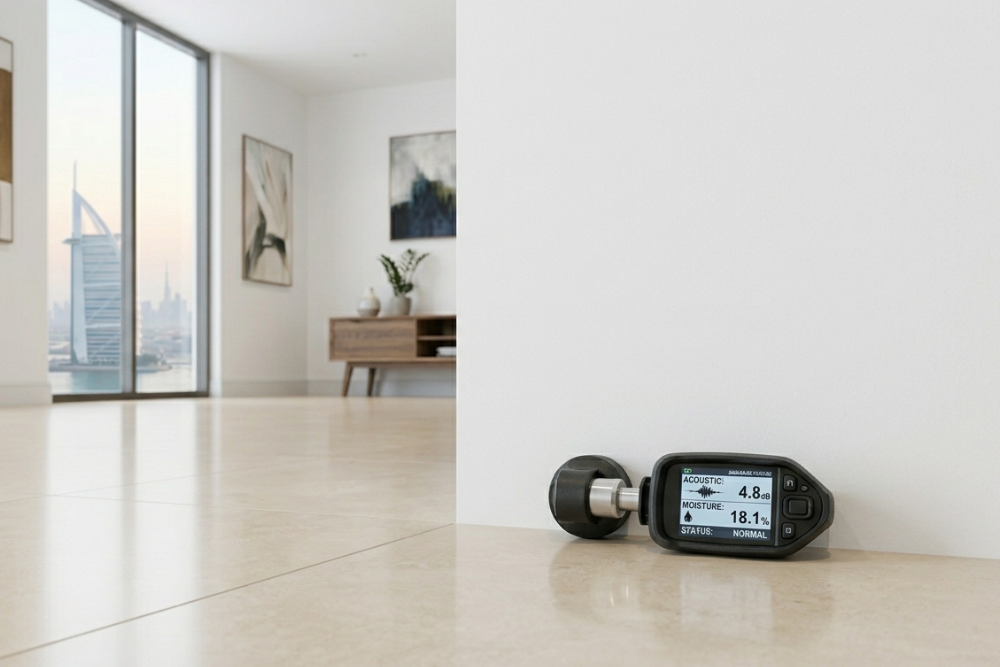
Detection Methods: Matched to Where the Leak Is
Not every method suits every situation. Using the wrong one either misses the leak or costs more than necessary for a simpler job. A company offering only one method regardless of the situation isn't being fully upfront about when a different tool would work better and cost less.
| Method | How It Works | Best For | Limitations |
|---|---|---|---|
| Thermal imaging | Camera detects temperature differences from moisture behind a surface | Leaks behind walls or under floors, unclear path | Needs a temperature differential; less effective once equalized |
| Acoustic detection | Sensitive equipment picks up the sound of escaping water under pressure | Underground pipes, slab leaks, concealed runs | Requires the line to be under pressure; ambient noise can interfere |
| Tracer gas | A safe, non-toxic gas is introduced and detected as it escapes at the leak point | Pressurized systems, hard-to-access underground networks | Requires temporarily isolating and pressurizing the line |
| Pressure testing | Isolated sections are pressurized and monitored for a drop | Confirming a leak exists before a targeted method | Confirms a section is leaking, not always the exact point alone |
| CCTV pipe inspection | A camera is fed through the pipe itself | Drain and sewer lines, blockages, root intrusion | Limited to accessible pipe diameters and reachable lines |
Thermal imaging
- How It Works
- Camera detects temperature differences from moisture behind a surface
- Best For
- Leaks behind walls or under floors, unclear path
- Limitations
- Needs a temperature differential; less effective once equalized
Acoustic detection
- How It Works
- Sensitive equipment picks up the sound of escaping water under pressure
- Best For
- Underground pipes, slab leaks, concealed runs
- Limitations
- Requires the line to be under pressure; ambient noise can interfere
Tracer gas
- How It Works
- A safe, non-toxic gas is introduced and detected as it escapes at the leak point
- Best For
- Pressurized systems, hard-to-access underground networks
- Limitations
- Requires temporarily isolating and pressurizing the line
Pressure testing
- How It Works
- Isolated sections are pressurized and monitored for a drop
- Best For
- Confirming a leak exists before a targeted method
- Limitations
- Confirms a section is leaking, not always the exact point alone
CCTV pipe inspection
- How It Works
- A camera is fed through the pipe itself
- Best For
- Drain and sewer lines, blockages, root intrusion
- Limitations
- Limited to accessible pipe diameters and reachable lines
How we actually choose: a technician assesses symptoms, property type, and likely location first, rather than defaulting to the most expensive method by habit. If a AED 350 thermal scan can find your leak, we're not going to suggest a AED 2,000 acoustic survey instead. Complex or widespread leaks sometimes need more than one method, pressure testing to confirm a leak exists, followed by acoustic or thermal to pinpoint it precisely, and we explain why before running up the bill on a second tool. The site visit exists specifically to make that call correctly before any detection work begins, which is also why we don't quote detection costs sight-unseen over the phone.
Signs You Have a Hidden Leak
A DEWA bill that's increased without explanation
Often the first and only sign for weeks, especially inside a wall or under a slab.
A damp or bubbling patch on a wall or ceiling
By the time this appears, the leak has usually been running for some time.
A musty smell with no obvious source
Moisture trapped behind a surface creates conditions for mould before any visible sign.
Running water sound with every tap closed
A faint hiss or trickle with nothing turned on points to a continuous pressure loss.
Warm patches on a floor
Can indicate a leak on a hot water line running beneath it.
A pool losing water faster than evaporation
Mark the level against a bucket left beside it for 24 hours; if the pool drops more, that's a leak.
Leak Detection Cost in Dubai
What actually moves the price: the area affected, how accessible the suspected location is, and whether the first method finds the leak or a second is needed to confirm it. A single bathroom is quick; a leak spread across a whole floor takes longer and often needs more than one method used together.
| Service | Typical Dubai Price Range |
|---|---|
| Site visit and initial assessment | AED 150 - 300 |
| Thermal imaging detection | AED 350 - 700 |
| Acoustic detection (underground/slab) | AED 800 - 2,000 |
| Tracer gas detection | AED 1,000 - 2,500 |
| Full property survey (multiple methods) | AED 1,500 - 3,500 |
| CCTV pipe inspection | AED 300 - 900 |
Site visit and initial assessment
- Typical Dubai Price Range
- AED 150 - 300
Thermal imaging detection
- Typical Dubai Price Range
- AED 350 - 700
Acoustic detection (underground/slab)
- Typical Dubai Price Range
- AED 800 - 2,000
Tracer gas detection
- Typical Dubai Price Range
- AED 1,000 - 2,500
Full property survey (multiple methods)
- Typical Dubai Price Range
- AED 1,500 - 3,500
CCTV pipe inspection
- Typical Dubai Price Range
- AED 300 - 900
The site visit is the best money spent first, since it means you're not paying for acoustic detection when thermal imaging would have found the same leak for a fraction of the cost. Every job concludes with a written report: methods used, confirmed location, supporting images, and a repair recommendation with an indicative cost, structured to be useful for insurance claims or property records.
Specialized Leak Situations
Slab leaks
A pipe beneath a property's concrete floor has failed, common in villas. Detected with acoustic equipment first; the exact location is pinpointed before any concrete is broken, so only the necessary section is opened rather than a wide speculative dig. Waiting costs more here, since water finding its way up through concrete has usually been running a while before it's visible.
Underground leaks
Supply or irrigation lines buried in a garden or between a meter and a property. Acoustic and tracer gas keep any dig to the smallest area possible rather than trenching along the whole suspected line, which matters both for cost and for not tearing up an otherwise fine garden.
Swimming pool leaks
Distinguished from evaporation with the bucket test, then located with pressure testing and acoustic equipment while the pool stays full. Draining is rarely necessary with the right equipment, and draining itself carries its own risk to the pool structure and finish.
Roof & ceiling leaks
Often not where the water actually enters; it can travel along a structural element before dripping elsewhere, meaning the drip point and the entry point can be meters apart. Thermal imaging traces the actual path rather than assuming the drip point is the source.
Sewer & basement leaks
Combined with CCTV pipe inspection, since a basement leak is often connected to a drainage issue rather than a fresh water fault. A basement's lower elevation also collects water from issues elsewhere in a building, which sometimes makes the source harder to trace without a proper inspection.
Sprinkler & irrigation leaks
Villa irrigation runs extensive underground networks; a leak shows up as unexplained bills or unusually lush patches, detected with the same acoustic and tracer gas methods. Since these systems run on a timer rather than being monitored like a main supply, a leak here can run considerably longer before anyone notices.
What Actually Drives Leak Detection Cost
A price range on a page only means so much without understanding what pushes a job toward one end of it or the other. These are the real factors, not a generic disclaimer.
Property Size and Type
A leak in a single apartment bathroom is a faster, more contained job than the same fault in a large villa with multiple water systems, more supply pipe run, and a bigger area to narrow down before survey work even begins.
Number of Stories
Multi-story properties add complexity: a leak on a lower floor might originate from plumbing on a floor above, and confirming which level is actually responsible takes more of the survey time than a single-story property where everything is in one place.
Access Difficulty
A straightforward, accessible area takes less time than a tight service void, a fully finished basement with no inspection hatches, or a location behind fitted furniture that has to be worked around rather than simply reached.
Number of Methods Needed
Some leaks are confirmed quickly with one detection method. Others, particularly where the first result is inconclusive or the property has multiple possible sources, need two or three methods used together before the location is pinned down with confidence.
Match Your Symptom to the Right Detection Type
Leak symptoms often point toward a specific likely source. Here's a quick way to find the page most relevant to what you're actually seeing, though a phone call works just as well if you're unsure.
If your situation doesn't match any of these cleanly, or spans more than one, WhatsApp us and describe what's happening. We'll point you to the right service, or just come out and figure it out directly.
Our Detection Process
Initial assessment
We discuss symptoms, when they started, and the property layout before selecting a method, so the first tool used is the right one for the situation rather than a default reached for out of habit.
Detection
The selected method, or combination, is applied, working toward the most likely location first rather than surveying the entire property speculatively and running up unnecessary time on-site.
Confirmation
Once located, we confirm the leak precisely, minimizing how much of a wall, floor, or garden needs to be opened to actually reach it, rather than opening a wide area around a rough estimate.
Written report
What was found, how, and what repair it needs, with an indicative cost, so you have a clear next step rather than just a mark on a wall and a verbal explanation you have to remember correctly.
Repair, if needed
Detection and repair don't have to be separate companies. We can move straight into the repair, or refer you to the right page on this site for more detail if it's a specific failure type like a copper pinhole leak.
What You're Actually Getting
The difference between a detection service that finds the leak precisely and one that opens a wall and hopes.
Method matched to your leak, not a default
We assess symptoms and location first, then choose the tool that actually fits, rather than running the most expensive survey regardless of what the situation calls for.
Minimal opening, not speculative demolition
Once a leak is located precisely, only that specific area needs opening for repair, not a wide search area based on a rough guess.
Written report on every job
Methods used, confirmed location, supporting images, and a repair recommendation, formatted for insurance claims and property records, not just a verbal explanation.
Honest pricing, confirmed after assessment
A phone quote before anyone's seen the property is a guess. We confirm cost after the site visit, once we know which method the job actually needs.
Detection and repair under one roof
We can move straight from confirming a leak into fixing it, so you're not coordinating between a detection company and a separate repair company.
Licensed and insured
Every inspection and repair carried out by trained technicians, with documentation you can actually use if a dispute or claim comes up later.
Serving All of Dubai
From villa slab leaks in Arabian Ranches to concealed apartment leaks in Downtown towers, our technicians carry thermal, acoustic, and tracer gas equipment covering every scenario.
Leak Detection FAQ
How do you find a leak without breaking my walls or floors?
How much does leak detection cost in Dubai?
Why would I need more than one detection method?
Can you detect a leak under a swimming pool without draining it?
How long does a typical leak detection visit take?
Do you repair the leak as well, or just locate it?
What's the difference between a slab leak and an underground leak?
Why is my water bill (or DEWA bill) suddenly so high?
Will my DEWA bill go back to normal after a leak is fixed?
Is leak detection worth it if I'm not sure there's actually a leak?
Do you provide documentation suitable for insurance claims or property handovers?
Can a leak in one apartment affect the unit below in a shared building?
How accurate is acoustic leak detection compared to just guessing based on where water appears?
What should I do while waiting for a leak detection appointment?
I'm not sure which type of leak I have. Can I just call instead of picking a specific service page?
Can one property have more than one type of leak at the same time?
Do all your leak detection services use the same underlying equipment?
Why does the same type of leak cost more in one property than another?
Does a multi-story property always cost more to survey than a single-story one?
Is a plumber the right person for water leak detection, or do I need a specialist?
Suspect a Hidden Leak? Get the Right Method the First Time
A DEWA bill spike or a damp patch is worth checking before it becomes a bigger repair. The longer a hidden leak runs, the more it costs in wasted water and eventual damage, and the more of a wall or floor eventually needs opening to reach it.
Non-invasive detection, honest method selection, a written report either way. We find it precisely, so only the necessary area ever needs to be opened.
Licensed & insured. All areas of Dubai.