A burst pipe announces itself. A hidden leak doesn't, it runs quietly behind a wall, beneath a slab, or inside a cistern for weeks or months before anything becomes visible, and by the time it does, the damage is usually more than just the leak itself. Knowing the early signs, most of which show up before any water is actually visible, is what separates a small repair from a much bigger one.
!Quick answer
The fastest way to confirm a hidden leak: turn off every tap, appliance, and irrigation zone, note your water meter reading, wait 30 minutes, check it again. If the reading moved, there's an active leak. A rising DEWA bill with no change in usage is usually the earliest sign, before any visible staining or smell appears.
1. A Rising DEWA Bill With No Change in Usage
This is usually the first sign, and it's often dismissed as normal seasonal variation before it's recognised as a leak. A hidden leak runs continuously, every hour of every day, which means its effect on consumption is steadier and more consistent than the up-and-down pattern of normal household use. If your bill has climbed over two or three consecutive months and nothing about your household, more guests, longer showers, extra laundry, has actually changed, that pattern is worth taking seriously rather than assuming it will correct itself.
The water meter test confirms this directly. Turn off every tap, appliance, and irrigation zone in the property, note the meter reading, wait thirty minutes without using any water, then check it again. If the reading has moved, there's an active leak somewhere in the supply system, even if nothing is visible yet.
2. Water Stains on Ceilings or Walls
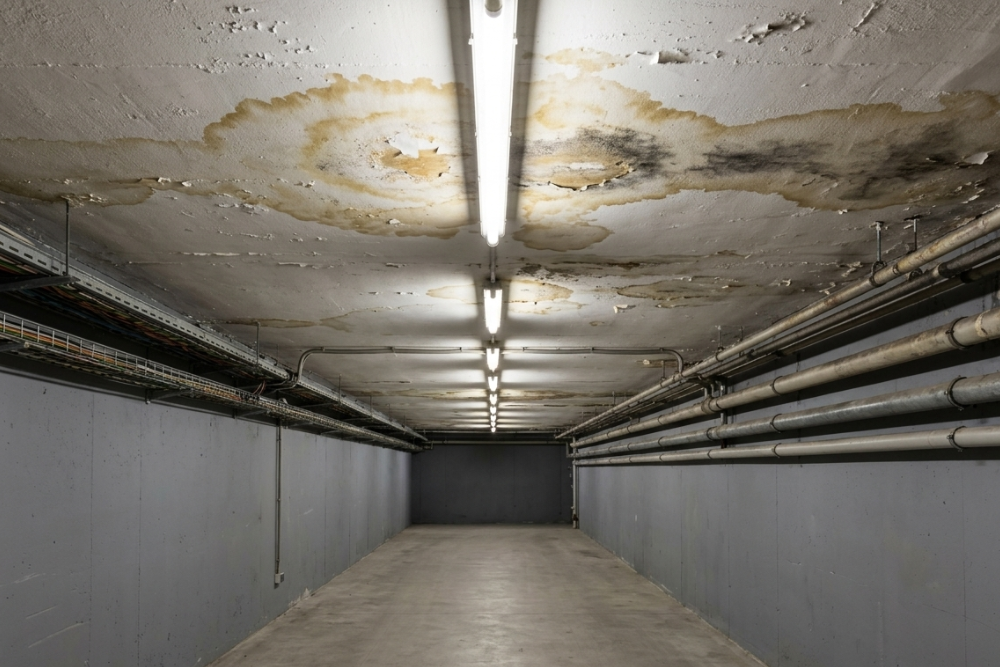
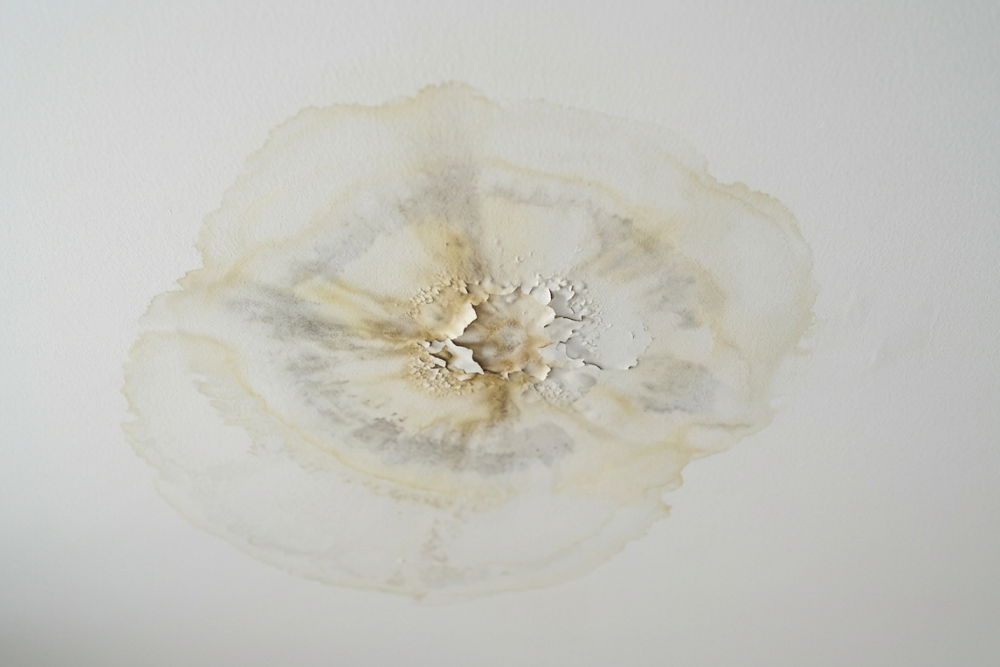
A yellow, tan, or brownish ring on a ceiling or wall is water that's soaked into the material and evaporated, leaving mineral residue behind, and it's usually a sign the leak has already been running for some time by the point it's visible on the surface. Don't assume a stain is old or inactive just because it feels dry to the touch; dryness on the surface doesn't mean the source has stopped, it can simply mean the material has temporarily absorbed as much as it can between active periods of the leak.
Where the stain sits relative to the property above matters for diagnosis. A stain directly below a bathroom or kitchen on the floor above is the most straightforward case. A stain that doesn't line up with any fixture above it is more likely a roof or slab-related source, and tracking exactly where water travels before it becomes visible is exactly the kind of thing that needs proper detection equipment rather than guesswork.
3. A Persistent Musty Smell
Often the earliest sign of all, appearing well before any visible staining. A musty or damp odour concentrated in one specific room or area, particularly one that doesn't clear even after cleaning, points to trapped moisture somewhere in that space, behind a wall, under flooring, inside a cavity. This is the smell of mould and mildew beginning to establish itself in a damp environment, and it's worth investigating even without any other visible sign yet.
4. Tiles Lifting or Cracking With No Obvious Cause
Floor and wall tiles rely on a stable, dry substrate and adhesive bond underneath. Water migrating beneath tiles, from a below-slab pipe leak or a failed waterproofing membrane behind a shower wall, breaks down that adhesive bond over time. Tiles that are lifting, sound hollow when tapped, or have started cracking in a pattern that doesn't match any physical impact are a meaningful sign, particularly in bathrooms and kitchens where concealed plumbing runs beneath or behind the finished surface.
5. A Warm or Damp Patch on the Floor
Specific to slab-built properties, which describes most Dubai homes. A warm patch on a tiled floor, particularly in an area with no underfloor heating, is one of the more reliable signs of a hot water pipe leaking beneath the slab, the warmth is literally the hot water escaping and warming the concrete and tile above it. A persistently cool, damp-feeling patch elsewhere, without any obvious water source nearby, points to the same mechanism on a cold water line instead.
6. Reduced Water Pressure
A drop in pressure at one specific fixture usually points to something local, a partially closed valve or a fixture-specific issue. A drop in pressure across the whole property is more often a sign that water is escaping somewhere in the main supply system before it reaches your taps at all, effectively splitting the available pressure between where it's supposed to go and where it's leaking out.
7. The Sound of Running Water With Everything Off
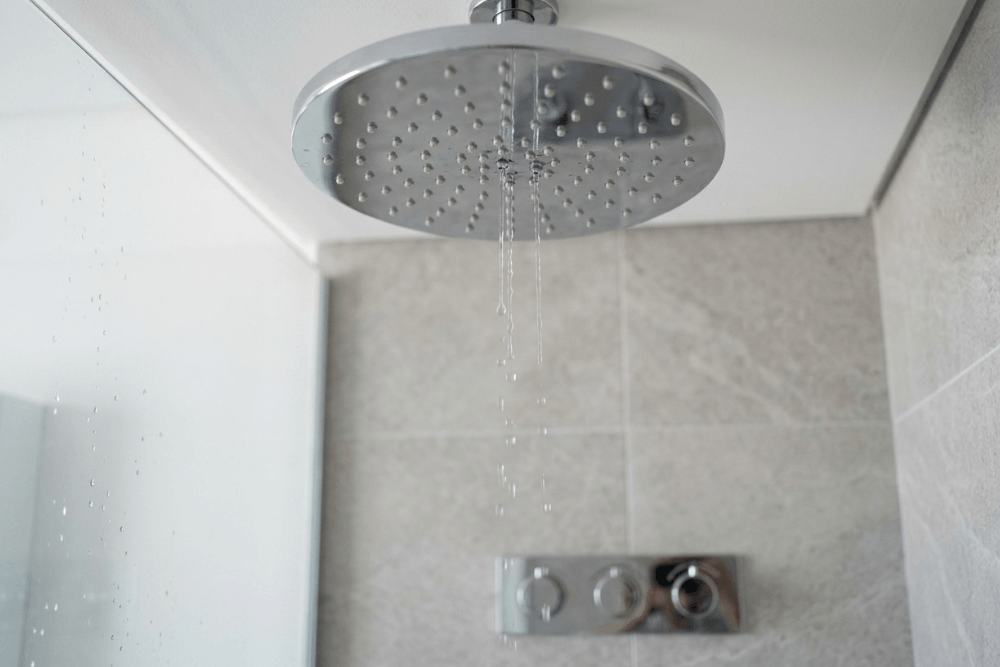
A faint hiss, trickle, or running sound audible when every tap, appliance, and irrigation zone in the property is confirmed off is one of the more direct signs available, since it's the leak itself you're hearing rather than an indirect consequence of it. This is easiest to notice in a quiet part of the property, at night or when the household is otherwise still, and worth paying attention to rather than dismissing as an unidentified household noise.
!One thing that isn't a leak: AC condensate
A damp patch or dripping near where an air conditioning unit is mounted is very often condensate drainage, not a plumbing leak at all. Condensate issues track with AC usage, worse in peak summer, and originate specifically near indoor units or ductwork rather than following a supply pipe route. It's not always obvious without inspection, but if a symptom appeared during a hot spell and sits near an AC unit, that's worth mentioning distinctly when you message us, since it changes what needs fixing.
If You're Renting: What Happens Next
For the large share of Dubai residents who rent rather than own, spotting a hidden leak raises a second, very practical question: who's responsible for fixing it. Under Dubai's tenancy law, Law No. 26 of 2007 as amended by Law No. 33 of 2008, landlords are generally responsible for maintenance and repairs affecting the tenant's ability to properly use the property, which a genuine plumbing leak typically falls under. In practice, many tenancy contracts draw a line between minor maintenance, commonly a repair costing up to around AED 500 for an apartment or AED 1,000 for a villa, which the tenant covers, and major repairs above that threshold, which fall to the landlord.
That specific threshold is usually set by the individual tenancy contract rather than being a fixed number in the law itself, so it's worth checking your own agreement rather than assuming a figure. What is consistently true is that a landlord generally can't contract away responsibility for a repair that affects the basic habitability of the property, a significant leak causing real damage is not something a "tenant pays for all maintenance" clause can simply assign away. If there's a genuine dispute about responsibility, Dubai's Rental Disputes Centre handles landlord-tenant maintenance disagreements. This is general information rather than legal advice, and any specific dispute is worth checking against your actual tenancy contract and, where needed, professional legal advice.
Practically, getting a written assessment of the leak, what it is, where it's coming from, and what's needed to fix it, is useful regardless of who ends up paying, since it gives both parties something concrete to work from rather than a dispute based on assumptions.
Why the Timing Matters
A leak caught at the DEWA-bill or musty-smell stage, before any visible staining, is usually a straightforward, contained repair, locate the source, open a small targeted section, fix it, done. The same leak left running through the water-stain and lifting-tile stages has typically saturated more of the surrounding structure, meaning the repair now involves not just the pipe but the affected tiling, plaster, or in worse cases, structural drying and mould remediation on top of the original plumbing fix. The cost difference between catching it early and catching it late isn't linear, it compounds, since each additional week gives the water more time to spread further than the point it's currently visible from.
What to Do If You Notice Any of These Signs
- Run the meter test described above to confirm whether an active leak is actually present
- Note where any stain, smell, or warm patch is located, and whether it's changed or spread since you first noticed it
- Avoid opening a wall or lifting tiles yourself to search for the source; this often complicates professional detection rather than helping it
- If you're renting, review your tenancy contract's maintenance clause before assuming who's responsible, and keep any communication with your landlord or agent in writing
None of these seven signs guarantee a leak on their own, but any one of them is a reasonable enough signal to investigate properly rather than wait and see. A leak found early is a targeted, inexpensive repair. The same leak found three months later, after it's had time to spread through a wall cavity or beneath a floor, is a considerably bigger job.
How do I test for a hidden leak myself?
What's the earliest sign of a hidden leak, before anything is visible?
Who is responsible for fixing a leak in Dubai, the tenant or the landlord?
Is a damp patch near my AC unit a plumbing leak?
Does a warm patch on the floor always mean a leak?
Why does catching a leak early make such a difference to cost?
Should I open a wall or lift tiles myself to find a leak?
Can reduced water pressure be a sign of a hidden leak?
Related Service
Leak Detection
Dealing with this issue right now? See real pricing and how we handle it.
View Leak Detection