Search for this problem and most of what comes back talks about damaged shingles, failing roof flashing, blocked gutters, and ice dams. None of that applies to a Dubai property. Dubai homes don't have shingled pitched roofs, gutters in the way a snow-climate home does, or any risk of ice damming. If you're getting that advice, it's not wrong, it's just describing a different building in a different climate. Here's what's actually behind a ceiling leak in a Dubai villa or apartment.
AC Condensate Drain Overflow, the Most Common Cause
Every air conditioning unit pulls moisture out of the air as it cools it, and that water has to go somewhere, normally down a condensate drain line to an outlet or drain point. In a climate where AC runs for most of the year rather than a few summer weeks, that drain line sees far more use than it would elsewhere, and it accumulates algae, dust, and mineral buildup accordingly. When it partially blocks, the condensate tray backs up and overflows, and if that unit sits above a ceiling void, the overflow finds its way through the ceiling material well before anyone notices the AC itself is the problem.
This is worth checking first precisely because it's the cause people rule out last. A stain that appears or worsens specifically during periods of heavy AC use, rather than after rain, points here.
Flat Roof Waterproofing, Not a Damaged Shingle
Dubai's flat and low-slope roofs are concrete with a waterproofing membrane layer on top, not overlapping shingles. That membrane does the entire job of keeping water out, and years of direct desert sun cause it to crack, blister, or pull away at the joints and edges long before the concrete underneath shows any obvious sign of a problem from inside. Once the membrane fails at even a small point, water finds its way in during rain and tracks along the underside of the slab before it drips through, so the stain on your ceiling is often nowhere near the actual point of failure on the roof above.
A Leak From the Apartment Above You
If you're in a mid-rise or tower rather than a villa, the leak may have nothing to do with the roof or the building's exterior at all. Bathroom and kitchen waterproofing in the unit above yours is what actually keeps water contained to that floor, and if it's failed, whether from age, a renovation that compromised it, or a slow supply leak under their fixtures, water tracks down through the slab and shows up on your ceiling first. This is one of the more common causes in Dubai towers specifically, and it's not something you can fix from your own unit, it requires access to the unit above.
Water Tank or Feed Pipe in the Ceiling Void
Older villas and some apartment layouts route water supply pipework, or in some cases sit part of the tank system, above a ceiling rather than fully concealed in walls. A joint failure or a slow pipe leak in that space behaves exactly like a roof leak from the room below, the water simply travels along whatever surface it meets before it drips through the nearest gap or weak point, which is rarely directly beneath the actual source.
How to Tell a Leak From Simple Condensation
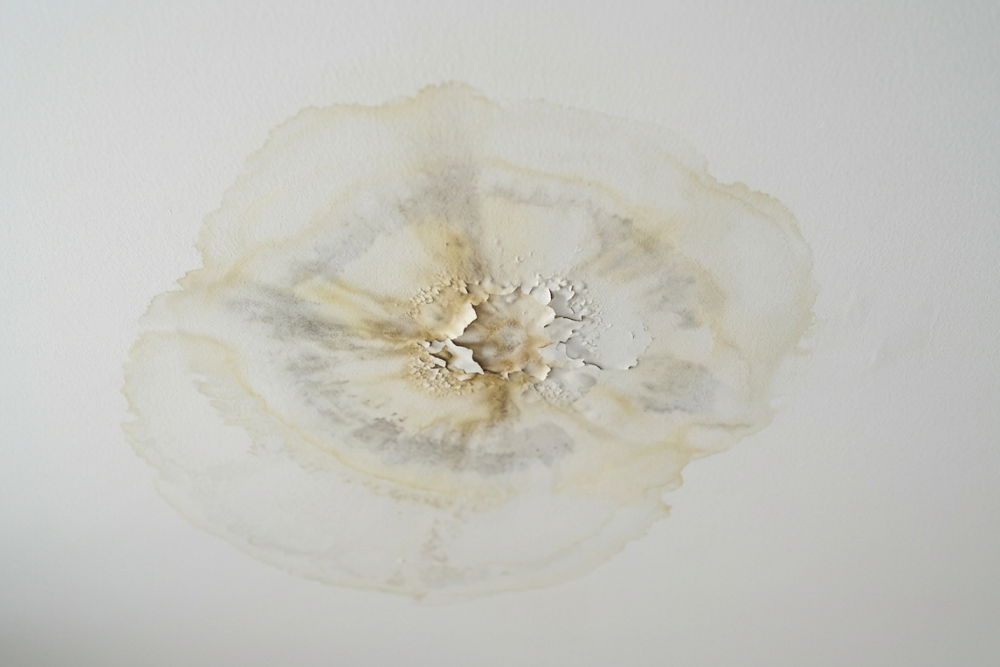
Not every damp patch is a leak. In a poorly ventilated bathroom or laundry area, humid air condensing on a cooler ceiling surface can leave a stain that looks similar. The distinguishing test is pattern and timing: condensation tends to be diffuse, appears in consistently humid rooms, and doesn't grow after a specific event. A leak stain has a more defined edge, tends to darken or spread after AC use or rainfall specifically, and often has a faint ring where water has dried at the boundary of each new wave.
| Likely cause | Typical pattern | Who's usually responsible |
|---|---|---|
| AC condensate overflow | Appears or worsens during heavy AC use, often near a unit's indoor location | Owner or building management, depending on the unit |
| Roof membrane failure | Worsens specifically after rain, top-floor units | Building owner or facilities management |
| Leak from the unit above | Appears regardless of your own AC or water use | The upstairs owner or the building's management |
| Tank or pipe in the ceiling void | Slow, gradual staining with no clear trigger event | Property owner |
| Condensation | Diffuse, in consistently humid rooms, no growth after a single event | Ventilation fix, not a repair |
Why You Shouldn't Just Repaint Over It
A fresh coat of paint covers the stain but does nothing about the moisture still sitting in the gypsum board or the void above it. Left long enough, saturated gypsum loses structural integrity and can sag or, in the more serious cases, fail outright. If the ceiling feels soft to a light touch, or you can see any bulge, treat that as a sign to get it looked at before it's addressed, not after.
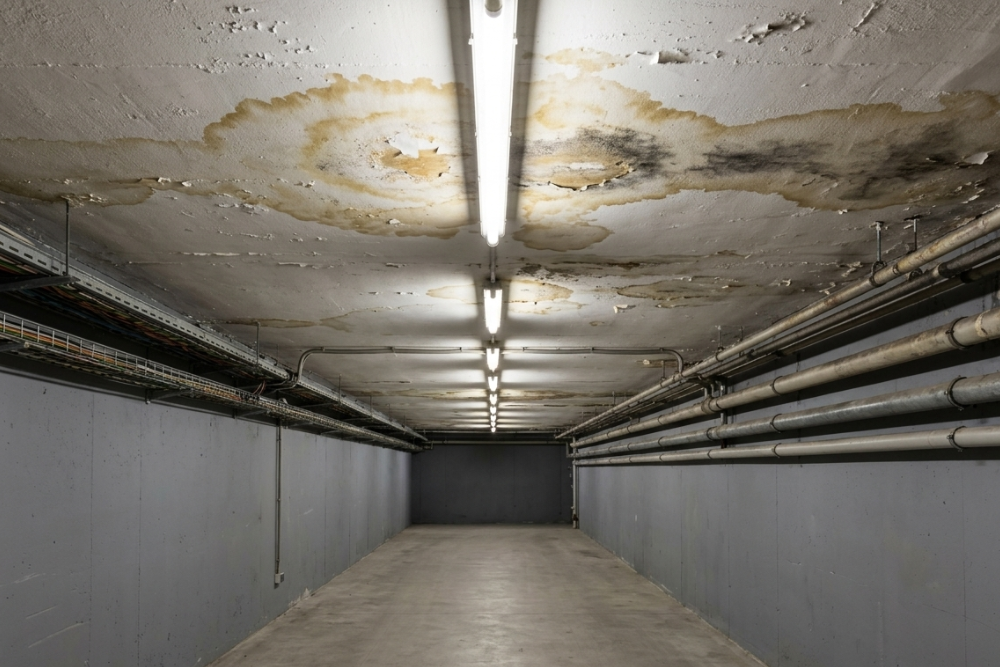
!Where the water shows up isn't where it started
Because water tracks along the path of least resistance before it drips through, the stain's location is a starting point for an inspection, not a diagnosis on its own. A proper leak survey traces the path back to the actual source rather than opening the ceiling directly under the stain.
FAQ
Can I just track the source myself before calling anyone? You can rule out condensation with the pattern test above, but tracing an active leak through a ceiling void reliably needs thermal imaging or moisture metering, guessing and opening plasterboard blind usually causes more damage than it saves.
Is a ceiling leak ever an emergency? If the ceiling is actively dripping, sagging, or feels soft to a light touch, treat it as one. A dry, stable stain with no active water can usually wait for a scheduled inspection.
Will the stain go away once the leak is fixed? The active leak stops, but the discolouration typically remains until the affected section is cleaned, primed, and repainted, the fix and the cosmetic repair are two separate steps.
Related Service
Leak Detection
Dealing with this issue right now? See real pricing and how we handle it.
View Leak Detection