A running toilet is easy to ignore. It's not dramatic, nothing's overflowing, and the sound fades into background noise after a day or two. But a toilet that keeps running is losing water continuously, every hour, every day, until something is actually fixed, and the cost of that shows up quietly on the next DEWA bill rather than as an obvious emergency.
The good news is that a running toilet is almost always a mechanical issue inside the tank, not a structural problem, and four of the five causes below are genuinely fixable without calling anyone. This guide walks through how to confirm what's actually happening, each of the five real causes, and the specific fix for each one.
!Quick answer
A running toilet is almost always a worn flapper seal letting water leak from the tank into the bowl, the fill valve then runs continuously (or in short bursts, a phantom flush) to compensate. In most cases the fix costs under AED 50 in parts. Left unfixed, a running toilet can waste 200 to over 1,000 litres a day depending on severity, an entirely avoidable addition to your DEWA bill.
Confirm It's Actually Running First
Before opening the tank, it's worth ruling out the obvious: a toilet that was recently flushed can sound like it's still running for the first minute or two as the tank refills normally. If the sound continues well past that, or if you can hear a faint hiss or trickle at random points through the day with no one having used the toilet, that's the pattern worth investigating.
!The food coloring test
This is the single most reliable way to confirm a leaking flapper without opening anything mechanical. Lift the tank lid, add a few drops of food coloring to the water inside the tank, and don't flush. Wait ten to fifteen minutes, then look in the bowl. If any color has appeared there without a flush, water is leaking past the flapper seal continuously, which is your answer before you've touched a single part.
It's also worth distinguishing between two different patterns, since they point toward different causes. A toilet that runs continuously, a steady sound that never stops, is usually a flapper or chain issue: water is escaping the tank constantly and the fill valve is working non-stop to keep up. A toilet that runs intermittently, silent for a while and then briefly refilling on its own every few minutes with no one having used it, sometimes called phantom flushing, more often points to the flapper letting a small amount of water past slowly enough that it takes time to trigger the fill valve, or occasionally to water pressure fluctuations elsewhere in the property affecting the fill valve's behavior. Both patterns are worth the food coloring test; it works for either.
Phantom Flush (Ghost Flushing): The Intermittent Version
A phantom flush, also called ghost flushing, is when the tank briefly refills on its own every few minutes without anyone having used the toilet, rather than running continuously. The tank isn't actually flushing itself; what you're hearing is the fill valve topping up water that's slowly leaked past the flapper into the bowl, and once enough has drained out to trip the fill valve's sensor, it briefly runs to top the tank back up, then stops again until the cycle repeats.
Because the leak driving it is slow, a phantom flush is easy to dismiss as normal or intermittent noise rather than a fault worth fixing, but it wastes water continuously the same way a fully running toilet does, just in smaller, spaced-out amounts rather than one constant stream. The food coloring test above confirms it exactly the same way it confirms a continuously running toilet: color appearing in the bowl between flushes means the flapper is the source, regardless of whether the running sound is constant or comes in short bursts.
Phantom Flush: Quick Answers
What causes a phantom flush or ghost flushing?
Is phantom flushing the same problem as a toilet that runs constantly?
Can I ignore a phantom flush since it's only running for a few seconds at a time?
Cause 1: A Worn or Warped Flapper Seal
This is the most common cause by a wide margin, and it's also the cheapest and easiest to fix yourself. The flapper is the rubber seal at the bottom of the tank that lifts when you flush and drops back down to seal the tank shut afterward. Over time, that seal degrades: it hardens, warps, or develops a rough surface that no longer sits flat against the valve seat, and water trickles past it into the bowl continuously.
Dubai's water conditions genuinely accelerate this specific failure. Hard water deposits mineral scale directly onto the rubber surface, which prevents the flapper from forming a completely flat seal even when the rubber itself is otherwise in reasonable condition. Chlorine in the municipal supply, standard for treated water everywhere, also breaks down rubber compounds faster than it would in untreated water, which is part of why flappers in this region tend to need replacement more often than the manufacturer's general guidance suggests.
To check it: lift the tank lid and look at the flapper while the tank is full and settled. It should be sitting completely flat against the valve seat. Common visible problems include warping (the edge doesn't sit flush), visible mineral scale or a rough, chalky texture on the rubber, or a chain that's too short and holding the flapper slightly open.
- Turn off the water supply at the shut-off valve behind the toilet
- Flush to empty most of the tank, then remove the old flapper, it usually unhooks from two pegs on either side of the overflow tube
- Take the old flapper with you when buying a replacement; flapper sizes and shapes vary between toilet models and an approximate match won't seal properly
- Hook the new flapper onto the same pegs and connect the chain, leaving a small amount of slack, roughly a centimetre, so it closes fully without being pulled open
- Turn the water back on and flush a few times to confirm a clean seal before considering it done
Cause 2: A Chain That's Too Long, Too Short, or Tangled
The chain connecting the flush lever to the flapper is a simple part with a narrow correct range. Too short, or tangled around the overflow tube, and it holds the flapper slightly open permanently, which produces a continuous trickle that looks identical to a worn flapper seal at first glance. Too long, and the flapper can't lift high enough during a flush, or the excess chain gets caught underneath it when it tries to close, propping it open the same way.
This is worth checking before assuming the flapper itself needs replacing, since it costs nothing to fix and takes under a minute. With the tank lid off, look at how much slack sits between the lever arm and the flapper when the flapper is closed. The right amount is small, about a centimetre of visible slack, enough that the chain isn't taut but not so much that it can tangle around the overflow tube or bunch up under the flapper. Trim excess chain with pliers if there's clearly too much of it, and reposition or replace it if it's kinked or twisted in a way that won't sit straight.
Cause 3: A Float Set Too High
Every toilet tank has an overflow tube, a vertical pipe in the middle of the tank that exists specifically to prevent flooding if the water level ever gets too high. If the float, either a ball on an arm or a cylindrical float around the fill valve depending on the toilet's age, is set too high, water keeps filling past the point where it should stop and drains continuously down that overflow tube. This produces a running sound that can be intermittent rather than constant, since it cycles as the fill valve keeps trying to compensate.
To check: flush the toilet and watch where the water settles once the tank finishes filling. It should stop roughly one inch, about two and a half centimetres, below the top of the overflow tube. If it's at or above that level, the float needs adjusting down.
- For a ball-float system, there's usually a small screw or adjustment mechanism where the float arm meets the fill valve; turning it adjusts the float's resting height
- For a cylindrical float around the fill valve, there's typically a clip or a twist adjustment on the side of the valve itself; lowering it lowers the shutoff point
- Make small adjustments and re-test after each one rather than guessing at a large change; a float set too low causes a weak flush, which is a different problem you don't want to trade for this one
Cause 4: A Faulty Fill Valve
The fill valve is the mechanism that controls water entering the tank after a flush and shuts off once the target level is reached. When it fails, water either doesn't shut off cleanly, producing a continuous or intermittent running sound, or the valve itself develops an internal leak that lets water trickle through even when it's supposedly closed. This is a more involved fix than a flapper or chain, since it usually means replacing the entire valve assembly rather than adjusting a part.
A fill valve failing this way is often, though not always, connected to the same hard water conditions affecting the flapper: mineral deposits inside the valve mechanism prevent it from seating and shutting off cleanly, the same underlying cause showing up in a different component. If you've already ruled out the flapper, chain, and float and the toilet is still running, or if you can hear a faint hiss with the tank full and everything else checked, the fill valve is the next place to look.
This is a reasonable DIY replacement for anyone comfortable with basic tools, universal fill valves are inexpensive and widely available, but it's also the point in this list where calling a plumber is a fully reasonable choice rather than a sign the problem is serious. The part itself is cheap; getting the connection right without a slow drip afterward is the part that benefits from experience.
- Turn off the water supply and flush to empty the tank as much as possible, holding the handle down to drain the last of it
- Disconnect the supply line from the base of the old fill valve, usually a simple nut connection, and remove the valve by unscrewing the locknut underneath the tank
- Install the new valve, adjusting its height according to the packaging instructions before tightening, most universal valves are adjustable to fit different tank heights
- Reconnect the supply line, attach the small refill tube to the overflow tube (this refills the bowl after each flush, easy to forget when swapping valves), and turn the water back on slowly
- Watch the tank fill fully, check for any drips at the connections, and flush several times to confirm both a clean shutoff and a proper seal
Cause 5: A Cracked Overflow Tube or Tank-to-Bowl Gasket
Less common than the four causes above, but worth knowing about, since it's the one genuine case where you'll see water outside the tank rather than just hear it running inside. If there's visible water pooling at the base of the toilet or dampness between the tank and the bowl, rather than just the sound of running water, the issue is likely a failed gasket where the tank bolts onto the bowl, or a crack in the tank itself. This isn't something to attempt fixing without experience, since an incorrectly reseated tank can crack under the bolt pressure and turn a repair into a full toilet replacement.
What a Running Toilet Actually Costs You
A continuously running toilet can waste anywhere from roughly 200 to over 1,000 litres of water a day, depending on how severe the leak is, a slow trickle from mineral scale on a flapper sits at the low end, while a stuck-open flapper or a float set well above the overflow tube sits toward the high end. Even at the lower end of that range, that's a meaningful, entirely avoidable addition to a monthly DEWA bill for a fault that, in most cases, costs under fifty dirhams in parts to fix.
| Cause | How to Confirm It | DIY Fix Difficulty |
|---|---|---|
| Worn or scaled flapper seal | Food coloring test; visible warping or scale on the rubber | Easy, 10-15 minutes |
| Chain too long, short, or tangled | Visual check of slack when flapper is closed | Easy, under 5 minutes |
| Float set too high | Water level at or above the overflow tube after a flush | Easy to moderate |
| Faulty fill valve | Hissing with tank full, or no change after flapper/chain/float checks | Moderate, replacement recommended |
| Cracked overflow tube or tank gasket | Visible water outside the tank, not just sound | Call a plumber |
When to Stop Troubleshooting and Call Someone
- Water is visible outside the tank, at the base of the toilet or between the tank and bowl, not just audible inside it
- You've replaced the flapper and adjusted the chain and float, and the toilet is still running
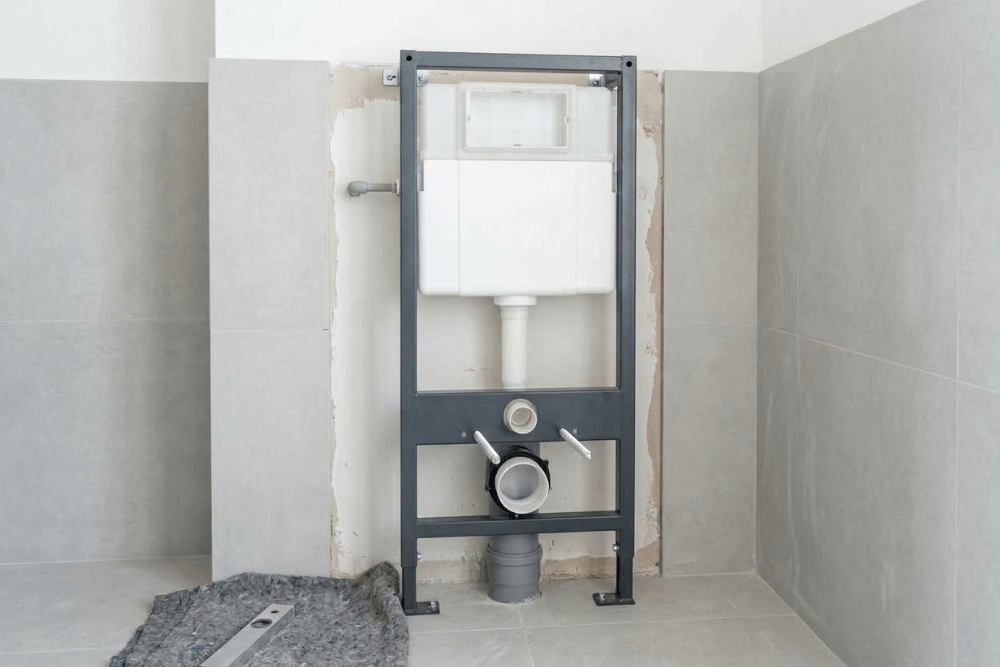
- The toilet is a concealed cistern system, built into the wall behind the bowl; these need a different access approach and aren't a straightforward DIY job the way an exposed tank is
- You're not confident shutting off and safely reconnecting the water supply yourself
For concealed cistern systems specifically, common in newer Dubai apartments and villas, the flush mechanism sits behind the wall accessible through a small panel rather than a lift-off tank lid, and diagnosing the same five causes above requires knowing the specific access point for that brand and model. Our toilet repair page covers concealed cistern systems and brand-specific access in more depth if that's the situation you're dealing with.
Preventing the Next One
- If your property has any history of hard water buildup elsewhere, showerheads, taps, kettle, expect the same mineral scale to eventually affect flapper seals and fill valves too
- A flapper that's due for replacement on age alone, even before it starts visibly failing, is a cheap preventive swap rather than waiting for the running-toilet symptom to appear
- After any plumbing work near the toilet, a quick food coloring test a week later confirms nothing was disturbed during the work
Most running toilets are a five-to-fifteen-minute fix once you know which of these five causes is actually responsible. The food coloring test and a look inside the tank answers that question directly, rather than guessing and replacing parts that weren't actually the problem.
Related Service
Toilet Repair & Installation
Dealing with this issue right now? See real pricing and how we handle it.
View Toilet Repair & Installation