Walk down the cleaning aisle of any Dubai supermarket and you'll find three genuinely different products all labelled "drain cleaner": a caustic gel, an acid-based liquid, and increasingly, an enzyme or bacterial treatment marketed as the safe alternative. They don't work the same way, they're not safe on the same pipes, and none of them fix the same problem a professional tool does. This isn't a buying guide dressed up as marketing copy, it's the actual chemistry and mechanics behind each option, what it can genuinely fix, what it can't, and why a fact specific to Dubai's water changes the calculation more than most guides mention.
The Three Types of Chemical Drain Cleaner, and How Each Works
Almost every bottled drain cleaner on the market falls into one of three chemical categories, and the category matters more than the brand name on the front.
Caustic (Alkaline) Cleaners
This is the most common type, sold under most major drain-cleaner brand names, and its active ingredient is almost always sodium hydroxide, also known as caustic soda or lye. When it dissolves in water it splits into sodium and hydroxide ions, producing a strongly alkaline solution with a pH around 14 and releasing a significant amount of heat as it does. That heat and alkalinity together drive two chemical reactions on contact with an organic clog: saponification, where the hydroxide ions react with fats and greases to convert them into soap and glycerol, essentially the same reaction that makes soap from scratch, and hydrolysis, which breaks down protein-based material like hair. The clog doesn't get pushed anywhere, it gets chemically converted into something water-soluble enough to rinse away.
The same heat that drives the reaction is also the source of the main risk. Caustic reactions get hot enough, especially with a large dose poured onto a fully blocked drain with nowhere for the heat to dissipate, to soften PVC pipe, which is the standard drainage material in the great majority of modern Dubai construction. PVC begins to soften at roughly 60°C (140°F), a temperature a concentrated caustic reaction in a confined pipe section can reach. Softened PVC doesn't fail immediately, it warps slightly and the joints lose some of their seal, which shows up weeks or months later as a slow leak that has nothing to do with the clog you were trying to clear. Caustic cleaners are also incompatible with septic systems: the same alkalinity that dissolves organic clogs kills the bacteria a septic tank depends on to break down waste.
Acid-Based Cleaners
Less common on Dubai supermarket shelves but still available, acid-based cleaners use concentrated sulfuric or hydrochloric acid rather than an alkaline base. The mechanism is broadly similar in outcome, aggressive chemical breakdown of organic material, but the chemistry is the opposite: these formulations push the solution's pH below 3 rather than above 12, and the reaction is, if anything, more aggressive and more dangerous to handle. Acid-based cleaners are genuinely effective against some material caustic cleaners struggle with, including a degree of mineral scale, but the trade-off is severe: concentrated sulfuric acid emits corrosive fumes on contact with air alone, before it's even touched water, fumes capable of irritating the respiratory tract and, with repeated exposure, eroding tooth enamel. Some countries restrict sale or use of acid-based drain cleaners to licensed professionals for exactly this reason. We don't recommend these for DIY use under any circumstance, the risk profile doesn't match the marginal effectiveness gain over a caustic cleaner or, better, a mechanical tool.
Enzyme & Bacterial Cleaners
The newer, greener-marketed category works on a completely different principle: rather than a chemical reaction that happens once, enzyme cleaners introduce proteases, lipases, and amylases, enzymes that target protein, fat, and starch respectively, sometimes alongside live bacterial cultures that continue colonising the pipe wall after the initial treatment and keep digesting organic buildup over time. This is genuinely useful for a specific job: ongoing prevention on a drain that's shown early signs of slowing, not a fully blocked one that needs clearing today. Enzyme treatments are slow, typically needing 6 to 24 hours of contact time to show a real result, and they're only effective against organic material, hair, soap scum, food waste. They do nothing against hair that's already matted into a dense physical clump, nothing against mineral scale, and nothing against a genuine solid obstruction. Their real advantage is that they're septic-safe and gentle enough not to stress PVC joints, which makes them a reasonable monthly maintenance product, not an emergency fix.
Oxidizing Cleaners
A smaller fourth category worth a brief mention: oxidizing cleaners, typically built around sodium hypochlorite (bleach) or nitrates, work by stripping electrons from organic material, decomposing it into smaller, water-soluble pieces. They're generally milder than caustic or acid options and produce fewer pipe-damaging heat spikes, but they're correspondingly weaker against a genuine blockage, better suited to odor control and light mold or mildew in a slow drain than to clearing something that's actually stopped flowing.
!The heat is the risk, not just the chemical
Every caustic or acid reaction generates heat as a normal part of how it works, that's not a malfunction, it's the mechanism. The risk to PVC pipe comes specifically from that heat building up in a confined space with nowhere to go, which is exactly what happens when a drain is already fully blocked and the cleaner just sits there reacting. This is also why repeated caustic dosing on the same drain, a common instinct when the first attempt doesn't fully clear it, is worse than a single application: each dose adds another heat cycle to the same section of pipe.
How to Tell Which Type You're Actually Buying
Marketing names rarely tell you the chemistry, "power gel", "max strength", "pro formula" are used across all three chemical categories, so the ingredients list on the back is the only reliable way to know what's actually in the bottle before you use it.
- Sodium hydroxide, caustic soda, or lye listed as the active ingredient: this is a caustic cleaner, follow the PVC and septic guidance above
- Sulfuric acid or hydrochloric acid listed: this is an acid-based cleaner, the most aggressive and hazardous option, ventilate the area well and avoid entirely if there's any chance of splash-back
- Sodium hypochlorite or listed simply as containing bleach: an oxidizing cleaner, mild, better for odor and light buildup than a genuine blockage
- Labelled "enzyme", "bio", "bacterial", or lists protease/lipase/amylase: this is the slow-acting, septic-safe maintenance option, not a same-day fix for a full blockage
- No clear active ingredient listed at all, just a vague "proprietary blend": treat it as caustic by default for safety purposes, ventilate and glove up as if it were, since this is the most common category to omit specifics
This matters practically because the products sold in Dubai supermarkets and hardware stores don't always carry the same branding as what's reviewed in most English-language guides written for other markets, the chemistry underneath is what determines the actual risk and effectiveness, not the brand name on the shelf.
What None of These Chemicals Can Actually Fix
Here's the point most drain cleaner marketing skips entirely, and it matters more in Dubai than almost anywhere else: none of the four categories above dissolve mineral scale. Caustic, acid, enzyme, and oxidizing cleaners are all formulated to break down organic material, fats, hair, protein, food waste. Mineral scale, the calcium and magnesium deposits that build up on the inside of a pipe from hard water, is inorganic, and none of these products touch it.
This matters specifically here because Dubai's municipal water runs meaningfully harder than the roughly 60 ppm benchmark for genuinely soft water, commonly measured well into the hundreds of parts per million depending on the property and its own pipework. That mineral content deposits as scale on the inside of every pipe it passes through, gradually narrowing the internal diameter the same way it leaves visible residue on a showerhead or kettle element. A pipe narrowed by scale catches organic debris, hair, soap residue, food particles, far more easily than a clean one, which is a large part of why the same drain in a Dubai property tends to reclog faster than the identical habits would produce in a soft-water region.
A chemical cleaner poured down that same drain will genuinely dissolve the organic clog sitting in it. It will do nothing to the scale layer that made the pipe narrow enough to catch that clog in the first place. The drain runs clear for a while, the underlying cause is untouched, and the next organic clog catches on the same narrowed section sooner than it would have in a scale-free pipe. This is the actual mechanism behind a complaint we hear often: "I used the cleaner and it worked, but it's blocked again three weeks later." The cleaner did work, on the part of the problem it was ever capable of solving.
| Method | What It Actually Dissolves | Won't Touch | Septic-Safe | PVC Risk |
|---|---|---|---|---|
| Caustic (sodium hydroxide) | Fats, grease, hair (protein) | Mineral scale, solid objects | No | Yes, with heat/repeat use |
| Acid (sulfuric/hydrochloric) | Organic matter, some mineral scale | Solid inorganic objects | No | Yes, more aggressively |
| Enzyme/bacterial | Organic matter, slowly | Mineral scale, matted hair, solids | Yes | Minimal |
| Oxidizing (bleach-based) | Light organic matter, odor/mold | Mineral scale, real blockages | No | Minimal |
| Mechanical snake/auger | Physically removes the clog | Nothing, if reached | Yes | None |
| Hydro jetting | Scours full pipe wall, incl. some scale | Structural pipe damage | Yes, with care | None, pressure-calibrated |
DIY Tools Worth Keeping on Hand
Before reaching for any chemical, the mechanical options handle a genuine majority of household clogs, without the pipe or septic risk.
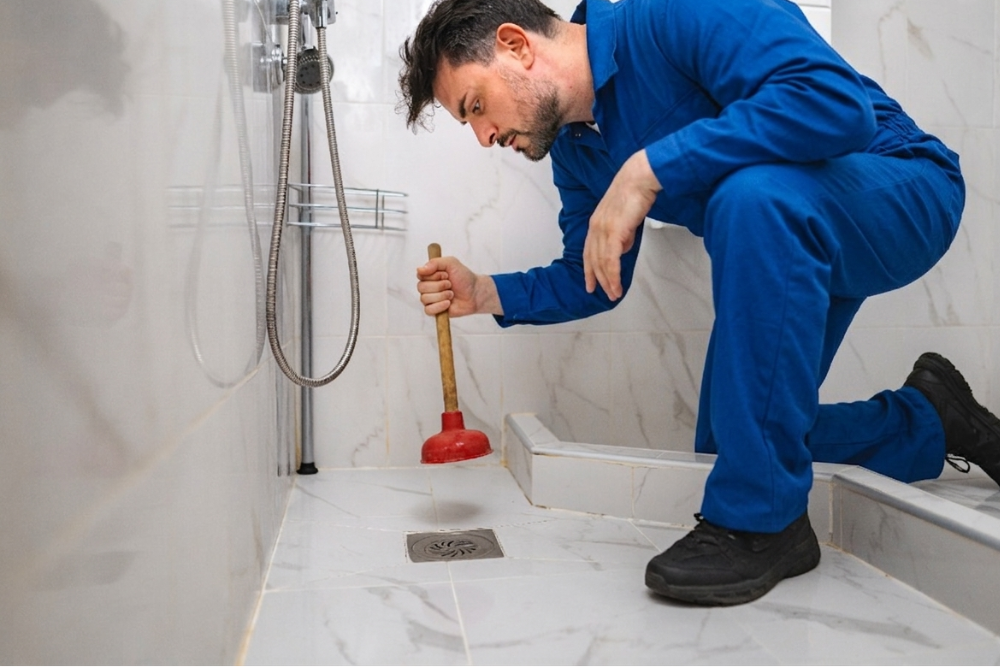
- Cup plunger, for a flat-bottomed fixture like a sink or bathtub: seal the overflow hole with a wet rag first, or the plunger never builds real suction against the clog
- Flange plunger, the type with an extended rubber lip, specifically for a toilet: the flange seats into the trap opening and creates a far better seal than a cup plunger ever will on that shape
- Zip-it tool (a long, barbed plastic strip): pulls a hair mat directly out of a sink or shower drain opening, often clearing the single most common type of bathroom clog in under a minute without touching a chemical or a snake
- Hand auger (also called a plumber's snake): a flexible cable on a hand crank, fed into the drain to physically hook and pull out, or break up, a clog sitting further in than a zip-it tool can reach
- Closet auger: a hand auger with a protective sleeve specifically designed for toilets, so the cable can be worked past the trap without scratching the porcelain
- Drain rods: a set of screw-together rigid rods, more common on villa and older-property external drainage than indoor fixtures, used to physically push through a blockage in a floor drain, gully trap, or external pipe run by hand
- A small drain brush: a stiff, narrow brush on a flexible handle, genuinely useful for the accessible section just past a sink or shower drain opening where a zip-it tool can't get a grip, but too short to reach a clog any further down the line
The common thread across all of these: they physically remove or break up the clog rather than trying to dissolve it, which means no heat, no pH extremes, and nothing to worry about if the property runs on a septic system. The trade-off is that they take a bit more effort and, for the auger and drain rod options, a level of hands-on comfort not everyone has.
What Professional Equipment Does Differently
The equipment a professional brings isn't a stronger version of the same DIY tools, it's built to solve a different category of problem: recurring blockages, main-line issues, and situations where guessing at cable size or chemical strength genuinely risks making things worse.
Cable-based drum machines, the step up from a hand auger, are sized specifically to the pipe they're working: roughly a quarter-inch cable for a sink or basin trap, scaling up to five-eighths of an inch or larger with a cutting head for a main line. Using an oversized cable on a small fixture risks damaging the fitting; an undersized one on a main line just punches a narrow hole through the middle of the blockage without actually clearing it. This is also why a proper diagnosis, sometimes with a push-rod camera, comes before the cable goes in on anything beyond a straightforward single-fixture clog, not as an upsell but because guessing at pipe material and blockage type on a main line is how avoidable damage happens.
Hydro jetting equipment addresses the exact gap every chemical option in this article shares: it's the only method here that meaningfully cleans the full interior wall of a pipe rather than just clearing a path through the middle of a clog. Pressure is calibrated to the specific pipe's material and condition, confirmed by camera first, which is why it can be used on both older galvanized pipework and newer PVC without the guesswork a bottled chemical involves. It's also the closest thing to an actual answer to the mineral scale problem raised above: high-pressure water genuinely dislodges a meaningful amount of scale buildup from the pipe wall, something no chemical on a supermarket shelf is formulated to touch.
The camera itself is worth understanding as a tool in its own right, not just a step before jetting. A push-rod CCTV camera fed into the line shows pipe material, the exact location and cause of a blockage, and any structural issue, a cracked joint, root intrusion, a sagging section, that a chemical or even a mechanical snake would otherwise be working around blind. For a drain that's blocked for the first time, this level of diagnosis is often unnecessary, a plunger or auger and moving on is the reasonable call. For a recurring blockage, it's the difference between clearing the same symptom for the third time and actually finding out why it keeps happening.
A Practical Decision Framework: What to Reach for First
- First-time, single-fixture slow drain (sink, shower): try a zip-it tool or plunger first, this alone resolves a large share of these
- Toilet that's clogged but not fully blocked: flange plunger first, closet auger if that doesn't clear it, never a chemical cleaner in a toilet bowl specifically, the standing water dilutes it and increases splash-back risk when it doesn't fully drain
- Slow drain with no full blockage, wanting prevention rather than a cure: an enzyme treatment used monthly is a reasonable low-risk maintenance step
- Property on a septic system, any drain: skip caustic and acid cleaners entirely, use mechanical tools or an enzyme product only
- Same drain blocking again within weeks of being cleared: stop reaching for any bottled product, this pattern points to scale buildup or a structural issue a chemical was never going to fix, worth a proper camera look
- Multiple fixtures affected at once, or gurgling from a different drain when one is used: this is a shared-line issue, not a single-fixture clog, and no amount of product poured into any one drain addresses it
!Never mix products, and never follow one chemical with another
Combining a caustic cleaner with an acid-based one, even hours apart if there's meaningful residue left in the pipe, risks a violent reaction. If a first attempt with one type of chemical cleaner hasn't worked, the next step is a mechanical tool or a call to a professional, not a different bottle from the same shelf.
Villa Floor Drains & Gully Traps: Why Chemicals Barely Work Outdoors
Worth a specific note for Dubai villa owners: the same bottled products that work reasonably well in an indoor sink trap are far less effective on an external floor drain or gully trap, and it's not really about the chemical formula. Indoor drains are a closed system, pour a cleaner in and it sits in contact with the clog in the trap for its full dwell time. A villa gully trap is a more open system exposed to sand, dust, and windblown debris, and a chemical poured in often just flows straight through without meaningful contact time against what's actually causing the slowdown, usually accumulated sand and grit rather than an organic clog a chemical is designed to dissolve. This is one of the clearest cases where a physical clean-out, clearing the trap by hand or with drain rods, genuinely outperforms any bottled product, because the problem was never something a chemical reaction was going to solve in the first place.
Frequently Asked Questions
Is it safe to use a caustic drain cleaner if I have PVC pipes? A single, correctly dosed application on an otherwise sound PVC pipe is unlikely to cause immediate damage, but repeated use on the same drain compounds the heat exposure over time, and a fully blocked drain, where the cleaner has nowhere to flow and just sits reacting, is the highest-risk scenario. If a drain needs more than one round of chemical treatment, that's the signal to switch to a mechanical tool instead.
Can I use an enzyme cleaner and a mechanical snake together? Yes, and it's actually a reasonable combination: physically clear the immediate blockage with a snake or auger first, then follow up with an enzyme treatment on a regular schedule to slow the buildup that caused it. The two work on genuinely different parts of the problem rather than competing with each other.
Why did the drain cleaner work at first and then stop working after a few uses? This usually means the underlying cause isn't actually organic material the chemical can dissolve, most often mineral scale narrowing the pipe, in which case each application clears the symptom without touching the cause, or a structural issue like a sagging section or root intrusion that a chemical was never capable of addressing regardless of how many times it's applied.
Are drain cleaning tablets any different from liquid or gel cleaners? Tablets and gels are typically the same active chemistry, caustic, enzyme, or occasionally a combination, in a different delivery format. Tablets dissolve more slowly and can be easier to dose accurately for maintenance use; gels cling to vertical pipe surfaces slightly better than a thin liquid. Neither format changes what the underlying chemical can or can't actually fix.
Do I need special equipment to use drain rods myself on a villa gully trap? No special equipment beyond the rod set itself, which screws together in sections to reach the length needed. The main thing to know is direction of rotation, most rod sets are designed to be turned clockwise while pushing, since turning the wrong way can unscrew the sections apart inside the pipe rather than driving the blockage forward.
When does a drain problem stop being a DIY job? Once mechanical tools, and, if the property isn't on septic, a single round of the appropriate chemical, haven't resolved it, or if the same drain has blocked more than once in a short period, continuing to try DIY methods usually just delays a proper diagnosis. A camera survey at that point tells you what's actually happening rather than continuing to guess.
Do professional plumbers ever use the same bottled chemicals sold in stores? Rarely, and not as a primary tool. A technician's default is mechanical, snake, auger, or jetting, because it works regardless of pipe material or septic connection and doesn't carry the liability of a chemical reaction inside a customer's pipework. Where a chemical is used at all, it's typically a professional-grade enzyme product for ongoing maintenance on a commercial account, not a caustic or acid cleaner for an active blockage.
Is it true that hot water alone can clear a grease clog without any product? Sometimes, for a very fresh, light grease clog in a kitchen sink, yes, hot water followed by dish soap can soften and move it along before it fully hardens. Once grease has cooled and set against a section of pipe, especially one already narrowed by mineral scale, hot water alone rarely stays hot enough by the time it reaches the clog to do much, this is really a prevention technique rather than a cure for an established blockage.
The honest summary: chemical drain cleaners aren't a scam, but they're formulated to solve one specific kind of problem, organic buildup, and marketed as if they solve every kind. In a city where hard water scale is doing a meaningful share of the underlying damage, that gap between what the bottle promises and what the chemistry can actually deliver matters more than it would somewhere with softer water. A mechanical tool, used correctly, resolves more household clogs with less pipe and septic risk than most people expect, and for anything that keeps coming back, the fix is a proper look at the pipe, not a stronger version of the same bottle.
Related Service
Drain Cleaning
Dealing with this issue right now? See real pricing and how we handle it.
View Drain Cleaning