A slow or blocked drain is one of the most common calls we get, and also one of the easiest to misdiagnose. Sometimes it's a simple clog you can clear yourself in five minutes. Sometimes it's a sign of something further down the line that a plunger will never fix. This guide walks through how to tell the difference, what's genuinely safe to try at home, and when it's time to stop and call someone.
!Quick answer
One slow drain is usually a local clog, try a plunger or drain snake first. Multiple drains slow at once, or gurgling when another fixture drains, points to the shared line and needs professional clearing, usually hydro jetting rather than a plunger. Skip chemical drain cleaners either way, they rarely clear more than the top of a clog and can damage older pipes.
Is It Actually a Blockage?
Before reaching for a plunger, it's worth confirming what you're actually dealing with. A single fixture draining slowly, just one sink or one shower, points to a localised clog in that fixture's own pipe. If multiple drains are slow or backing up at the same time, kitchen and bathroom together, for example, that's usually a sign the problem is further down the shared line, not something a plunger at one sink will resolve.
Gurgling sounds from a drain when you run water elsewhere in the house is another useful clue. That's air being displaced somewhere in the shared system, and it usually means the blockage is affecting more than the one fixture you're standing at.
What You Can Try Yourself
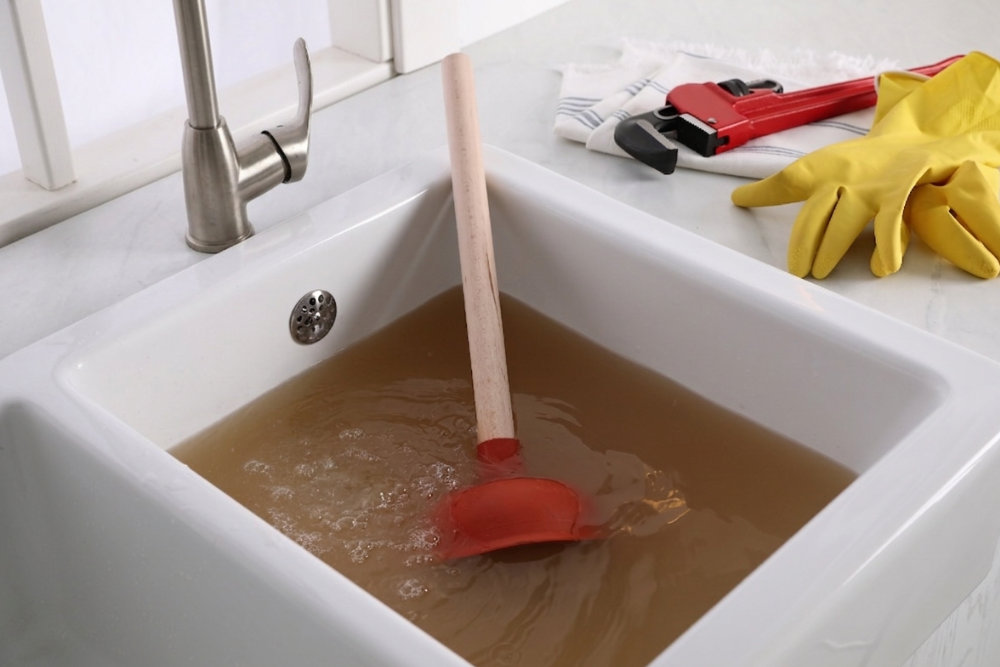
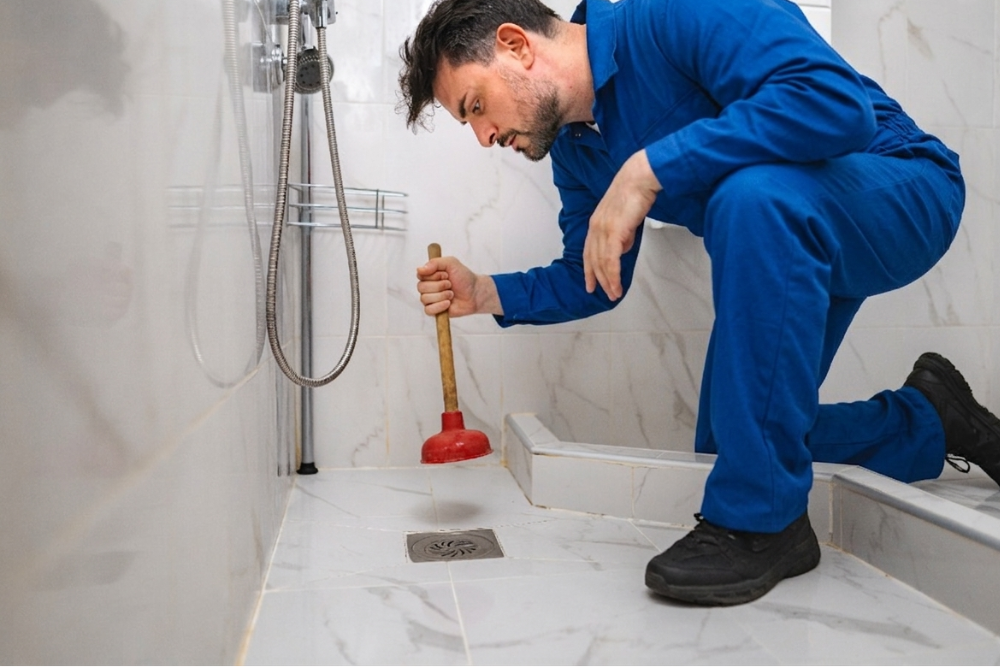
- A plunger, used correctly: enough water in the basin to cover the plunger cup, a firm seal over the drain, and steady pushes rather than one hard slam
- A drain snake or barbed plastic tool for hair and debris caught just below the stopper, common in shower and bathroom sink drains
- Hot water flushed through a kitchen sink drain to help break up light grease buildup, most effective as prevention rather than a fix for an existing blockage
- Checking and cleaning a visible P-trap under a sink, the curved section of pipe, which is where a lot of accessible clogs actually sit
!Skip the chemical drain cleaner
Chemical drain cleaners rarely clear anything beyond the very top of a clog, and the heat they generate can damage older pipes, particularly PVC. They also make the job harder and more hazardous for a plumber if the blockage doesn't clear and a technician has to work on the line afterward. If a plunger and a drain snake haven't worked, that's the signal to call rather than escalate to chemicals.
When to Call a Professional
A few signs mean it's time to stop troubleshooting yourself:
- Multiple drains affected at the same time, pointing to the main line rather than one fixture
- The blockage keeps coming back within weeks of clearing it, a sign of a recurring cause rather than a one-off clog
- Water backing up from a drain rather than draining away, especially at the lowest drain in the property
- A plunger and drain snake have both been tried without any real improvement
How We Clear a Stubborn Blockage
For anything beyond a simple clog, the right tool is usually hydro jetting rather than a mechanical snake. A snake punches a hole through a blockage; high-pressure water jetting scours the full interior of the pipe wall clean, removing grease, scale, and buildup rather than just pushing it further along the line. For a recurring blockage in the same spot, we'll often run a camera inspection first, so the actual cause, a root intrusion, a section of scale buildup, a structural issue, is confirmed before deciding on the right approach rather than guessing.
Preventing the Next Blockage
- Use a drain strainer in showers and kitchen sinks to catch hair and food debris before it goes down
- Avoid pouring cooking fat or oil down a kitchen drain, even diluted with hot water; it resolidifies further down the pipe
- Don't flush wipes, even ones labelled flushable, or other non-toilet-paper items
- For a property with a history of recurring blockages, a scheduled jetting visit once or twice a year keeps the line genuinely clear rather than just managing symptoms as they appear
Most blocked drains are a straightforward fix, either something you can clear yourself in a few minutes or a same-day callout. The main thing worth avoiding is escalating with chemicals or repeated plunging on something that was never going to clear that way. If it's not resolving, that's useful information in itself, not a reason to keep trying the same thing harder.
How do I know if a blocked drain is a DIY job or needs a plumber?
Are chemical drain cleaners safe to use?
Why does my drain gurgle when I run water somewhere else in the house?
What's the difference between a drain snake and hydro jetting?
Why does the same drain keep blocking again after I clear it?
Is it okay to pour hot water down a kitchen drain to clear grease?
How often should drains be professionally cleaned to prevent blockages?
What can I do myself before calling a plumber?
Related Service
Hydro Jetting & Drain Cleaning
Dealing with this issue right now? See real pricing and how we handle it.
View Hydro Jetting & Drain Cleaning