"Blocked drain" covers a lot of genuinely different situations. A bathroom sink, a shower, a bathtub, and a kitchen sink each clog for different reasons, with different mechanisms sitting behind the drain cover, and each responds best to a slightly different approach. Our general guide to unblocking a drain covers the basics that apply everywhere, plunging, checking for gurgling elsewhere, when to call a professional. This one goes further, fixture by fixture, including the parts of a bathtub drain that most guides skip entirely.
!Quick answer
Bathroom sink: pull the stopper, remove the hair mat, plunge, then check the P-trap. Shower: pull hair from the cover, snake if it won't budge. Bathtub: depends on the mechanism, a pop-up stopper drains slowly when clogged, a trip-lever won't hold water at all, and each needs a different fix. Kitchen sink: it's grease, not hair, never pour it down the drain even with hot water running. Dubai's hard water makes all four worse by turning soap into a sticky scum that binds hair together.
Why This Is Worse in Dubai Than It Looks
Dubai's municipal water supply sits well above what's generally considered soft water, commonly measured somewhere between 200 and over 500 parts per million of dissolved minerals, against a benchmark of around 60 ppm for water classed as genuinely soft. That gap matters directly for drain clogs, not just kettles and showerheads.
Soap, whether bar soap or many liquid formulations, is chemically a fatty acid salt. In soft water it rinses away cleanly. In hard water, the calcium and magnesium ions react with that fatty acid to form a different compound entirely, an insoluble, sticky residue commonly called soap scum, or more precisely soap curd. It doesn't rinse away. It clings to the inside of pipes, and it does something specifically unhelpful to hair: it coats loose strands and binds them together into a denser, more solid mat than hair would ever form on its own. This is the actual chemistry behind why bathroom drains in Dubai clog faster and more solidly than the same habits would produce somewhere with softer water.
Bathroom Sink
A bathroom sink's most common clog sits right at the stopper or in the P-trap immediately beneath it, hair combined with the soap scum described above, toothpaste residue, and general grooming debris.
- Start by removing the stopper. Most lift out and twist to release; some are held by a pivot rod underneath the sink that needs unscrewing by hand first
- With the stopper out, use a zip-it tool, a long flexible plastic strip with barbs along the edge, or failing that, needle-nose pliers or tweezers, to pull out the hair mat sitting just below the opening; this alone clears a large share of sink clogs
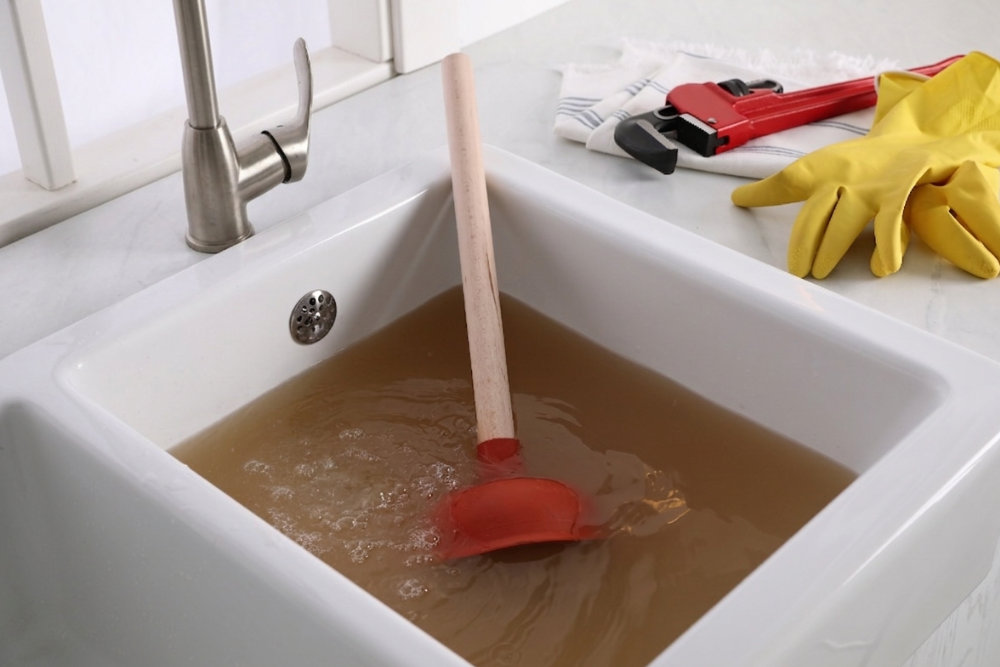
- If that doesn't fully clear it, plunge: fill the sink with enough water to cover the plunger cup, seal the overflow hole with a wet rag or tape so the plunger has something to push against, and use short, firm strokes
- If plunging doesn't work, the clog is likely in the P-trap itself, the curved section of pipe under the sink. Place a bucket underneath, loosen the slip nuts on both sides of the trap by hand or with pliers, and remove it carefully, water and whatever's trapped inside will drain into the bucket
- Clean the trap out completely, hair, scum, and any debris, then reassemble in reverse order, hand-tightening the slip nuts before a final quarter-turn with pliers, not fully wrenched
Shower Drain
A shower drain deals with a genuinely higher volume of hair and soap scum than a sink, simply from how much more water and product runs through it, and the drain opening itself is usually a flat cover or strainer rather than a stopper assembly.
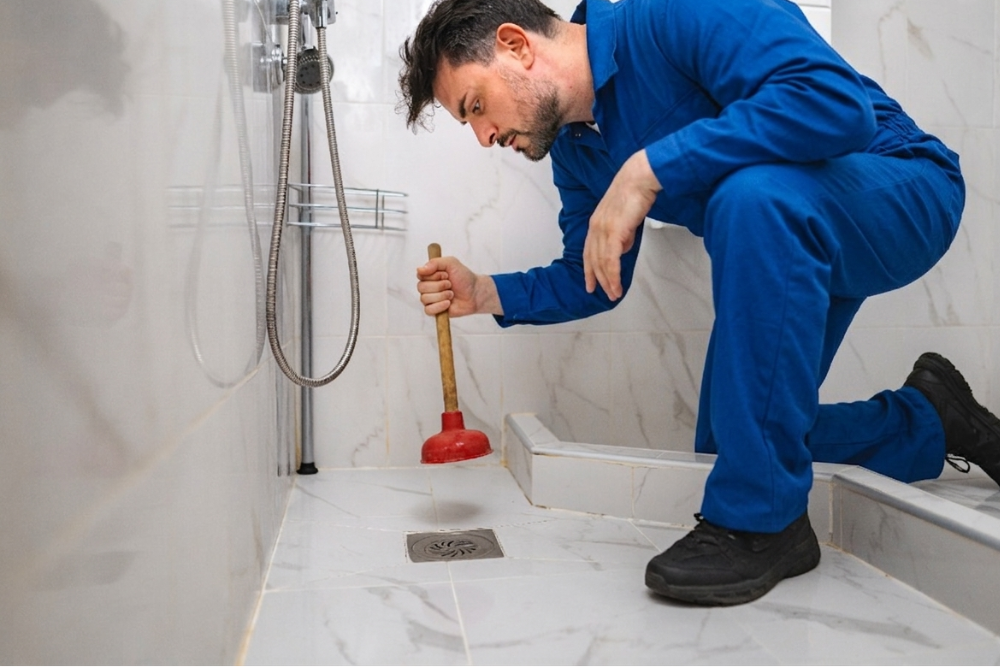
- Remove the drain cover, most simply unscrew or pry up; some flat covers need a flathead screwdriver worked gently under the edge
- Pull visible hair out by hand or with a zip-it tool; shower hair clogs tend to sit as a dense mat right at or just below the opening rather than deeper in the pipe
- For a stubborn mat that won't pull free, a drain snake fed a short distance in and rotated will hook onto it far more effectively than a plunger, which works better on liquid-blocking clogs than on a solid mat
- Finish with hot water, or a baking soda and vinegar pour followed by a hot water rinse, to help clear any remaining soap scum coating the pipe walls
- Reinstall the cover and run the shower for a minute to confirm normal drainage before considering it done
Bathtub Drain
This is the fixture most DIY guides gloss over, and it's genuinely more mechanically involved than a sink or shower, because a bathtub drain isn't just an opening, it's connected to a stopper mechanism operated from the overflow plate on the wall of the tub, and there are two common types that behave differently.
A pop-up stopper sits directly in the drain opening and lifts or drops via a linkage connected to the overflow plate. A trip-lever stopper works differently: a plunger assembly moves up and down inside the overflow tube itself, and a lever on the overflow plate controls it. This matters diagnostically. A pop-up stopper clogged with hair typically drains slowly, the classic clog symptom. A trip-lever mechanism fouled with hair has the opposite problem: hair caught in the linkage can prevent the plunger from seating fully, so the tub won't hold water for a bath even when it drains normally otherwise. If your bathtub won't hold water rather than draining slowly, that's the trip-lever mechanism, not a standard clog, and it needs a different fix.
- Remove the two screws holding the overflow plate to the wall of the tub, then pull the plate away; if it's a trip-lever type, the entire stopper assembly, plunger, linkage, and rod, comes out attached to the plate
- Clean any hair and soap scum off the plunger and linkage with an old toothbrush and a little vinegar to cut through mineral scale, then dry it
- If reassembly still leaves the tub draining slowly, feed a hand auger into the overflow opening rather than the drain itself; this is the correct access point for reaching the actual drain line on a trip-lever system
- For a standard pop-up stopper, squeeze the sides and lift it directly out of the drain opening to access and clear the trap beneath
- When plunging a bathtub specifically, stuff a wet rag firmly into the overflow opening first; otherwise it acts as a pressure-release vent and the plunger never builds enough suction to move anything
!A misaligned linkage can mimic a clog
If a trip-lever tub won't hold water and there's no visible hair or debris on the plunger and linkage after cleaning, the linkage itself may simply be misaligned or the plunger not seating correctly, a mechanical adjustment rather than a blockage. Worth checking before assuming a deeper clog and reaching for an auger.
Kitchen Sink
Kitchen sinks clog for almost entirely different reasons than bathroom fixtures: grease, cooking oil, and food particles rather than hair and soap scum, though Dubai's hard water still plays a role by narrowing the pipe diameter with mineral scale, giving grease more surface to cling to as it cools and solidifies.
- Never pour hot grease or oil down the drain, even with hot water running; it cools and re-solidifies further down the pipe, this is prevention as much as cure
- For a slow-draining kitchen sink, hot water followed by dish soap works on lighter grease buildup, similar to the sink and shower methods but with more emphasis on the soap since grease, not hair, is usually the binder here
- A plunger works on a kitchen sink with a single basin the same way as a bathroom sink; for a double basin, block the second drain opening with a wet rag first so plunging pressure doesn't just escape through it
- If there's a garbage disposal unit, check that it isn't jammed before assuming the pipe itself is blocked; a disposal that's stopped spinning can present identically to a drain clog
- For a P-trap clog, the process is the same as a bathroom sink, bucket underneath, loosen the slip nuts, remove and clean the trap
When the Clog Is Past the Trap
If a fixture's trap comes out clean, and plunging hasn't helped either, the blockage is further down the line than any of the methods above can reach, in the branch drain connecting that fixture to the main waste line. A hand auger fed further in than a trap-clearing pass, deep enough to actually reach and hook the obstruction, is the next step. If that still doesn't clear it, or if the same fixture keeps clogging in the same spot every few months despite repeated clearing, that's usually a sign of something structural, a section of scale buildup, a sagging pipe section, or in villas, root intrusion in an external line, worth a proper camera inspection rather than continuing to clear the symptom repeatedly.
- Multiple fixtures slow or backing up at the same time, not just the one you're working on
- Gurgling from other drains when this fixture is used, a sign of a shared line or venting issue
- A sewage smell accompanying the slow drainage, which can point to a dry trap or a line issue rather than a simple clog
- The same fixture clogging again within weeks of being cleared
Skip the Chemical Drain Cleaner Here Too
!Why these specifically are a poor choice
Chemical drain cleaners generate heat as they react, and that heat is genuinely hard on PVC pipe, which is what most Dubai bathroom and kitchen drain lines are built from. They also do very little against a physically dense hair-and-scum mat, which needs to be pulled out or broken up mechanically, not dissolved. If a plunger and a manual clearing pass haven't worked, the next step is a drain snake, not a bottle from the shop.
Preventing the Next One, Fixture by Fixture
- Fit a mesh hair catcher over every shower and bathroom sink drain, and actually clear it weekly rather than letting it fill until it's the clog itself
- Never pour grease or oil down a kitchen drain, even diluted with hot water
- A monthly hot water flush through bathroom and kitchen drains helps limit soap scum and grease buildup before it hardens
- For a trip-lever bathtub, an annual check of the linkage and a light coat of silicone grease on the moving parts prevents the mineral scale that eventually seizes the mechanism
- For a property with genuinely persistent hard water symptoms across multiple fixtures, a whole-property water softener reduces the underlying cause behind all of this, not just one drain at a time
The right method really does depend on which fixture and which mechanism you're dealing with. A sink and a shower respond to roughly the same approach; a bathtub, particularly a trip-lever one, is a genuinely different job; and a kitchen sink is fighting grease rather than hair. Knowing which one you're actually looking at before reaching for a tool saves a fair amount of wasted effort.
Why do drains clog faster in Dubai than in other cities?
How do I unclog a bathroom sink?
What's the difference between a pop-up and a trip-lever bathtub stopper?
My bathtub won't hold water for a bath but drains fine otherwise. What's wrong?
Can I use a chemical drain cleaner on a shower or sink drain?
How do I unclog a kitchen sink?
What if the trap comes out clean but the drain is still clogged?
Is it safe to pour hot grease down the kitchen drain if I run hot water after it?
How can I prevent bathroom and kitchen drains from clogging again?
Related Service
Hydro Jetting & Drain Cleaning
Dealing with this issue right now? See real pricing and how we handle it.
View Hydro Jetting & Drain Cleaning