You can't see your own pipes. Unless a wall is already open, the only real clue you have to what's running behind your kitchen tiles or under your villa's garden is a single fact you almost certainly do know: the year your building went up. That one number turns out to be a surprisingly good predictor, because Dubai's plumbing standards didn't evolve gradually. They moved in distinct waves tied to the city's construction booms, and each wave used a different default pipe material. A property from 2003 and a property from 2019 are not just different ages, they're plumbed with materials that behave completely differently under two decades of Dubai heat, pressure, and mineral-heavy water.
This isn't a way to diagnose your specific pipes without an inspection, nobody can promise that. It's a way to know what question to be asking, and whether that question is urgent.
The Four Eras of Dubai Pipe Material
Dubai's building stock breaks into four rough periods, each with a material that was standard practice at the time. None of these are hard boundaries, a 2004 building and a 2007 building weren't plumbed to a different rulebook overnight, but the pattern holds well enough to be genuinely useful.
Before the mid-1990s, this is Dubai's oldest occupied housing stock, concentrated in areas like Deira and Bur Dubai. Galvanized steel and early copper were the standard here, the same materials cities worldwide were using before plastic piping systems existed as a mainstream option. Galvanized steel corrodes from the inside as its zinc coating wears away, and by this point, any building still running its original galvanized supply lines is decades past the material's typical 20 to 40 year service life.
From the mid-1990s through the mid-2000s, copper became the default for both villas and apartments during Dubai's first major freehold construction wave. It's a genuinely good material, corrosion-resistant, easy to work with, rated for both hot and cold lines, and it's why so much of Dubai's more established housing stock still relies on it today. The issue isn't that copper was a poor choice. It's that copper wears from the inside as dissolved minerals in the water interact with the pipe wall, and that process has now had two decades or more to progress in buildings from this period.
From the mid-2000s through roughly 2015 was a transition period. Copper was still common, but PPR (polypropylene random copolymer) piping started appearing more frequently, particularly in larger developments where installation speed and cost mattered at scale. A building from this window is genuinely a coin flip: it could be copper, PPR, or a mix of both depending on which contractor built it and when in the period construction happened. This is the hardest era to generalize about, which is itself useful information, it means a property from this window deserves more benefit of the doubt about needing an actual look rather than an assumption either way.
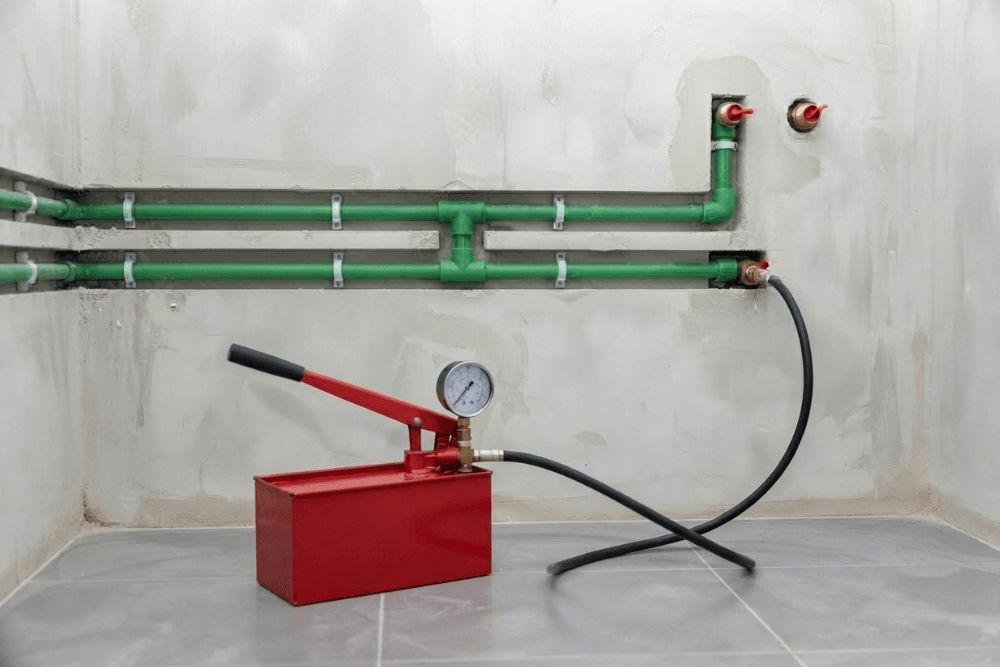
From 2016 onward, PPR and PEX became the settled standard for new Dubai construction. Both resist scale buildup and internal corrosion far better than copper or galvanized steel, and neither develops the pinhole-leak failure pattern that defines aging copper. If your building was completed in this window and hasn't been renovated with older salvage materials, your baseline pipe risk from age alone is genuinely low.
| Era | Typical material | Typical age today (2026) | General risk level |
|---|---|---|---|
| Before ~1995 | Galvanized steel, early copper | 30+ years | Higher |
| ~1995 – 2005 | Copper | 20–30 years | Moderate |
| ~2006 – 2015 | Mixed copper / PPR | 10–20 years | Lower-moderate |
| 2016 onward | PPR / PEX | Under 10 years | Lower |
What This Looked Like Across Dubai's Communities
Because Dubai grew in recognizable phases, this pattern maps loosely onto specific communities, not as a guarantee about any individual property, but as a genuinely useful starting point if you don't know your building's exact completion year.
The Emirates Living communities, Emirates Hills, The Meadows, The Springs, The Lakes, and The Greens, were among Dubai's first freehold residential developments, with Emirates Hills itself launching around 2003. Villas here sit squarely in the copper era, and a meaningful share of that original copper pipework has now been in continuous service for over two decades.
Dubai Marina followed a similar timeline for its earliest phases, Marina 1's buildings were the first completed in the district, delivered around 2003, but the district kept building for close to a decade after that, with many towers completing between 2006 and 2012. That spread means Marina isn't one era, it's copper-era buildings standing next to mixed-era towers a few streets away, which is exactly the kind of nuance a single "how old is Dubai Marina" assumption misses.
Areas that grew slightly later, JLT, Downtown Dubai, and Business Bay, developed through the mid-to-late 2000s and into the early 2010s, landing mostly in the mixed transition period. Newer villa communities like JVC grew through the early-to-mid 2010s, straddling the transition and modern eras depending on the specific cluster and phase.
Dubai Hills Estate represents the modern end of this timeline clearly, launched in 2014 with its first handovers arriving from 2017 onward, and construction in parts of the community continuing well into the late 2020s. Properties here were built entirely within the PPR/PEX standard.
None of this replaces knowing your actual building's completion year, which is the more reliable number. But if you genuinely don't know it and can't easily find out, your neighborhood's general development period is a reasonable starting assumption.
Why Copper Specifically Fails With Age
Understanding why copper wears out explains why age matters more for this specific material than for almost any other part of your plumbing system.
Municipal water isn't pure H2O. It carries a measurable load of dissolved minerals that, left undisturbed for years, slowly wear a thin spot into the interior wall of a copper pipe from the inside out. This is invisible from the outside for the entire process, right up until the wall finally gives way and water starts weeping through what's now a genuine pinhole, not a crack or a failed joint. That's the key difference from a burst pipe: a burst is sudden mechanical failure from an external cause, while a pinhole leak is the slow end result of years of interior erosion with no external warning at any point before the final failure.
Two other factors compound this specifically in Dubai. Residential water pressure here often runs higher than the baseline many plumbing fittings were originally engineered around, and running consistently above that baseline accelerates wear on any weak point already forming, including a thin spot that's been developing inside aging copper for years. Daily heat cycling adds a second layer, copper pipework running through roof spaces or exterior walls expands and contracts with Dubai's temperature swings, and a section already thinning from mineral wear is the one most likely to be pushed past its limit by that thermal stress, not a section still at full wall thickness.
None of this means copper piping was a mistake. It means copper piping has a genuine, well-understood aging curve, and a building's age is the clearest available signal for where on that curve your specific property sits.
Warning Signs Worth Acting On
Age tells you the likelihood, not the certainty. A copper-era building can go another decade without incident, and a newer PPR building can still develop a leak from a bad installation joint or accidental damage. What actually shifts the odds isn't the calendar alone, it's whether any of the following signs are present, because these are the same indicators a professional inspection is built around, not just informal warning signs:
- Discolored water, brown or yellow tinting, especially noticeable after a tap hasn't been used for a few hours, which usually points to internal corrosion in metal pipework.
- A drop in water pressure across multiple fixtures at once, rather than just one tap, which suggests something affecting the supply line itself rather than a single worn fixture.
- An unexplained rise in your DEWA bill with no obvious change in household habits, one of the earliest and most reliable signals of a slow leak building behind a wall or under a floor.
- Damp patches or discoloration on walls, ceilings, or flooring that don't correspond to any spill or obvious source.
- Repeated small leaks at different points over time, rather than one isolated incident, which suggests the underlying pipe material is failing generally rather than one section having a one-off problem.
Any single sign here is worth a look. Two or more together, especially in a property from the copper era or older, is worth an actual inspection rather than continued monitoring.
One Complication: Renovation History Can Override Building Age
Building age is a strong signal, but it isn't the only variable, and it's worth being honest about where it breaks down. A property from 1998 that underwent a full renovation in 2018 may have entirely new PPR or PEX supply lines behind its original walls, in which case its real plumbing age has nothing to do with when the building itself was constructed. The reverse also happens: a newer building can end up with older salvaged materials during a cost-driven fit-out, though this is far less common in Dubai's regulated construction environment.
If you know your property has had a full plumbing renovation, or if you're a landlord or buyer who can access previous maintenance or fit-out records, that renovation date is a more accurate signal than the original building completion year. Where that history isn't available, and for most tenants it genuinely isn't, the building's construction era remains the best available estimate.
If You're a Tenant or Landlord: Who's Actually Responsible
Pipe age isn't just a maintenance question, it's a legal one, and Dubai's tenancy law is more specific about this than many renters and landlords realize.
Two overlapping laws establish the landlord's repair obligation in Dubai. Article 767(1) of the UAE Civil Code, Federal Law No. 5 of 1985, requires a landlord to repair any defect affecting a tenant's use of the property, and gives the tenant the right to seek a court order for repair or cost recovery if the landlord doesn't act. Dubai's own tenancy law, Law No. 26 of 2007, reinforces this at the emirate level: Article 16 makes the landlord responsible for maintenance and repair unless the tenancy contract specifically states otherwise, and Article 17 extends that responsibility to damage from causes not attributable to the tenant, which is exactly the category an aging, deteriorating pipe falls into.
!In practice
An aging copper pipe that finally develops a pinhole leak is, in the overwhelming majority of cases, the landlord's repair responsibility, not the tenant's, regardless of who happens to notice it first. What it doesn't mean is that a tenant should sit back and wait. Reporting a warning sign early protects everyone: it gives the landlord the chance to act before a slow leak becomes a burst pipe, and it puts a documented timestamp on record if a dispute ever needs to go to Dubai's Rental Disputes Centre.
Check Your Actual Score
Everything above is a general pattern, not a verdict on your specific property. The most useful next step isn't guessing harder, it's combining what you actually know: your usage, your property type, and your building's real completion year, into one honest picture.
Our free Dubai Water Score tool does exactly that. It takes two minutes, compares your actual DEWA usage against typical ranges for your property type, and combines it with your building's construction era to produce a single shareable score, along with a downloadable image if you want to send it to a landlord, a property manager, or just compare notes with a neighbor in the same building. It won't replace an actual inspection if your result comes back concerning, but it's a genuinely useful first check before deciding whether that inspection is worth booking.
Frequently Asked Questions
How do I find out exactly when my building was completed? Your title deed or tenancy contract usually states the completion year. Your building's management office or the original developer's handover documents will also have it, and for many Dubai communities this information is a matter of public record through the Dubai Land Department.
My building is from the copper era but I've never had a leak. Does that mean I'm fine? It means you haven't had a leak yet, not that the pipe material has stopped aging. Copper wear is a gradual, cumulative process, and the absence of a visible symptom so far doesn't reset that clock. It's a reasonable sign that your specific pipework is holding up well, worth combining with the warning signs above rather than treated as a guarantee going forward.
Is PPR piping actually better than copper, or just newer? Both are genuinely capable materials when installed correctly. PPR's real advantage for Dubai specifically is that it doesn't share copper's internal mineral-wear failure mode, so it doesn't develop the same pinhole-leak pattern as it ages. Copper has its own advantages, particularly for certain commercial and hot-water applications, so "newer" and "better" aren't quite the same claim here.
If my building is old but was fully repiped, do I still need to worry? The building's original construction era stops being the relevant number once a genuine repipe has happened, what matters is the age of the actual pipe material currently installed, not the building around it. If you can confirm the repipe date and the material used, that date is your real starting point.
What should I actually do if my result or building age suggests higher risk? Start with the specific warning signs, not a general sense of worry. If you're seeing one or more of the signals above, book an actual leak detection visit rather than waiting for a bigger, more obvious failure. If copper pinhole leaks are the specific concern, our copper pipe leak repair page covers real pricing by scenario, so you know roughly what you're looking at before anyone comes out.
Does building age matter for drainage and sewer pipes the same way it matters for supply pipes? Not in quite the same way. Supply pipes fail from internal mineral wear under constant pressure, which is the copper-specific mechanism this guide focuses on. Drain and sewer lines fail more often from root intrusion, sand ingress, or physical blockage than from material aging alone, so an older building's drainage risk is a genuinely different question, better covered by a camera inspection than by a building-age estimate.
Dubai Water Score
Check your own usage and building-age risk score free, in about two minutes.
Copper Pipe Leak Repair Dubai
Real AED pricing by leak type and repair method, once a pinhole leak has appeared.
Repiping & Pipe Replacement Dubai
When repeat leaks mean it's time to replace copper or GI with PPR or PEX, with real prices by scope.
Leak Detection Dubai
For a warning sign that needs an actual inspection, not just a self-check.
Plumbing Maintenance Responsibilities in Dubai
The full landlord-vs-tenant responsibility breakdown under Law No. 26 of 2007.
Related Service
Copper Pipe Leak Repair
Dealing with this issue right now? See real pricing and how we handle it.
View Copper Pipe Leak Repair